Beans, Lentils and Groch: Poland's Pulse Aisle
The essentials: Fasola means beans, soczewica lentils, groch peas and ciecierzyca chickpeas. Choose the specific variety and form your recipe needs, then follow that product's preparation. One packet's cooking time is not a rule for every pulse.
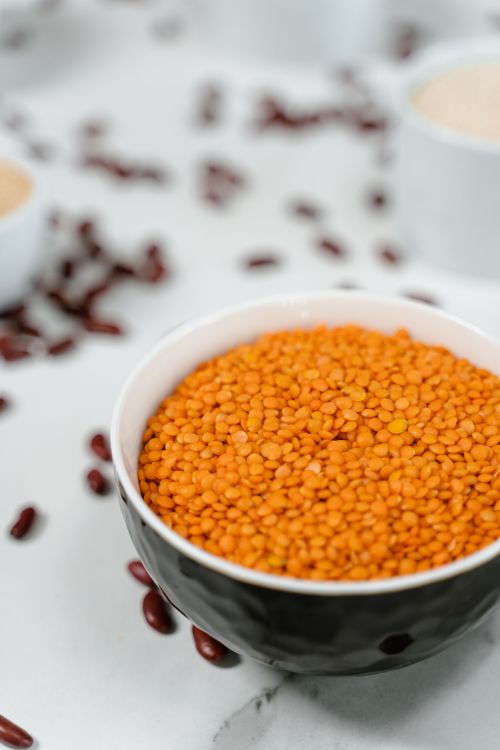
Cover: MART PRODUCTION, Pexels source photograph, Pexels License. Image unchanged. Red lentils in a bowl, shown as ingredient context, not as a photograph of a named Polish retail pack.
The Polish dry-goods aisle becomes easier once you can distinguish fasola, groch, soczewica and ciecierzyca. They are not four names for the same small ingredient. The words identify different pulses, and details such as colour, whole or split form and preparation instructions can change the time your meal needs.
This guide is a shopping and cooking-planning aid, not one universal recipe for all beans. It uses current Melvit producer pages to identify Polish names, available forms and named preparation examples. Follow the instructions on the actual product you buy. Do not transfer one packet's cooking time to a different species simply because both are sold dry.
Start with the four names
Fasola means beans. Groch means peas in this dry-pulse setting. Soczewica means lentils. Ciecierzyca, also called cieciorka in the checked producer range, means chickpeas. Learning these names makes it easier to match a shopping list to the right shelf without guessing from the packet colour.
The useful next question is the specific type. A recipe calling for red lentils is not asking for any bag from the pulse section. Nor does an unfamiliar Polish name mean you must abandon a familiar dish. Translate the ingredient first, then compare the colour, form and preparation the recipe expects.
Soczewica comes in several colours
Melvit's checked range includes red, yellow, green and black lentils. Its guidance describes red and yellow varieties as quick-cooking options that do not need prior soaking and tend to break down, while green and black varieties are useful where retaining structure matters. Keep these as the producer's guidance for the products it describes.
That distinction helps you plan the dish. A smooth soup and a salad with distinct pieces are different aims. Choosing the right variety at the shelf is simpler than trying to force the wrong one to behave differently afterwards. The word soczewica alone is therefore not always enough on a shopping list.
A named red-lentil preparation example
For its Soczewica czerwona 400 g, Melvit says to rinse the lentils and cook them without prior soaking. The page describes about five minutes of cooking before salting and another ten minutes over low heat. This is a concrete example of why red lentils can suit a meal you begin without planning overnight.
Do not turn that example into a guarantee that every lentil product is ready in exactly fifteen minutes. Read your packet, use the stated preparation and check the result as instructed. A producer page can help you plan, but the product you have bought remains the relevant reference. This guide does not invent a universal water ratio.
Fasola includes different bean choices
The checked range includes fasola biała drobna, small white beans, and fasola Piękny Jaś, a larger named white-bean product. These descriptions help when you want the bean's size and texture to suit a dish. A recipe that names one is giving more detail than simply beans.
For an English recipe, look for the closest specified ingredient rather than assuming every white bean is identical. If you deliberately use an alternative, treat it as a recipe change and follow its preparation directions. The beans may still make a good meal, but an honest substitution is different from a promise of identical timing or texture.
Piękny Jaś needs advance planning
Melvit's Piękny Jaś 400 g page describes soaking for eight to twelve hours, draining and rinsing, then bringing the beans to a boil in fresh water and simmering for around sixty to ninety minutes until softened. This named example requires a different plan from the red lentils above.
The practical shopping consequence is simple: choose the ingredient before choosing when dinner will be ready. A dry-bean packet is not an emergency substitute for a quick-cooking lentil recipe if you have no soaking time. Do not try to make a broad timing claim about all beans from this one producer example.
Groch is not the same thing as lentils
Groch łuskany means hulled peas. Połówki means halves or split form; cały means whole. Those words are worth reading because they identify a processing difference within the broad category. The checked Melvit guidance describes split peas softening and helping thicken soups and stews.
If you grew up buying split peas under an English name, this vocabulary can help you find a familiar ingredient. Still, match the actual packet to your recipe. A yellow colour alone is not enough to distinguish every pulse, and a small photograph on a bag is less useful than its written product name.
Chickpeas have two useful shelf names
Melvit uses cieciorka in its range and also explains ciecierzyca in its guidance. Recognising both helps when a recipe and a shop use different Polish wording. The producer gives uses such as hummus, spreads, curries and salads, while its preparation guidance calls for advance soaking of its dry chickpeas.
That is not the same purchase as a ready-prepared product in a jar or tin. Check what form you are buying and what the directions require. When a recipe calls for already cooked chickpeas, buying a dry packet creates an extra preparation task and changes the schedule even if the ingredient name is otherwise correct.
Dry and prepared quantities are different comparisons
Before comparing prices, identify whether the product is dry or already prepared. A packet weight and a drained quantity do not describe the same stage of cooking. Read the declared amounts rather than treating equal-looking numbers on two packages as equal portions for a recipe.
For a first purchase, write the required form on your list: dry red lentils, dry white beans or cooked chickpeas, for example. That prevents a helpful shopper or delivery substitute from bringing the right species in the wrong form. It also makes the cooking plan clearer before you open a packet.
Keep cooking instructions attached to the product
The producer's different instructions show why one table cannot safely replace every label. Red lentils and large dry beans do not share one preparation method. Even within one category, use the directions for your actual product and any suitable tested recipe requirements. Do not taste uncooked beans as a way to improvise a readiness check.
This guide does not supply a shortcut using low-temperature appliances or a universal bean-safety protocol. If you want to use a slow cooker, pressure cooker or another method not covered by your packet, find reliable instructions for that specific ingredient and appliance. Saving time is not a reason to guess at a preparation that the source did not verify.
Read the ingredient and allergen information
A simple-looking dry product still deserves a label check. Look for składniki, meaning ingredients, and any allergen information. A photograph of plain lentils cannot establish what a particular pack contains or how it was handled. Do not infer an allergy-safe claim from the fact that the ingredient is naturally recognisable.
If you are shopping for a specific dietary restriction, use the actual package and appropriate advice. The producer's range page is useful for discovering names and forms, not for certifying every shop's product. A replacement brand means another label to check, not an automatic transfer of the original pack's declarations.
Use a few Polish questions at the shelf
Czy to jest groch łuskany w połówkach? asks whether the product is hulled split peas. Czy ta soczewica wymaga namaczania? asks whether the lentils require soaking. Ile czasu trzeba gotować? asks how long they need to cook. The packet should be your reference when interpreting the answer.
For beans, Czy to fasola biała? asks whether they are white beans. You can also show the recipe's ingredient line and ask for help finding the matching description. That is more useful than asking which pulse is best, because the best choice depends on whether you want a quick soup, a salad or a planned bean dish.
Make a small, useful pantry rather than buying every colour
A practical first shop might contain one quick-cooking pulse and one ingredient for a dish you already plan to make. You do not need every variety to understand the aisle. Buying several unfamiliar bags at once can create a pantry full of ingredients without a schedule or recipe to use them.
Keep the original package information when organising storage, and follow its directions. If you move ingredients into a container, retain the name, date and preparation details rather than relying on colour to identify them later. Clear identification matters especially when two small dry ingredients look similar but require different treatment.
Build the meal around the ingredient's timetable
For a same-evening meal, the checked red-lentil example may fit better than dry Piękny Jaś requiring overnight preparation. For a planned weekend dish, the longer bean schedule may be entirely reasonable. Neither is inherently the better purchase. The useful choice is the one that fits the meal and the time you actually have.
Our supermarket guide explains the broader Polish shopping setting, while individual stock varies by store. Use the producer examples to recognise names rather than assuming a particular packet is always available. If a substitution changes species or form, reassess the preparation instead of keeping the original cooking time by habit.
A repeatable pulse-aisle checklist
Read the ingredient name, colour or variety, whole or split form, preparation and net amount. Ask whether your recipe expects it dry or already cooked. That short check resolves most of the confusion before it becomes a kitchen problem. It also lets you compare another brand without depending on familiar package artwork.
Once these distinctions are clear, Polish pulse names become useful vocabulary rather than obstacles. Fasola, groch, soczewica and ciecierzyca each point you toward a different decision. Match the specific product to the meal, keep instructions with it and let the preparation timetable guide your plan rather than discovering it when dinner is already late.
Related: Supermarkets in Poland.
Frequently asked questions
What does groch łuskany połówki mean?
Hulled split peas. Cały means whole, so read the full description.
Does every pulse need overnight soaking?
No. The named Melvit red-lentil example does not, while its Piękny Jaś bean example specifies advance soaking. Follow your own product's directions.