Hevelianum in Gdańsk: Science Tickets and the Hilltop Visit
The essentials: Hevelianum's Góra Gradowa site combines science exhibitions with historic hill buildings. Single Dookoła świata or Z energią! tickets are 20 zł ordinary or 15 zł concession; Z energią! prohibits entry for pacemaker users.
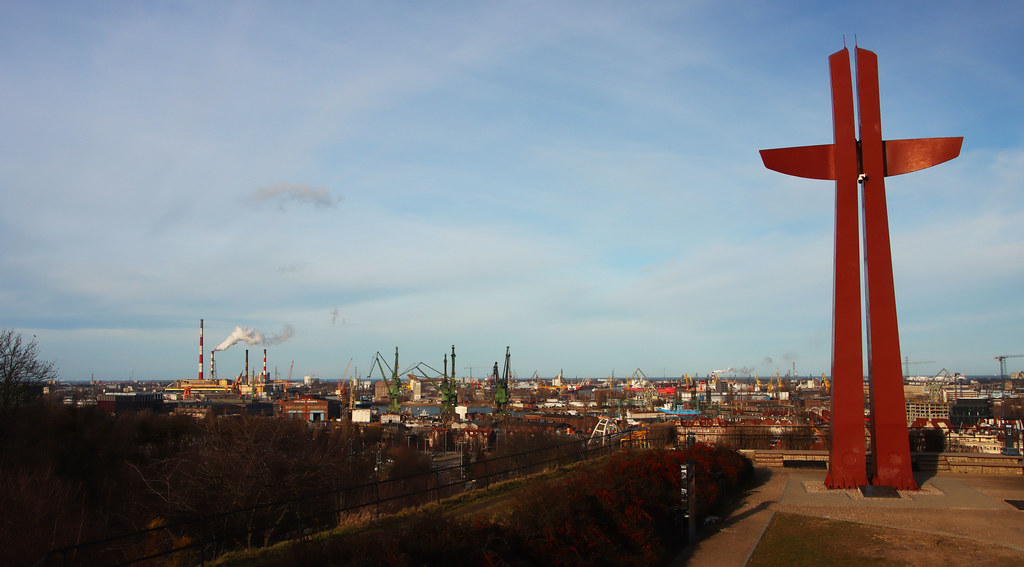
Cover: Guillaume Baviere, source photograph, CC BY-SA 2.0. Image unchanged. Góra Gradowa viewpoint and Gdańsk panorama in March 2023; the Hevelianum hill setting, not a science-exhibition interior.
Hevelianum is a science centre on Góra Gradowa, with exhibitions fitted into historic military buildings and a hilltop setting overlooking Gdańsk. That combination is its attraction and its planning challenge. It is not one flat, self-contained museum building where every visitor follows the same indoor circuit. You may want interactive science, a view over the city, a walk among the fort buildings or a separately timed workshop, and those choices do not all use the same ticket.
For a first visit, start with one question: do you mainly want a science exhibition or an outdoor hill visit with some history? Then check the relevant programme. The operator also runs Dom Zdrojowy in Brzeźno, a different location near the sea. This guide concerns Góra Gradowa at ul. Gradowa 6. It uses current operator information, including important access limits and an explicit medical restriction on one exhibition, rather than claiming a personal visit.
Choose the right location and activity
The operator describes Góra Gradowa as a place combining science, history, historic architecture and outdoor recreation. Dom Zdrojowy is its environmental-education centre in a restored nineteenth-century seaside building. An event carrying the Hevelianum name therefore does not automatically take place on the hill. Check the location on the event page before choosing transport or meeting friends. The two settings should not be treated as adjacent parts of one entrance.
At Góra Gradowa, Dookoła świata is the geography-and-nature-oriented interactive exhibition. The current description gives more than 90 stations spread over two floors of former shelter barracks, covering seven continents. It is a stronger match for a visitor curious about environments and places than for someone seeking a lecture about astronomy. The name Hevelianum commemorates the astronomer Johannes Hevelius, but the programme is broader than a planetarium.
Z energią! concerns changes between forms of energy, with hands-on observation and experiments on two levels of the South Caponier. The operator also sells workshops, science demonstrations and escape-room-style activities. Those are separate products with their own times, ages and group arrangements. Do not arrive assuming an exhibition ticket includes every activity pictured on the home page. Choose the actual session or exhibition your party wants to use.
A medical restriction that must not be buried
The Z energią! exhibition page explicitly prohibits entry for people with pacemakers because some stations emit strong electromagnetic fields. This is an operator rule, not a general suggestion to stand a little farther away from one exhibit. If it applies to you or someone in your party, do not plan that exhibition as part of the visit. Ask Hevelianum about a suitable alternative before buying a package that includes it.
Do not extend this guide into medical advice about other implanted devices. If you have a related concern, contact the operator and your clinician as appropriate, describing the specific exhibition. The practical point is to identify the restriction before purchase rather than discover it at the door. A different exhibition or outdoor visit may still fit the day, but suitability should be checked for the person concerned.
This also illustrates why "interactive science for everyone" is too broad a planning promise. Different rooms use different equipment, lighting, sound and physical actions. Read the individual activity page, not only the general promotional introduction. A family or mixed-age group can choose different priorities without requiring every person to enter the same space simply because a bundle is available.
Current hours and holiday exceptions
The individual-tariff page gives Tuesday-Friday hours of 08:00-16:00 and Saturday-Sunday hours of 10:00-18:00, with Monday closed. The dedicated accessibility information repeats that ordinary pattern and notes different operation during school holidays and winter breaks. For a normal term-time visit, use the main dated information rather than a repeated footer. Some website footers still contain a contradictory old schedule and 2025 closures.
The current tariff page lists specific 2026 closed dates, including 24-26 December and 30-31 December, as well as earlier closure periods. That is useful for advance planning, but an individual event may still have its own slot and admission instructions. Check the programme for the day you intend to visit. Do not infer that a workshop runs throughout the full opening window just because the building is open then.
An early weekday opening can suit a morning plan, but it does not establish the best time for avoiding groups. The operator warns that rainy days increase demand and tickets can sell out, and encourages advance online purchase. If the indoor activity is essential, inspect availability before climbing the hill. An outdoor viewpoint remains a different plan, not a guaranteed replacement for a sold-out exhibition that a child was expecting to enter.
Ticket choices need a scope check
The current Dookoła świata and Z energią! pages each list 20 zł ordinary and 15 zł concession admission, with a stated duration of 60 minutes. The individual tariff also lists a 30 zł ordinary and 25 zł concession package under Dookoła Świata, Łamigłówka and Z Energią! Compare the package currently offered for your chosen date with the single exhibition you actually want. A tariff heading alone does not tell you every room's operational status on that date.
Family products and card discounts are also advertised, but check the precise party definition and current conditions in the shop or at the desk before paying. In particular, do not use the word "family" as an assumption about how many adults, children or additional relatives are covered. Workshops and escape-room products have their own prices and group sizes. The price of a single exhibition should never be presented as the price of a whole day of unlimited programmed activities.
Tickets are sold at the information point by the main square and online. The access information says payment is possible by cash or card. Keep the correct location, date and product visible when comparing options. A ticket for Dom Zdrojowy or a timed workshop will not become a Góra Gradowa exhibition ticket because the same institution operates both. If you are unsure, settle the product question before buying rather than after arrival.
Give the hill and buildings separate time
The outdoor setting is part of what makes the visit different from a shopping-centre attraction. You can combine a science exhibition with looking at the historic buildings and the panorama. But moving between spaces and walking uphill takes time and energy, particularly with a buggy, mobility aid or young child. Do not use a one-hour exhibition duration as the total door-to-door visit estimate.
A manageable first plan is one exhibition, a pause and a short look at the surrounding site if conditions suit. Add a second activity only if its time, access and content fit the party. The geography exhibition's more than 90 stations are not a requirement to complete every task. Choose a few questions that interest you and allow time to experiment rather than racing to tick off a list of devices.
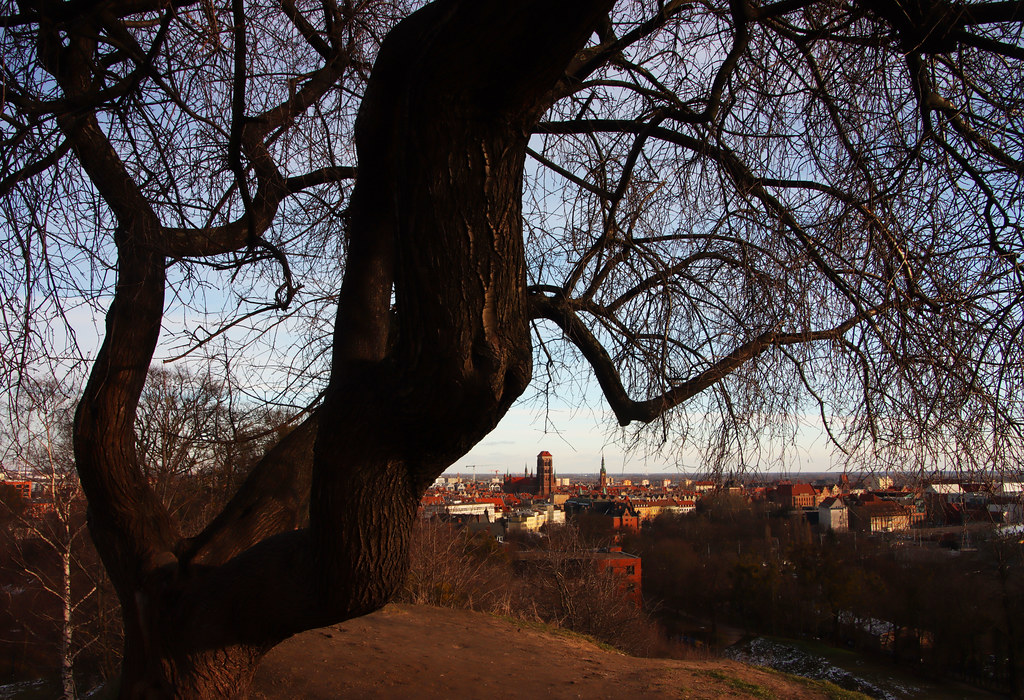
The hill photos accompanying this guide show the Góra Gradowa setting and views, not current exhibition interiors. They help explain the outdoor context without promising a particular display arrangement. Weather, vegetation and visibility will differ from the photographs. If the panorama is the main reason for coming, check the day's conditions and your access route rather than treating a clear historical photograph as a forecast.
Accessibility is route-specific
Hevelianum's accessibility page is direct about the terrain: the site is on a hill and occupies former military buildings with historic architectural barriers that cannot all be removed. A general statement that the centre welcomes visitors with disabilities does not mean every building or exhibition is step-free. Use its access map and discuss the route covering your chosen activity, toilets and arrival point.
The operator lists Dookoła Świata, Z Energią! on levels 0 and +1, Hevelianum bez Barier and the creative playground among wheelchair-accessible exhibition or workshop spaces. It also provides lift dimensions and the locations of adapted toilets. These details are useful for matching a real mobility device to a real route. Check current lift operation and any doorway or turning-space constraint if it is essential for your visit to work.
For someone arriving without an assistant, the centre offers assistance by prior arrangement and asks for contact at least a week ahead to agree the scope. That is not an on-demand guarantee at any entrance. Explain what support you need, which exhibition you intend to visit and how you will arrive. The same early conversation can help a family decide whether to bring a particular buggy or choose a shorter route.
Sensory, language and family expectations
The accessibility information describes tactile models, Braille, audio description, captioned films and Polish Sign Language material for particular spaces and resources. Those are specific provisions rather than a promise that every interactive station has the same format. If you need English interpretation, ask about the chosen exhibition's current materials before purchase; a translated website is not evidence that every device or workshop runs in English.
Families should check the intended audience of the individual activity. A workshop for very young children, a longer escape-room booking and an open-ended exhibition ask different things of participants. Choose based on the people attending, not on a photograph of another family enjoying a different programme. Allow for breaks and a possible change of plan after one activity. The outdoor site can be part of the day without turning every visit into a full programme of paid sessions.
Before setting out
Confirm Góra Gradowa as the location, inspect current activity availability and note the ordinary weekday or weekend closing time. Read the pacemaker restriction if Z energią! appears anywhere in your plan. If access matters, check the route map and contact the centre early enough for assistance arrangements. Take weather-appropriate clothing for the outdoor parts even when your main activity is indoors.
Hevelianum works best as a chosen combination of science and place. One well-matched exhibition with time to experiment can be more satisfying than an ambitious package that leaves no room for the hill, breaks or individual needs. The useful preparation is not memorising every activity name. It is knowing which experience you have booked, how you will reach it and what the current operator information says about its limits.
Related: Gdańsk weekend guide.
Frequently asked questions
Is Hevelianum all one building?
No. Góra Gradowa uses several historic hill buildings, and the institution also runs the separate Dom Zdrojowy location in Brzeźno.
Can a pacemaker user enter Z energią!?
The operator explicitly prohibits entry for people with pacemakers because some stations emit strong electromagnetic fields. Ask about alternatives before buying.
Are workshops included with an exhibition ticket?
Do not assume so. Workshops, demonstrations and escape-room activities have separate products, times and conditions.