Gdańsk Weekend Guide: Old Town, Museums and Westerplatte
The essentials: Two days cover Gdańsk well: day one for the Main Town (Długi Targ, Neptune Fountain, St Mary's, the Żuraw crane), day two for the WWII Museum (33 zł, free Tuesdays, closed Mondays) and the Solidarity Centre (40 zł, closed Tuesdays), plus Westerplatte. Off-season means short queues.
Why Gdańsk works as a weekend, especially off-season
Gdańsk is the Polish weekend trip that expats consistently rate highest, and it has a secret season. From late October the cruise crowds vanish, the amber stalls on Mariacka street actually have room to browse, and the city's two heavyweight museums, among the best in Europe, can be walked at a human pace. The trade-off is Baltic weather: wind, horizontal rain and daylight that ends before 16:00 in December. Gdańsk's answer is that most of what you came for is indoors, and the Main Town looks its most atmospheric under winter illuminations.
Fast trains link Gdańsk Główny station with Warsaw and Kraków, and the station sits a short walk from the Main Town, so a car-free weekend works well. This guide uses official ticket prices checked on 23 October 2026, because Gdańsk's two big museums have different closing days and discount calendars that reward planning.
Data source: muzeum1939.pl and bilety.ecs.gda.pl official ticket pages; checked 23 October 2026.
Day one: the Main Town on foot
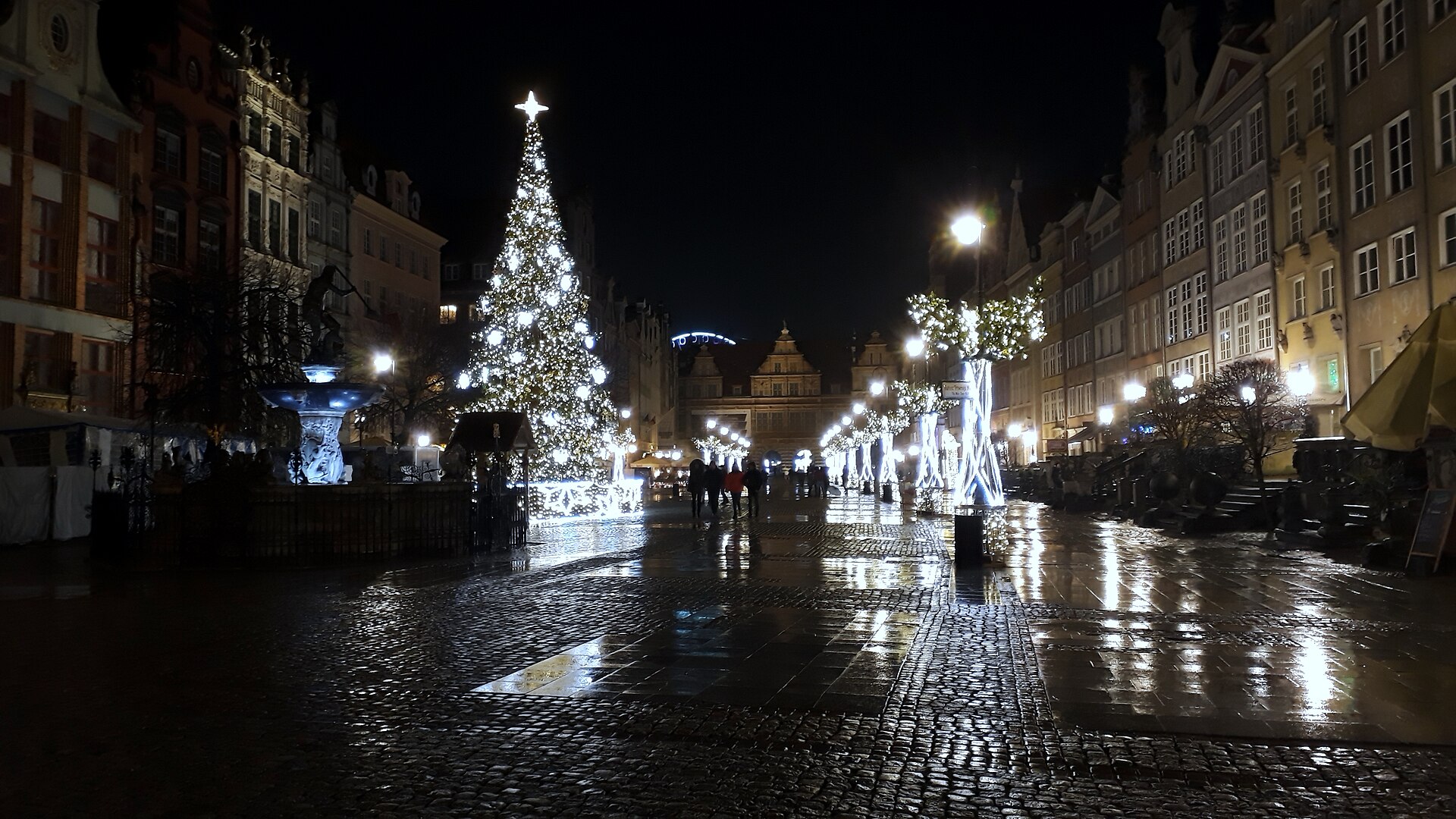
The classic route starts at the Golden Gate and runs down ulica Długa into Długi Targ, the Long Market, past the Neptune Fountain, the Artus Court and the Green Gate to the Motława river. St Mary's Basilica, one of the largest brick churches in the world, anchors the side streets, and Mariacka street below it is the postcard lane of gabled houses, stone terraces and amber galleries. On the river, the medieval Żuraw crane marks the old port, and the island of Ołowianka across the footbridge carries the AmberSky ferris wheel and the Philharmonic, while the rebuilt granaries of Wyspa Spichrzów fill the opposite bank with restaurants.
All of this is free and walkable in half a day, which leaves the afternoon for a museum or a slow coffee on Mariacka. In late autumn the illuminations come on early, so the evening version of the same walk is worth repeating after dark. If your weekend falls in late November or December, the Gdańsk Christmas market on Targ Węglowy, by the Golden Gate end of Długa, adds mulled wine and stalls to the route; we track its dates in our Polish Christmas markets guide.
Data source: site layouts per official city and museum materials; seasonal events per the Christmas market listing checked 23 October 2026.
Day two: two museums that explain Poland
The Museum of the Second World War, a ten-minute walk north of the Main Town, is the anchor of any Gdańsk weekend. The main exhibition takes three hours at a minimum and covers the war from the Polish and civilian perspective in a vast underground hall. As of October 2026, tickets cost 33 zł normal and 23 zł reduced, with a family ticket at 72 zł for up to five people including one or two adults and children under 19. The museum is closed on Mondays. Every Tuesday entry is free until 16:00, but free tickets are issued only at the box office, with no advance reservation and a 2,500-visitor daily limit, so Tuesday mornings draw a queue. Box offices run 9:30-14:30 on Tuesdays, 9:30-17:00 on Wednesdays and Thursdays, and 9:30-19:00 from Friday to Sunday. An audioguide for the main exhibition costs 12 zł, and the main exhibition ticket includes the children's exhibition.
The European Solidarity Centre, at the gate of the former Lenin Shipyard twenty minutes north, tells the other story Gdańsk owns: the strikes of 1980, the birth of Solidarity and the fall of communism in Europe. Tickets as of October 2026 are 40 zł normal and 35 zł reduced, with family packages at 100 zł for two adults and one child or 115 zł for two adults with two or three children, and Large Family Card holders pay 32 or 28 zł. The Solidarity Centre is closed on Tuesdays, and its box office works 10:00-17:00 on Mondays and Wednesdays to Fridays and 10:00-18:00 on weekends. The mirror-image closing days mean a two-museum Saturday or Sunday is the efficient play.
Data source: muzeum1939.pl ticket and opening pages, including the Tuesday free-entry rules, and bilety.ecs.gda.pl price list; both checked 23 October 2026.
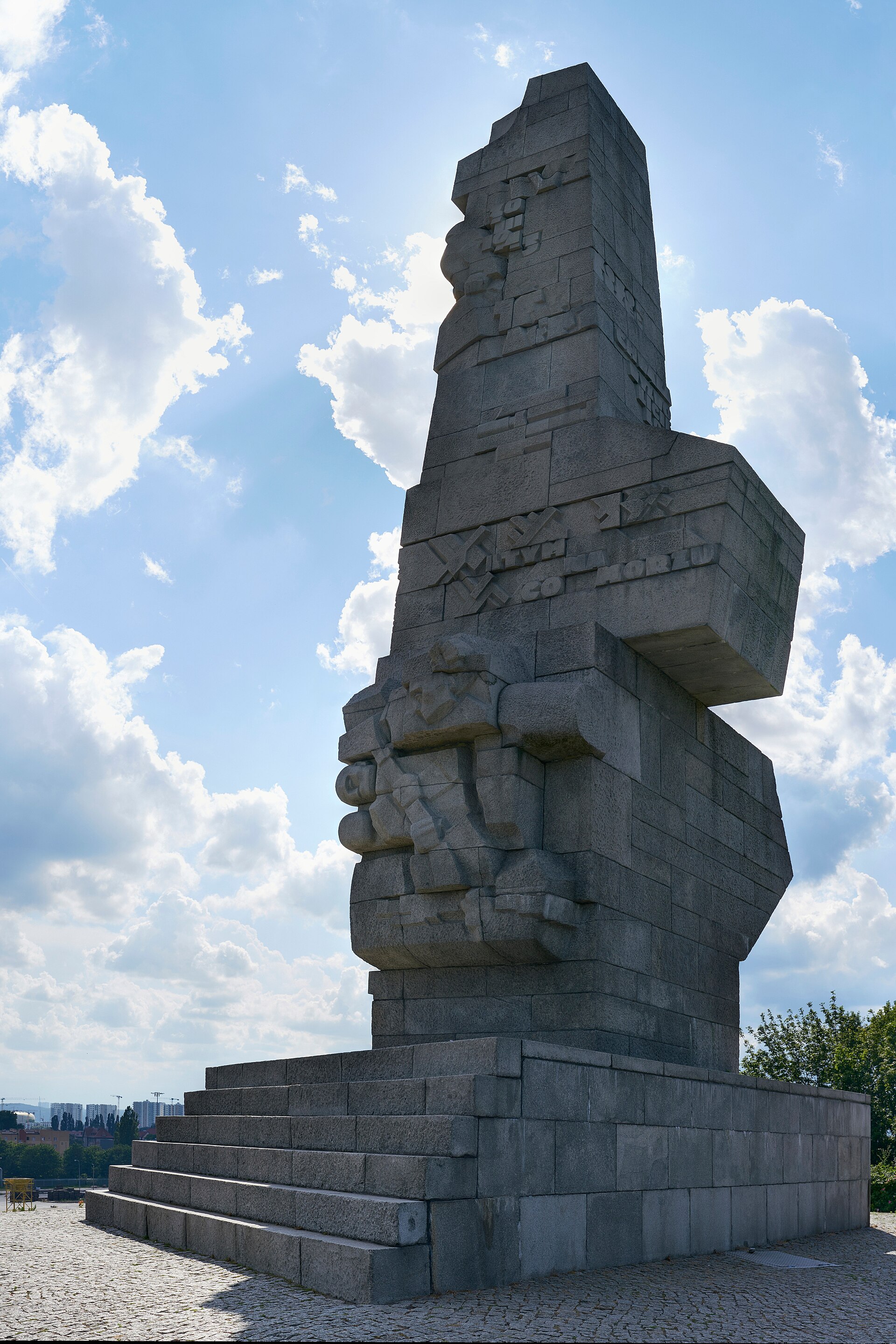
Westerplatte: where the war began
Westerplatte is the peninsula where German forces attacked a Polish military depot on 1 September 1939, opening the Second World War, and it remains a raw, open-air memorial rather than a polished attraction: ruined guardhouses, marked walking paths and the massive stone monument to the Defenders of the Coast above the channel. The Museum of the Second World War operates a visitor center here, with an exhibition in the former power plant building open 10:00-16:00. City buses run from the main station area, and in season water trams cross the port to the site, an approach worth taking when the boats run, because the industrial shipyard shoreline is part of the story.
Westerplatte takes half a day with travel. It pairs naturally with the WWII Museum on the same day if you start early, or stands alone as a quieter second afternoon. In late autumn bring windproof layers; the peninsula is exposed and the weather off the bay is the point of the place.
Data source: muzeum1939.pl Westerplatte visitor and ticket pages, including the Elektrownia exhibition hours; checked 23 October 2026.
Practical notes for an off-season weekend
Getting around is simple. Gdańsk's trams and buses use a single ticket system, and our guide to Gdańsk public transport tickets covers the current fares; arriving by air, the airport-to-city guide compares the train and bus options. Inside a weekend you will mostly walk: the Main Town, both museums and the shipyard area form a compact triangle. Sopot, with its famous wooden pier, is a suburban train ride away and adds a seaside half day if the weather behaves.
Budget realistically. A museum-heavy weekend for two adults runs about 106 zł in tickets for both big museums at normal prices, less with the Tuesday free entry or family tickets, and the Old Town costs nothing. Book accommodation early even off-season, because Gdańsk weekends sell out around concerts and market weekends, and carry a card plus a little cash, since small amber and craft stalls on Mariacka are not always card-friendly. Pack for wind first and cold second: a waterproof shell beats a warm coat in a Gdańsk November.
Data source: linked Expats Poland transport guides and the museum price lists above; checked 23 October 2026.
* Photos: CC BY 4.0 Tomasz Sienicki via Wikimedia Commons (Długi Targ with winter illuminations, cover); CC BY-SA 4.0 Virtual-Pano via Wikimedia Commons (Westerplatte monument, body).
Frequently asked questions
When is the Gdańsk WWII Museum free?
Every Tuesday. The Museum of the Second World War admits visitors free on Tuesdays until 16:00, but free tickets are issued only at the box office with no advance reservation, and a 2,500-visitor daily limit applies for order and safety. On other days the main exhibition costs 33 zł normal and 23 zł reduced.
Which day is best for museums in Gdańsk?
Plan carefully because the two big museums close on different days: the WWII Museum is closed on Mondays, and the European Solidarity Centre is closed on Tuesdays. A weekend visit avoids both closures, and the WWII Museum stays open latest on Fridays, Saturdays and Sundays, with box offices working until 19:00.
Is Gdańsk worth visiting in late autumn or winter?
Yes, and many expats prefer it. The Main Town is fully walkable year-round, museum queues disappear, and the Długi Targ illuminations light up the early evenings. From late November the Gdańsk Christmas market fills the Targ Węglowy area. Pack for wind off the Baltic and rain rather than deep snow.
How do you get to Westerplatte from central Gdańsk?
Westerplatte is a peninsula north of the center, reachable by city bus from the main station area and, in season, by water trams along the Motława and the port channel. The open memorial grounds can be walked at your own pace, and the Museum of the Second World War runs a visitor center there with an exhibition in the former power plant, open 10:00-16:00.
Is two days enough for Gdańsk?
Two full days cover the Main Town, both big museums and Westerplatte at a comfortable pace. Add a third day if you want Sopot and its pier, the Gdynia waterfront, or the Malbork Castle day trip, which is one of the easiest rail excursions from Gdańsk.