Supermarkets in Poland: Biedronka, Lidl and Żabka explained
The essentials: Poland's grocery market is led by discounter Biedronka, with Lidl, Dino and convenience chain Żabka behind it. Shops close most Sundays; a bottle deposit system has run since October 2025, and loyalty apps carry the real discounts.
Your first week in Poland will include a grocery run, and it will probably confuse you. The shop with the ladybird logo is everywhere, the one with the frog is somehow open on Sunday when everything else is shut, and the cashier scans your items at a speed that feels personal. Welcome to Polish grocery shopping - one of Europe's most competitive food markets, and genuinely one of the best countries in the EU to fill a fridge.
This is the map: who the chains are, how the deposit system works, and the small habits that make you look like you have lived here for years.
The lay of the land
Polish grocery retail is discount country. The 20 largest retailers account for nearly three-quarters of grocery sales, and the fight at the top is intense: according to YouGov data for the first half of 2026, Biedronka remains the undisputed market leader by value of FMCG sales, but Lidl posted the biggest share gains of the half-year, with Dino third. For you as a shopper, this war is good news - it means relentless promotions and some of the lowest food prices in Western Europe. Analysts expect the market to keep consolidating, with the biggest chains strengthening and weaker operators squeezed - so expect the logos below to dominate for years.
Biedronka: the default
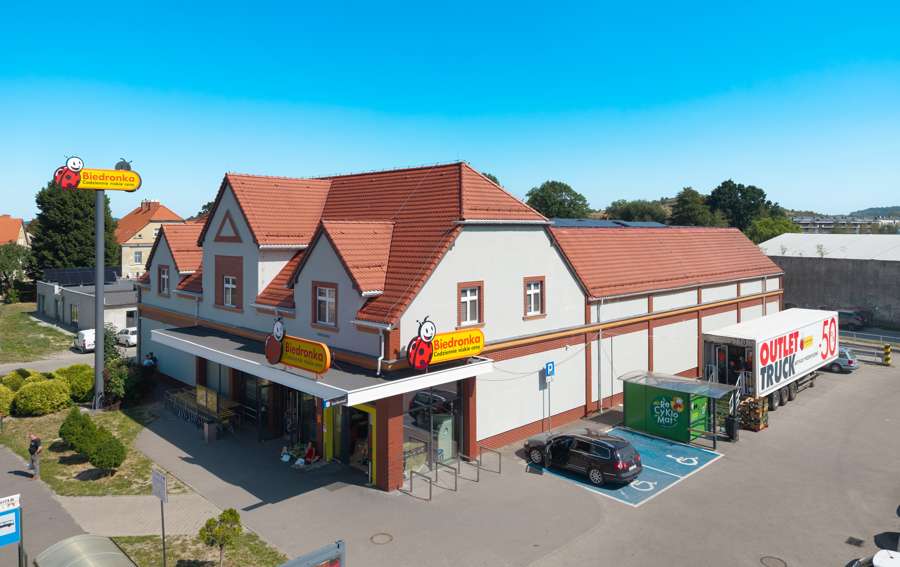
Biedronka ("ladybird") is the largest grocery chain in Poland by a wide margin: PLN 108 billion in revenue in 2025, thousands of stores from big cities to villages, owned by Portugal's Jerónimo Martins. It is a discounter with a Polish soul - heavy on Polish own brands, strong meat and deli counters, regional promotions that follow the calendar (carp before Christmas, grilling gear in May), and weekly promotional leaflets everyone actually reads. Download the Moja Biedronka app: the personalized discounts are significant, and the chain effectively expects you to use it.
Lidl: the challenger
Lidl needs no introduction to most expats, but the Polish operation is a powerhouse: PLN 41.3 billion revenue in its 2024/25 financial year and, per YouGov, the fastest share growth of 2026 so far. The in-store bakeries are a daily ritual for many Poles, the middle aisle of random non-food bargains is a national joke, and the Lidl Plus app mirrors Biedronka's discount model. If you shopped at Lidl at home, you will feel at home - with better bread.
Dino and the rest of the supermarket tier
Dino is the quiet giant: a Polish chain of mid-sized stores, mostly in small towns and suburbs, that quadrupled its sales in a few years to PLN 33.6 billion in 2025 and passed 3,000 stores. It looks and feels like a classic supermarket rather than a discounter. Around it sit the international full-format players: Kaufland (Lidl's bigger sister, hypermarket scale), Auchan, Intermarché, Netto, and Carrefour - the latter deep in restructuring after a PLN 259 million net loss in 2025, with its Polish future openly debated in the trade press. Local franchises like Lewiatan and the old cooperative Społem fill the gaps.
Żabka: the frog that never sleeps
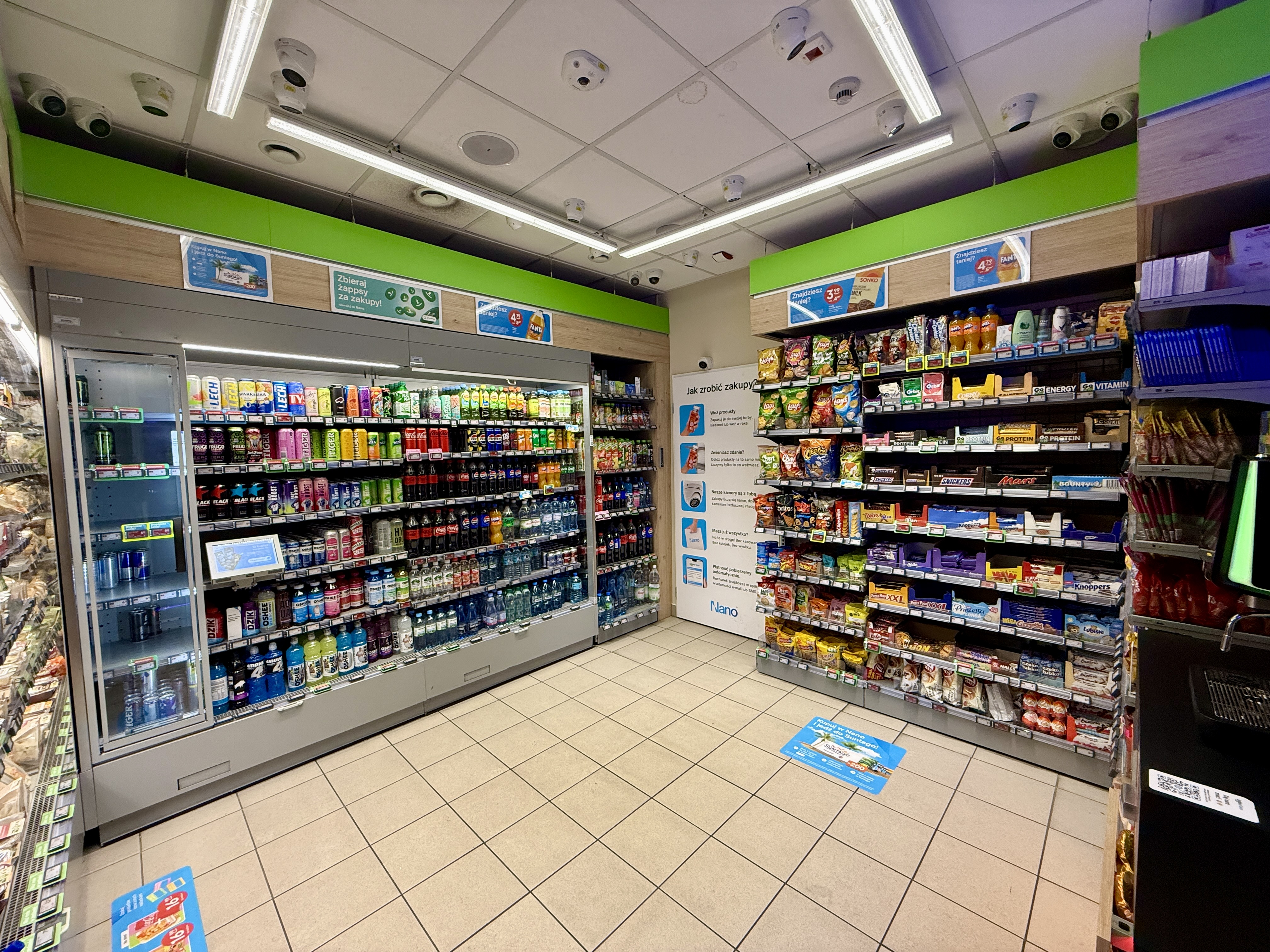
Then there is Żabka ("little frog"), which is not a supermarket at all but might become your most-used shop in Poland. It is a convenience chain of small franchise stores - over 12,000 of them by the end of 2025, making it one of the largest convenience networks in Europe, and since July 2026 controlled by Canada's Couche-Tard (the Circle K owner). Żabka sells top-up groceries, coffee, hot dogs and fresh snacks, hosts parcel pick-up points, and - crucially - is open on Sundays and late into the evening, legally staffed by the franchise owners themselves. The Żappka app handles loyalty points and, in the unmanned Żabka Nano stores like the one pictured below, is your key to the door: you scan in, take items, and cameras and sensors bill you automatically.
Beyond the chains: markets and corner shops
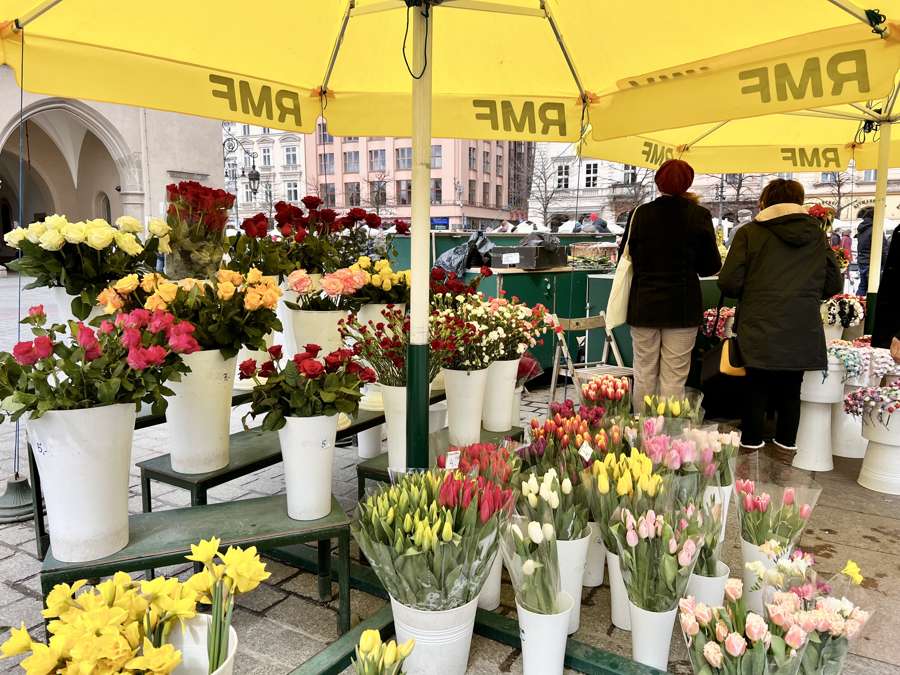
Supermarkets are only half of Polish food life. Most towns still have a targowisko - an open-air or covered market where farmers sell eggs, seasonal fruit, honey and oscypek-adjacent cheeses - and neighborhood piekarnie (bakeries) and mięsne (butchers) do steady trade against the chains. In big cities, restored market halls such as Hala Koszyki or Hala Gwardii in Warsaw turn the same idea into a food-hall evening out. Prices at the chains are hard to beat, but for bread, seasonal produce and anything you want to ask a human about, the small players are where Poles themselves still go.
Sundays: plan around them
Most shops in Poland are closed on Sundays under the trading ban - typically only one or two Sundays a month are "shopping Sundays", plus special dates before Christmas and Easter. Żabka, petrol stations, pharmacies and small owner-run shops stay open, so a Sunday emergency is survivable, but your main grocery run belongs to Saturday. The full 2026 calendar of shopping Sundays is in our Sunday shopping ban guide and the 2026 holiday and shopping calendar.
The bottle deposit that appeared in 2025
Since 1 October 2025, Poland runs a deposit-return system, the biggest change to grocery logistics in years. Plastic bottles up to 3 litres and cans up to 1 litre carry a 0.50 zł deposit; reusable glass bottles up to 1.5 litres carry 1 zł. You pay it at the till and get it back - in cash, no receipt needed, at any collection point, not just the shop where you bought the drink. Shops over 200 m² must accept returns, manually or through machines. Two rules matter: the packaging must carry the deposit symbol on the label, and it must be intact - do not crush your cans. If you don't return them, you are simply tipping the system fifty groszy per bottle. It fits into Poland's broader five-bin recycling system.
Shopping like a local
A few habits separate the veterans from the newcomers. Bring your own bags - plastic ones cost extra and everyone carries a stash. At the checkout, pack fast: cashiers scan at remarkable speed and the unwritten rule is that your bagging happens at the packing counter or in athletic real-time. Fruit and vegetables are weighed either at self-service scales in the aisle (press the picture, take the sticker) or at the till, depending on the chain. Pay by card or phone without a second thought - Poland is effectively cashless at retail, and BLIK is the national sport. Self-checkouts are standard in most chains now. And if you'd rather skip the whole thing, Poland's grocery delivery apps will bring Biedronka to your door in under an hour.
Cover photo: a Biedronka store in Bielawa, 2026, by Jacek Halicki, CC BY-SA 4.0. Photo above: inside an unmanned Żabka Nano store at Warsaw's Dworzec Gdański, by Cybularny, CC0.
Frequently asked questions
Which supermarket is cheapest in Poland?
Biedronka and Lidl are the price leaders and constantly undercut each other - that fight is exactly why Lidl gained share in 2026. The practical answer: shop the weekly promotions in both apps and you will pay some of the lowest grocery prices in the EU.
What is Żabka and why is it open on Sundays?
Żabka is a convenience-store franchise - over 12,000 small shops selling top-up groceries, coffee and snacks. Because the shops are staffed by their owners rather than employees, they are exempt from the Sunday trading ban, so they run on Sundays and late evenings when supermarkets are closed.
How does the bottle deposit (kaucja) work?
Since 1 October 2025 you pay 0.50 zł extra on plastic bottles up to 3 litres and cans up to 1 litre, and 1 zł on reusable glass bottles. Return them uncrushed, with the deposit label intact, to any shop over 200 m² - no receipt required - and you get the deposit back in cash.
Do I need the loyalty apps?
Need, no - but Biedronka's Moja Biedronka, Lidl Plus and Żabka's Żappka carry the real discounts. Shopping without them means paying noticeably more, so regulars treat them as standard equipment.
Can I pay by card or phone everywhere?
Yes. Poland is one of Europe's most cashless retail markets - cards, phones and BLIK are accepted essentially everywhere, including tiny Żabka stores and market stalls. Cash is fine too, just rarely needed.
Are there hypermarkets for big weekly shops?
Yes - Kaufland, Auchan and Carrefour run large-format stores on city edges with full fresh-food counters and non-food sections. Carrefour's Polish network is shrinking amid restructuring, so check which formats still operate near you.