Kolędnicy misyjni: Poland's mission carolers of the Christmas season
The essentials: Kolędnicy misyjni are Poland's mission carolers: parish groups of children who sing door to door between Christmas and Epiphany, chalk a C+M+B blessing on doors and collect donations for children in mission countries. Giving is optional.
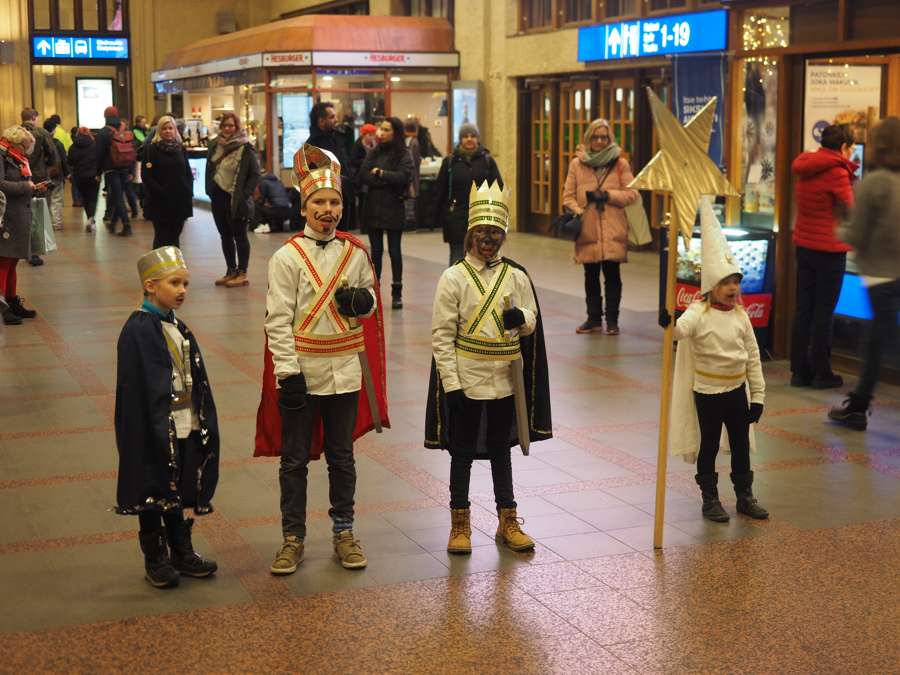
In the quiet days between Christmas and New Year, an expat in Poland may hear an unexpected knock. Open the door and you find half a dozen children in crowns and capes, one carrying a huge golden star on a pole, singing a carol at full volume while an adult hovers behind them. Do not panic, and do not reach for your phone to call anyone: you have just met the kolędnicy misyjni - Poland's "mission carolers" - one of the country's most charming, and least explained, winter traditions.
Here is who they are, what the chalk they leave on your door means, and what to do when they sing at you.
Caroling with a purpose
Door-to-door caroling at Christmas is an old Polish custom, but the mission carolers give it a specific job. The groups - children and teenagers, always with an adult guardian - are organized by parishes under the Papieskie Dzieła Misyjne Dzieci, the Pontifical Mission Society of the Holy Childhood. Between Christmas and Epiphany they walk from home to home singing kolędy, offering Christmas wishes, telling residents about the lives of children in poorer countries, and collecting donations for them. They leave a blessing behind: the letters C+M+B chalked on or above your door, short for *Christus mansionem benedicat* - "may Christ bless this house."
The scale is remarkable. What began nationwide in Christmas 1993 with ten parishes and about a hundred children had, by 2009, grown to 383 parishes, some 17,000 caroling children, over 135,000 families visited and more than 1.1 million złoty raised in that one season. Today the organizers speak of hundreds of thousands of children, parents and animators taking part each season across Poland and in Polish communities abroad - from big-city parishes to tiny village congregations, and even hospital wards, where the groups carol from bed to bed.
Where the custom comes from
The roots are medieval. Dramas about the Three Kings performed at Epiphany appeared in the 14th century and spread in the 16th; groups of schoolboys imitating the Magi's procession, star aloft, are recorded in legends from that era. The custom was popular enough to worry authorities - Innsbruck banned it in 1522 - and it survived in German-speaking lands into the 19th century.
Its modern form is a 1950s reinvention: revived as a fundraiser for the Vatican's missions, it became the Dreikönigsaktion in Austria in 1955 and the Sternsinger ("star singers") in Germany in 1959. Poland caught the idea early - some parishes in the Tarnów diocese were caroling for the missions already in the 1980s - and in 1993 the Papieskie Dzieła Misyjne turned it into the national Kolędnicy Misyjni campaign that still runs today.
How a mission caroling visit works
The choreography is surprisingly standardized. Groups of five or six children rehearse a short program - a few kolędy carols, wishes, sometimes a small scene - dress as the Three Kings, angels or shepherds, and carry a colorful star plus a labeled money box naming that year's cause. An adult guardian accompanies every group, responsible for safety and for the group's credibility. On St Stephen's Day (26 December) or the nearest Sunday, the groups gather for a Mass at which the priest formally sends them out, and the rounds begin.
The campaign runs through the school-free days between Christmas and New Year and traditionally closes at Epiphany, 6 January - which the Church also marks as Missionary Children's Day, and when Poland's streets fill with the bigger public cousin of this tradition, the Three Kings parades.
Where the money goes
Each year has a focus country. In the 2024/2025 season the campaign helped over 12,000 children directly in the Democratic Republic of Congo and hundreds of thousands more across eight other countries; the 2025/2026 edition is focused on Sri Lanka, where organizers highlight children - especially those with disabilities - who lack proper housing, education and medical care. Over the years the collected offerings have paid for concrete projects: a hospital in Bagandou in the Central African Republic (over 1.5 million złoty), homes for street children in South America, Africa and Siberia, kindergartens and schools, feeding programs, water tankers in Brazil and more than thirty deep wells in Africa.
For the children doing the caroling, the organizers frame it as formation as much as fundraising: they learn geography, other cultures and languages, rehearse for weeks, and - as one coordinator put it - how to give their own time and talents without keeping a single złoty of what they collect. Many participants call it their first lesson in solidarity.
What to do when they knock
If a star-carrying group appears at your door, the etiquette is simple. You are being offered a short carol concert and a blessing; listening with a smile is the whole job. A donation is welcome but genuinely optional - a few złoty is completely normal, and nobody will check what you give. After the songs the children may chalk C+M+B above your door (the letters also stand for the names of the Magi - Caspar, Melchior, Balthazar - which is the friendlier explanation kids often give). The inscription is a blessing, not a marker for anything sinister; Poles leave it in place all year.
You will most likely meet them if you live in a house or block within a parish area, especially outside the big city centers, where the tradition is strongest. If you would rather not receive visitors, a polite "dziękuję" through the door is accepted without offense. And if your own children attend a Polish parish school or scout group, they can usually join a group - ask the parish office in early December.
A tradition that keeps the season going
For expats, the kolędnicy misyjni are also a useful calendar signal: in Poland, Christmas is not over on 26 December. The caroling season stretches from Christmas Eve to Candlemas on 2 February, and the mission carolers are how many families hear the year's first live kolędy. When the star singers appear at your door, you are watching a custom that links a 14th-century Epiphany play, a 1950s Austrian fundraiser and a modern Polish parish - all in one cold-afternoon knock.
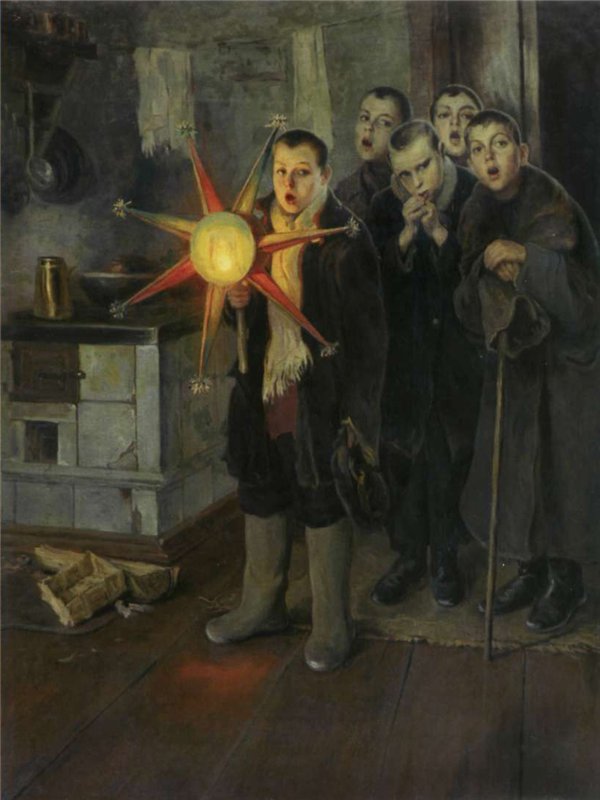
Cover photo: star singers at Helsinki Central railway station by JIP, CC BY-SA 4.0. Painting above: "Koliadky" (1880) by Mykola Pymonenko, public domain.
Frequently asked questions
Who are the children in costumes knocking at my door after Christmas?
They are kolędnicy misyjni - mission carolers: parish-organized groups of children, always with an adult guardian, who sing carols door to door between Christmas and Epiphany and collect donations for children in poorer countries. The campaign is run by the Pontifical Mission Society of the Holy Childhood and has been national in Poland since 1993.
Do I have to give them money?
No. A donation is welcome but optional, and a few złoty is a perfectly normal amount. The visit itself - the carols, the wishes and the door blessing - is the point; nobody will pressure you.
What does C+M+B written above my door mean?
Officially it is Latin: Christus mansionem benedicat, "may Christ bless this house". Popularly the letters are also read as the names of the Three Kings - Caspar, Melchior and Balthazar. It is a blessing for the household, and many Poles leave the chalk up all year.
When exactly do the mission carolers come?
Between Christmas and Epiphany, mostly in the school-free days after 26 December. Groups are formally sent out at a parish Mass on St Stephen's Day or the nearest Sunday, and the campaign closes on 6 January.
How can I tell an official group from scammers?
Look for the markers described by the organizers: children in costume with a colorful star, a money box labeled with the cause, and an adult guardian present at all times. Groups come from your local parish; if in doubt, you can ask which parish they are from and check with the parish office.
Where does the collected money actually go?
Each year funds a focus country - the 2025/2026 edition supports children in Sri Lanka; the previous one helped children in the Democratic Republic of Congo and eight other countries. Past projects include a hospital in the Central African Republic, wells in Africa and homes for street children. The Papieskie Dzieła Misyjne publish project summaries on missio.org.pl.