Gromniczna: Poland's Candlemas and the thunder-candle of 2 February
The essentials: Gromniczna is Poland's Candlemas on 2 February - the Feast of the Presentation, closing the Christmas season. Poles bring tall decorated candles called gromnice to be blessed at Mass; traditionally the blessed candle protected the home from storms and fire.
In the first days of February, keep an eye on the people heading to church on a weekday morning: many will be carrying a tall candle dressed up with sprigs of boxwood, ribbons and paper flowers, as carefully as if it were a newborn. This is Gromniczna - Poland's Candlemas, 2 February - the day the Christmas season officially ends, and the day Poles bless the most storied candle in the country's folk tradition.
For expats it is a small, beautiful window into how deeply candle, calendar and weather are wired into Polish culture. Here is what the day is about.
The last day of Christmas
The church feast on 2 February is the Presentation of the Lord, forty days after Christmas, also known as the Purification of Mary - in Polish, Święto Matki Boskiej Gromnicznej. Liturgically it closes the Christmas cycle: nativity cribs stay up in churches until this day, and the kolędy carolling season ends with it. In many homes the Christmas tree and decorations survive until Gromniczna too; taking them down before 2 February was traditionally considered bad luck. When the candles come out, Christmas is officially over.
A midwinter date Europe shares
Poland is not alone in marking 2 February. Across the Catholic world it is Candlemas - in France it is crêpe day, in Germany Maria Lichtmess - and in North America the same date belongs to Groundhog Day and its weather forecast. The Polish version is distinctive for how completely it revolves around a single object: the thunder-candle. Where other countries feast or watch marmots, Poland blesses hardware against lightning.
The candle named after thunder
The star of the day is the gromnica - a long candle whose name comes from the old Polish adjective *gromny*, "thundering, booming". Its first job, for centuries, was protection: a blessed gromnica was the household's shield against lightning strikes and storms.
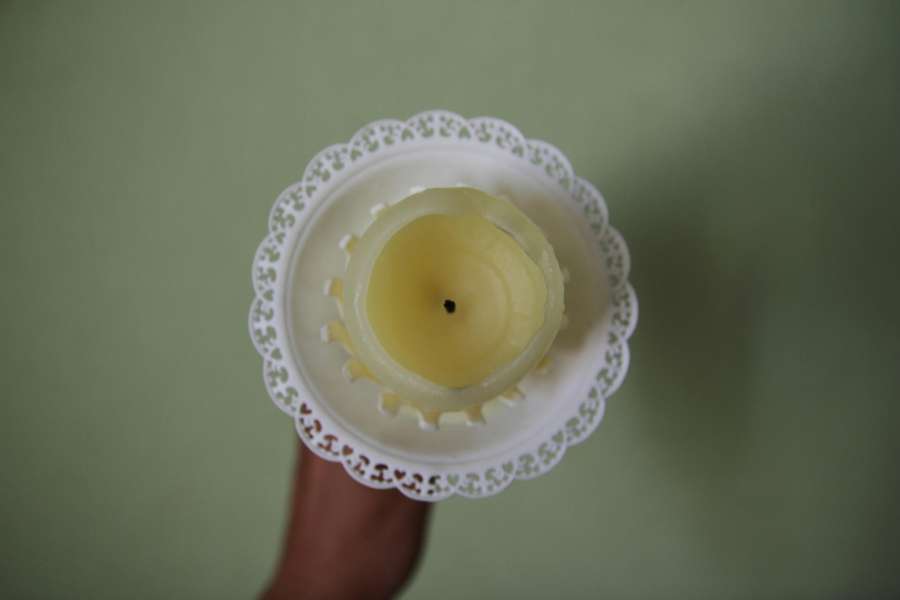
A traditional gromnica had to be beeswax, made by melting down used honeycombs - a natural substance credited with health-giving properties. Before being carried to church it was dressed up with greenery - sprigs of boxwood, myrtle, periwinkle or juniper - plus artificial flowers and a bow, usually of white or light-blue ribbon. Today most gromnice are paraffin, but the decorated look survives, and candles come with a lace-paper drip collar called an okapnik, like the one in the photo above.
At Mass on 2 February the candles are blessed in a rite built around the meaning of light in human life, and people carry their gromnica home - in the old days trying to keep the blessed flame alive all the way, because it going out on the road was a bad omen.
What the gromnica was for
The Ministry of Culture's heritage write-up reads like an inventory of a pre-electricity insurance policy. With a lit gromnica, the farmer blessed the house, farmyard and fields, burned a cross into a ceiling beam, and made the sign of the cross in smoke over doors and windows. Hearth and kitchen fires were lit from it - and if the fire caught easily, it promised harmony in the home. People "swallowed" the smoke of an extinguished gromnica as protection against sore throats and tooth decay, and walked it around cattle to keep the herd healthy and witches out.
At life's critical moments, the candle was there. It was lit to greet the priest bringing the viaticum to a sick person. It was placed in the hand of the dying, to ease the passing. During a storm it went into the window - or in some regions, was carried around the house - against lightning; when a neighbour's house burned, it was carried outside with prayers to turn the danger away; during epidemics it was lit to guard people and animals.
The candle also marked the passing year in a quieter way: in many regions the gromnica was lit again at All Saints' and All Souls', carried to the cemetery, and burned on family graves - the same object guarding the living in February and honouring the dead in November.
Even the flame itself was read like a forecast during the Candlemas Mass: a crackling gromnica foretold a stormy year, and wax dripping heavily meant winter would linger long.
The candle became such a fixture of Polish winter life that it walked into art. The painting further down this article is by Teodor Axentowicz (1859-1938), a Polish-Armenian painter famous for his scenes of Hutsul highland life: a girl in a snowy landscape, wrapped against the cold, carrying her gromnica past a wooden church. It was painted over a century ago, and the scene is still recognisable in any Polish village on 2 February.
Gromniczna today
The practical modern version is simple. In the days before 2 February, churches and religious-goods shops sell ready-decorated gromnice of every size, from modest to extravagant. You bring your candle to Mass on 2 February - morning or evening, both exist in most parishes - the priest blesses them, and the candle goes home to a cupboard or a spot by a holy picture, waiting for storms, power cuts and important moments. Plenty of younger Poles treat it purely as a beautiful custom rather than protection, and the blessing is open to anyone who attends; it is a normal Mass, not a closed ritual.
The custom is also having a quiet urban revival. Ethnographic museums run Candlemas workshops where children decorate gromnice with ribbons and tissue flowers, parish shops report steady sales, and in smaller towns the blessing can turn into a small procession of candles through the church. Folk museums such as the open-air skansens treat it as one of the anchor dates of the winter calendar.
The date is not a public holiday, so offices and shops run normally. But if you want to see it, step into any parish church on the morning of Tuesday 2 February 2027 - or ask a Polish grandmother why she keeps that enormous ribboned candle in the wardrobe.
How to take part as an expat
There is no etiquette trap here. Buy a gromnica - church stalls sell them in the days before, typically for a small donation - and join the 2 February Mass. During the blessing, people raise their candles; you simply hold yours up too. Afterwards many people carry the candle home visibly, unwrapped, which is why the trams that morning look oddly festive. If you miss the day itself, some parishes bless candles at the nearest Sunday Mass as well. And if a Polish friend lights an old candle when a summer storm rolls in, you now know why.
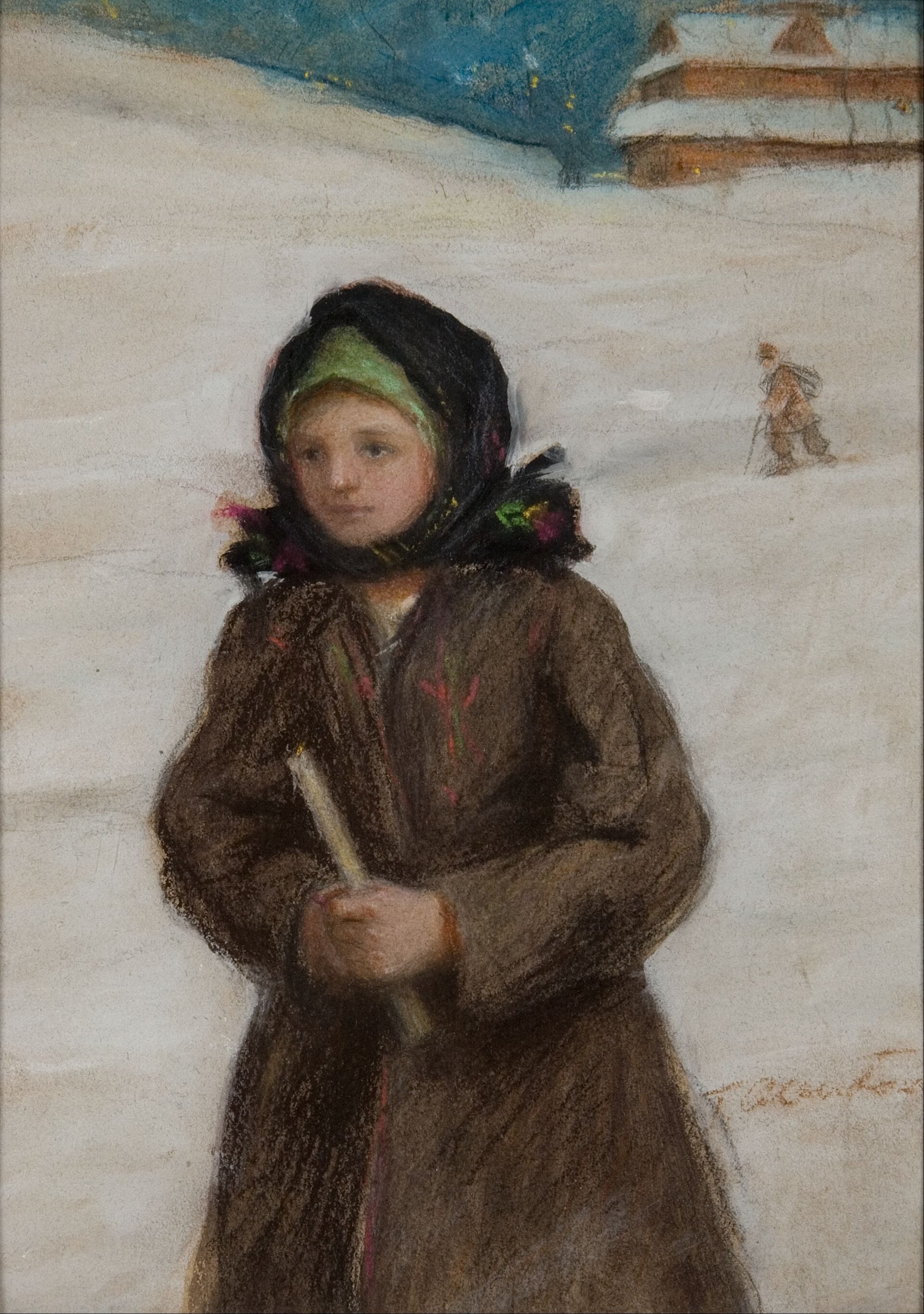
Cover photo: a gromnica with its traditional lace drip collar (okapnik) by Agata Stanisz, CC BY-SA 3.0 PL. Photo above: "Girl with a gromnica" by Teodor Axentowicz, public domain.
Frequently asked questions
Where does the English name "Candlemas" come from?
From exactly the same ritual: it is the "Mass of candles". The feast commemorates the presentation of the infant Jesus at the Temple forty days after his birth, when Simeon called him "a light for revelation" - which is why light and candles became the day's symbol across Europe.
Is Candlemas (2 February) a public holiday in Poland?
No. Gromniczna is a church feast, not a day off - offices, shops and schools run normally. The candle blessing happens during ordinary morning and evening Masses, so anyone can attend before or after work.
What exactly is a gromnica?
A long candle, traditionally beeswax, decorated with greenery, flowers and ribbons, and blessed at the Candlemas Mass on 2 February. The name comes from the old Polish word gromny, "thundering", because its traditional role was to protect the home from storms and lightning.
When do Poles take down Christmas decorations?
Traditionally after Gromniczna. The nativity crib stays in churches until 2 February, carols are sung until that date, and many families keep the tree up through Candlemas as well. If you see Polish Christmas trees still standing at the end of January, that is tradition, not laziness. When they do come down, our [Christmas tree guide](/a/christmas-tree-poland-buying-real-tree-prices-disposal-guide) covers the disposal rules.
Can non-Catholics attend the candle blessing?
Yes. It is an ordinary parish Mass with a blessing rite; nobody checks affiliation, and you can simply watch. If you bring a candle, buying a decorated one from the church stall beforehand is the normal way.
What is the connection between Candlemas and weather lore?
Polish folk tradition read omens from the blessed candle itself: a crackling flame foretold a stormy year and dripping wax a long winter. The day sits at the meteorological midpoint of winter, which is why so many cultures mark 2 February with weather predictions - Poland just does it with candles.