Walentynki: Valentine's Day in Poland and the city of lovers
The essentials: Walentynki is Valentine's Day in Poland on 14 February - not a public holiday. Couples exchange flowers, cards and gifts and dine out; the holiday only took hold in the 1990s, but St Valentine's relic in Chełmno anchors much older local tradition.
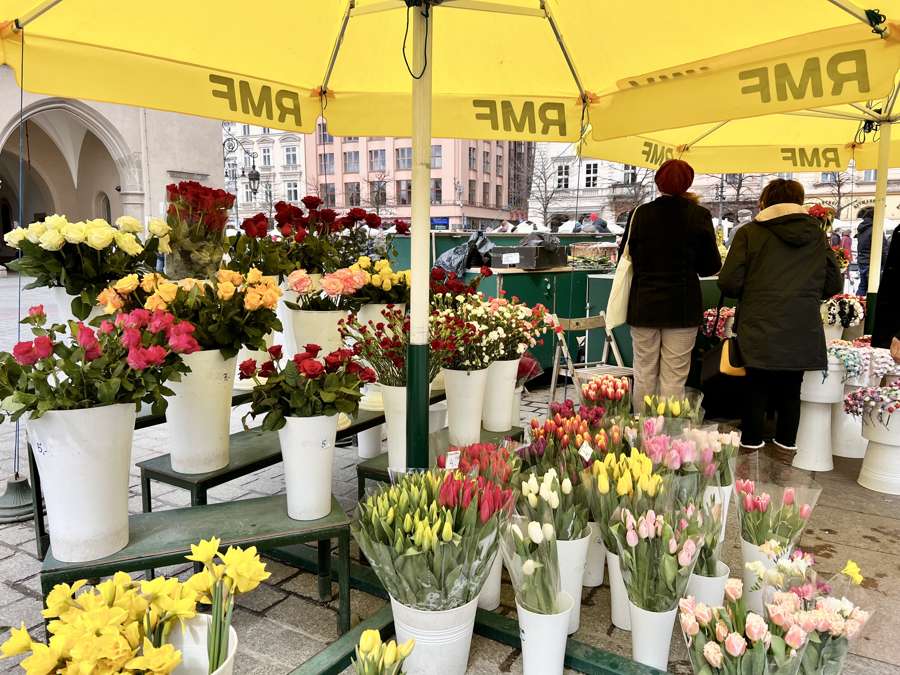
Walk into any Polish shopping centre in early February and you will hit a wall of red: heart-shaped balloons, heart-shaped chocolates, roses stacked like cordwood at the florist. This is Walentynki - Valentine's Day, 14 February - and the remarkable thing about it is how new it is. Poland's favourite celebration of love arrived only in the early 1990s, yet today florists and restaurants call it the biggest day of their year.
For expats, it is an easy holiday to join and a genuinely odd one to understand. Here is how Poland fell for it, where it plugs into much older tradition, and how the day actually works.
A holiday launched like a product
Valentine's Day did not drift into Poland over centuries. It was, in large part, launched - by one woman with a marketing budget. In 1991 Nina Kowalewska-Motlik began publishing Harlequin romance novels in Poland, and to promote them she built a campaign around Valentine's Day 1992. She hung a 12-by-12-metre red heart on Warsaw's Palace of Culture - the first time the dour Soviet-built tower was ever decorated lightheartedly - bought six hours of prime-time state television to explain the holiday, coaxed the then prime minister on air with his wife, invented a "most kissable" contest (Polish had no word for it) and finished with a red formal ball that became the social event of the season.
It worked beyond anyone's expectations. The Catholic Church, crucially, raised no serious objection - in 1997 even Pope John Paul II congratulated believers on St Valentine's Day. Poles, and especially Polish women, took to it immediately; the nearest rival, Women's Day on 8 March, carried socialist baggage and had permanently ruined carnations as a romantic gift. Within a decade Valentine's Day had, in the words of one account, entered the canon of Polish feasts. Children now exchange paper hearts, and the heart symbol blankets advertising from late January - to the point that even defenders of the holiday admit a certain red-heart fatigue.
The earliest enthusiasts spread it in a touching way: the first Polish Valentine's craze ran on postcards. In the mid-1990s, shy teenagers and not-so-shy adults posted anonymous cards to signal feelings they could not say aloud - the word walentynka came to mean both the card and the person it went to. Text messages and Instagram have replaced the post, but the word stuck - and card shops still do a brisk trade every February.
The saint behind the hearts
The day is older than its Polish incarnation, and older than roses. St Valentine was, according to the hard-to-verify early accounts, a bishop of Interamna - modern Terni in Italy - martyred around 269 or 347 AD. One legend has him secretly marrying young couples against an imperial ban; a more plausible version credits him with miraculously healing a philosopher's son. For the next thousand years people prayed to St Valentine not about love at all, but for relief from epilepsy and mental illness. Only in the late Middle Ages, first in England, did he become the patron of lovers.
The cult reached Poland the old way, centuries before the marketing campaign - carried from Bavaria and Tyrol along with devotion to the saint. Poland's folk calendar even kept a weather proverb for his day: *Gdy na św. Walenty mróz, chowaj sanie, szykuj wóz* - "if it freezes on St Valentine's, put away the sleigh and ready the cart," meaning spring is on its way.
A piece of the saint in Poland
Here is the part most expats never hear: Poland holds real relics of St Valentine, and a dozen or more churches and monasteries keep them. The most famous is in Chełmno, a small Gothic town in Kujawsko-Pomorskie, where the parish church of the Assumption preserves a fragment of the saint's skull. It sits in a silver reliquary made in the 17th century, commissioned by a noblewoman as a votive offering for her daughter's healing - and you can see it through glass. In Bieruń in Silesia, a St Valentine sanctuary drew pilgrims for over 300 years, who came praying for help with mental illness and epilepsy. Parishes in Kalisz and Galew keep prayers and a litany to the saint, including ones "for love" and "for the right choice of life partner."
Chełmno: the city of lovers
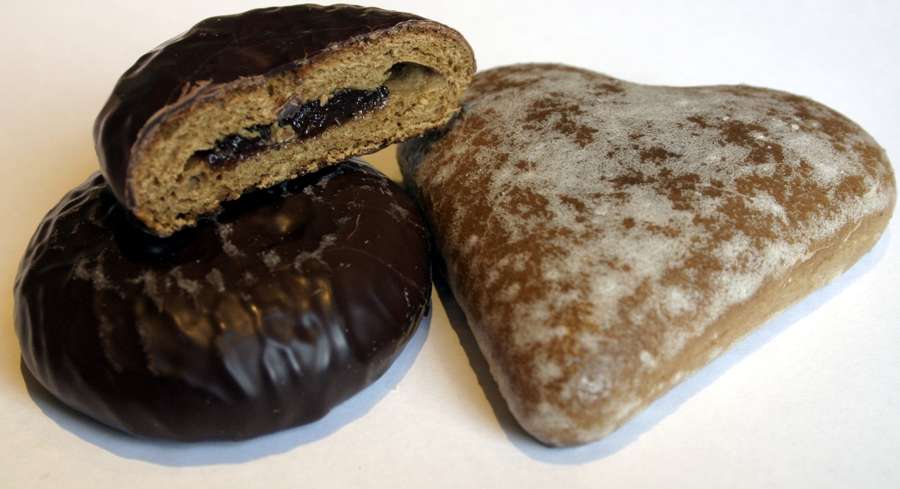
Chełmno has turned its relic into an identity. Since 2002 the town has celebrated Walentynki Chełmińskie, branding itself - with a registered trademark, no less - as the City of Lovers. The 25th edition ran 13-16 February 2026 with concerts on the market square (Justyna Steczkowska, Lanberry and Michał Szczygieł headlined on 14 February), a St Valentine's fair, workshops and exhibitions, all built around the church and its relic. The festival returns each February, and the town pairs naturally with a Toruń weekend - the gingerbread capital is just 45 minutes away, and heart-shaped Toruń pierniki, like the ones in the photo above, are probably the most Polish Valentine's gift that exists.
How Poles celebrate today
The modern Polish Valentine's is recognisably Western, with local colour. Couples exchange cards and small gifts - flowers, chocolates, jewellery - and go out for dinner or a film; florists and restaurants report it as their single biggest day of the year. Reservations at good restaurants in Warsaw, Kraków or Wrocław disappear days ahead, and roses spike in price. Schools and offices stay quiet about it, though children do swap paper hearts.
The holiday also has its critics, and Poles argue about it every February. Objections mirror the Halloween debate: an Anglo-Saxon import, aggressively commercial, hard on single people, and - say romantics - a poor substitute for showing love daily. Some commentators prefer to champion Noc Kupały, the midsummer Slavic night of love, as the "native" alternative. But the ethnologists who study it note that Walentynki now sits comfortably inside Polish tradition rather than outside it: a country soaked in the cult of saints simply reconnected with one of its own.
What to expect on 14 February
Practically speaking: Valentine's Day is not a public holiday - shops and offices run normally. The next one falls on Sunday 14 February 2027, which means restaurant demand will compress into that weekend; book well ahead if you plan a dinner out. Flowers are the default gift and available everywhere, including 24-hour petrol stations, for the forgetful. If you want the full Polish experience, the Chełmno festival weekend is the move; if you want a quiet one, a box of heart-shaped pierniki from Toruń and a home dinner will be read as charmingly local. And if you are still in Poland's long run of winter feast days, the season's candles come first - Gromniczna on 2 February - with the hearts following twelve days later.
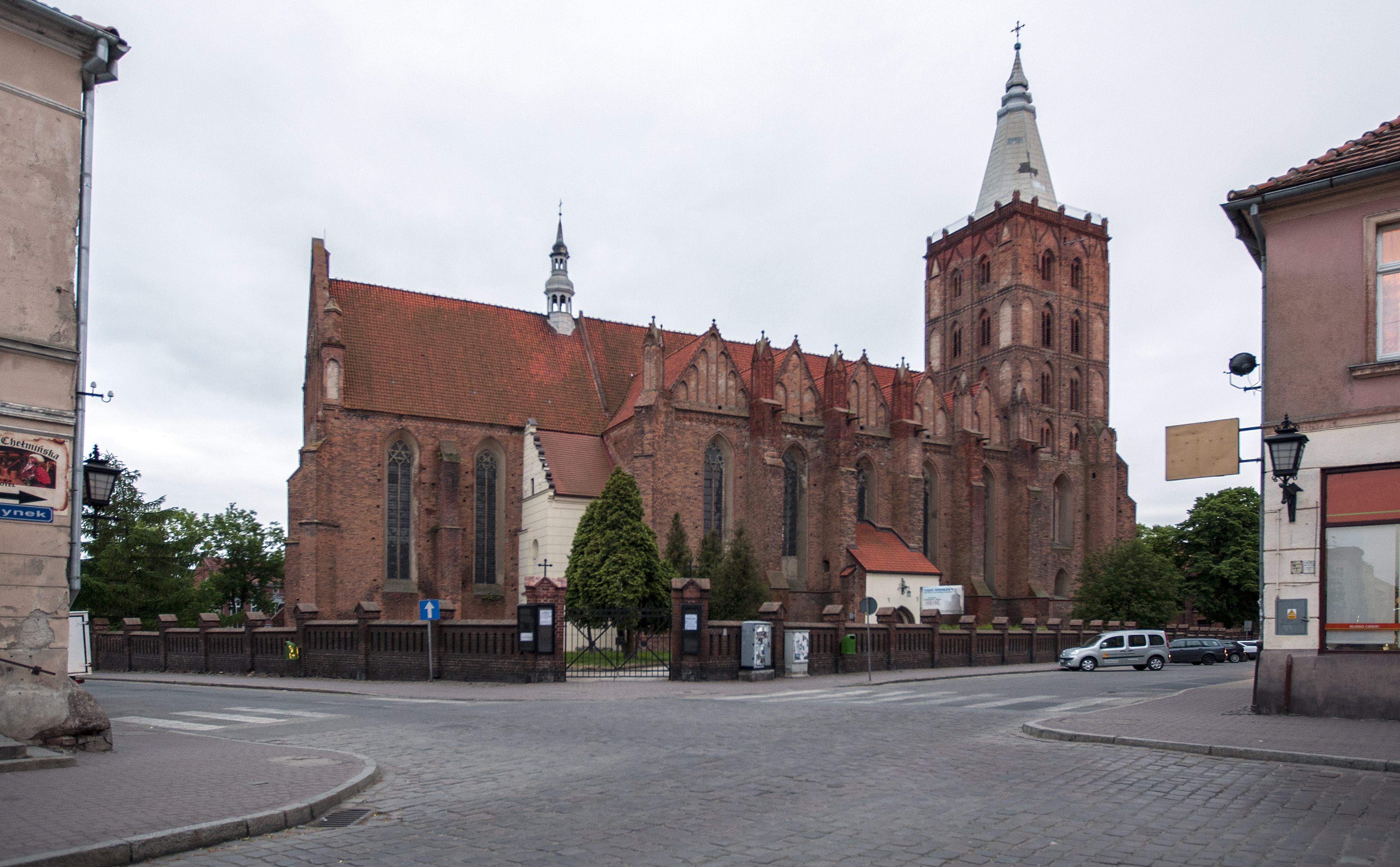
Cover photo: heart-shaped Toruń gingerbread by Marcin Floryan, CC BY 2.5. Photo above: the Assumption church in Chełmno by Jerzy Strzelecki_Che%C5%82mno_(Poland).jpg), CC BY-SA 3.0.
Frequently asked questions
Is Valentine's Day a public holiday in Poland?
No. Walentynki on 14 February is a normal working day - shops, offices and schools run as usual. Celebration happens in the evening: dinners, gifts and events.
How long has Poland celebrated Valentine's Day?
Only since the early 1990s. A 1992 promotion by Harlequin publisher Nina Kowalewska-Motlik - including a giant heart on Warsaw's Palace of Culture - is credited with launching it. That makes the Polish holiday about 34 years old as of 2026.
What is Chełmno and why is it called the city of lovers?
Chełmno is a Gothic town in Kujawsko-Pomorskie whose parish church holds a relic of St Valentine in a 17th-century silver reliquary. Since 2002 it has hosted Walentynki Chełmińskie each February and trademarked itself the City of Lovers. It pairs well with a Toruń day trip.
What gifts do Poles give on Valentine's Day?
Flowers - especially roses - chocolates, cards and small gifts are standard, plus dinner out. Carnations are avoided, thanks to their Women's Day association. A heart-shaped Toruń gingerbread is a distinctly Polish option.
Do Poles celebrate anything instead of Valentine's Day?
Some prefer Noc Kupały, the Slavic midsummer night in June, as a native celebration of love. In practice both coexist: Walentynki is the widely observed February date, embraced even by the Catholic Church, while Noc Kupały remains a folk and festival event.
When is the next Valentine's Day in Poland?
Sunday 14 February 2027. The date never moves, but because it is not a day off, a Sunday Valentine's concentrates restaurant bookings into that one weekend - reserve early.