Gdańsk Library Card: Documents, Deposits and Borrowing
The essentials: Gdańsk WiMBP's detailed rules provide a no-PESEL borrowing route of three volumes with a 30 zł deposit per volume. Bring identity and address information, clarify your registration route and check the actual due dates.
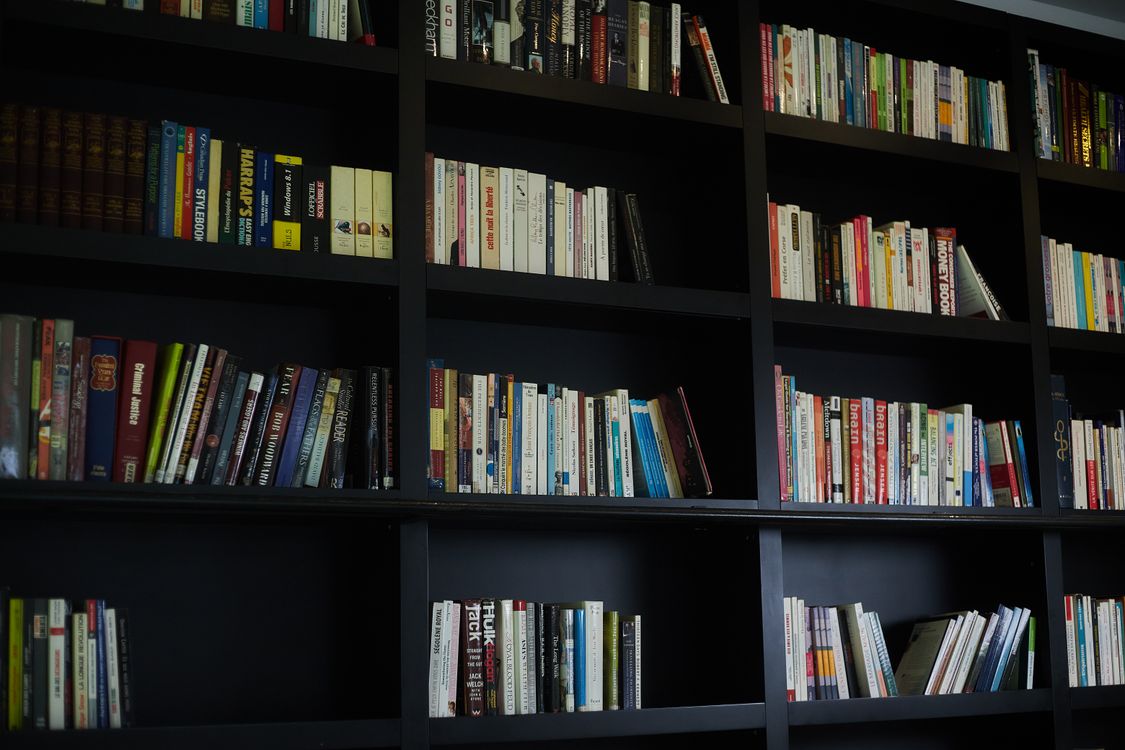
Cover: ulrich Keutchatang, Pexels source photograph, Pexels License. Image unchanged. Books arranged on dark shelving. Illustrative library and reading context, not a photograph of the named Polish library or branch.
A Gdańsk library card can make the city easier to live in, especially if you want books without buying every title or a regular place to explore language materials. The useful first step is understanding the local system's document rules rather than assuming that all Polish libraries handle foreign readers alike.
This guide covers Wojewódzka i Miejska Biblioteka Publiczna im. Josepha Conrada-Korzeniowskiego w Gdańsku, shortened to WiMBP. Its current linked collection regulations include an important route for readers without PESEL: a lower borrowing limit and a per-volume deposit. That detail matters more to a new arrival than a general promise that library membership is free.
Choose WiMBP, not any library in Gdańsk
Use the WiMBP website to identify its branches and current regulations. University and other specialist libraries can have different membership rules. A card accepted across WiMBP branches does not automatically cover every library in the city, even when the catalogue or building name looks familiar.
Pick a branch around both the outward and return journey. The current regulations generally require returning materials to the branch from which they were borrowed. A branch convenient during one sightseeing day may be less convenient when you need to return a book after work several weeks later.
Read the detailed rules as well as the short signup page
The brief official signup page tells readers to visit a branch, show identity documentation, complete the form and receive the Metropolitalna Karta do Kultury. The detailed regulations add online activation, accepted document examples, address information and a specific no-PESEL borrowing provision.
Do not interpret the short page's reference to a Polish identity card as a complete exclusion of all other documents. The detailed rules list examples including passport and residence card, then separately describe borrowing without PESEL. Bring your actual document and ask how the branch will record your situation.
Prepare identity and address information
The regulations' general registration paragraph asks for a valid photo identity document with PESEL and a permanent or temporary registered address. Examples include identity card, driving licence, passport, student card and residence card. Later, the rules expressly provide for readers without PESEL, so the document should be read as a whole.
If you have no PESEL or your address circumstances do not fit that general wording, ask the branch to explain the applicable registration route before relying on a full borrowing allowance. Do not invent a PESEL or treat a different document number as though it were one. An explicit question is better than silently completing the form incorrectly.
Without PESEL, plan for the deposit
The current linked regulations say a reader without PESEL can borrow up to three volumes at one time, with a 30 zł deposit for each volume. This is a specific distinction, not a statement that foreign citizens are categorically barred from borrowing or that all foreign readers must pay the same deposit.
Ask how the branch takes and returns the deposit and keep the receipt or other record it provides. Do not assume a payment method from an unrelated library. If the deposit affects how much you want to borrow, choose a smaller first loan. The relevant distinction in the written provision is PESEL status, not the language you speak at the desk.
Online signup still needs a visit
The regulations allow online registration, followed by activation during a personal visit to any branch within five days. That makes online registration a preparatory step, not a fully remote replacement for identity verification and account activation. Plan the visit before starting if the deadline will be inconvenient.
At the desk, check that the account is active and learn how to inspect loans and ready-for-pickup messages. A submitted online form is not proof that you can already collect reserved materials. Leave with a working understanding of the account rather than only a confirmation that the form was sent.
Understand the two card routes
WiMBP uses the Metropolitalna Karta do Kultury, or MKK, and recognises a valid Gdańska Karta Mieszkańca, or GKM, under its regulations. Electronic counterparts generated in the relevant application or website are also recognised, but the rules require logging in during the visit.
Photographs and screenshots are not accepted in place of those electronic counterparts. This is a practical detail worth remembering before leaving home. A saved image may show your name and number while still failing the library's presentation requirement. Ask which card or live digital version is active for your account.
Update the account after the calendar year
The regulations say the MKK or GKM library validity runs to the end of the calendar year, after which personal details must be updated in the computer system. This can be done in any branch. It is not the same as assuming every account runs for twelve months from its signup day.
If you register late in the year, remember that distinction. An account update is also separate from renewing a loan: changing personal details does not automatically extend a book's due date. Check the actual dates and account status instead of treating all forms of renewal as one action.
Borrowing limits depend on the situation
The ordinary limit is five materials in each branch, with an overall maximum of ten items. The regulations describe additional format allowances at Biblioteka Manhattan and separately state the no-PESEL limit of three volumes with deposits. Read the limit applying to your account rather than combining every number into one large allowance.
For a first visit, take a manageable amount. Check the condition before leaving and report damage. A smaller first loan gives you a chance to learn the account and return process without juggling several branches or formats. The maximum is available capacity, not an instruction to use all of it.
Books and games have different deadlines
Books, including spoken books, and the listed film and music formats are lent for no more than thirty days under the regulations. Board games have a period no longer than fourteen days. The actual date in your account is the one to record, especially when borrowing different formats together.
A shorter loan should not be treated as an error merely because you expected a calendar month. Ask at checkout if a date is unclear. Put each deadline in your own calendar rather than assuming a single reminder will cover everything you carry out of the branch.
One extension is conditional
The rules allow a request to extend ordinary listed materials by no more than thirty days, or games by up to another fourteen days, provided no other reader has reserved the item. After one extension, the materials must be returned; if unreserved, they may be borrowed again under the rules.
Do not count on an automatic sixty-day book loan from the start. Check whether renewal is available and confirm the changed deadline. If it is not available, arrange the return. Your wish to finish a book does not remove the next reader's reservation or the library's recorded due date.
Orders and reservations have different pickup windows
The regulations distinguish ordering available materials from reserving materials. An available-item order is ready when the account shows it prepared for collection and the library sends the relevant notification. Ordered materials must be collected within three days, while the described reservation pickup window is seven calendar days.
Read the notice carefully instead of remembering only that the library holds books for a week. The rules also describe temporary ordering or reservation blocks after repeated uncollected requests. If your plans change, deal with the request rather than leaving the library to hold an item you no longer intend to collect.
Return to the right branch
The default rule is return to the branch that lent the material. An exception allows return elsewhere when the branch is closed for reasons such as refurbishment or relocation. That exception should not become a general assumption that every convenient branch accepts every ordinary return.
If your lending branch is unexpectedly unavailable, check the library's current instructions. Do not leave books outside a closed door or in an unrelated return slot. A record of where you borrowed and the account item details will help staff explain the proper route.
Free registration is not a promise of zero charges
The short signup page describes receiving the MKK free of charge, while the detailed rules include deposits, replacement-card charges and consequences for overdue or damaged materials. These are different questions. Free membership does not remove responsibility for borrowed property or make every service cost-free.
Ask about any amount before agreeing to a paid service or deposit. For lost materials, report the problem and follow the library's procedure rather than buying a replacement at random. A prompt conversation is usually more useful than letting an unresolved account problem grow while you avoid another visit.
Register children through the proper adult route
For readers under eighteen, a parent or legal guardian signs the commitment and is responsible for the consequences of the child's use. The detailed rules also describe linking a minor's account to the guardian's account. Do not assume a child can be added casually to your own borrowing record without the relevant procedure.
Bring the appropriate documents and ask whose contact details receive notices. A family borrowing routine should make it clear which items are on which account. That prevents confusion when an adult's book and a child's game have different deadlines or the family collects from more than one branch.
Ask for an actual title or language
Registration does not guarantee a specific book, language collection or digital service is available in your chosen branch. Search the catalogue or ask about the exact title. Czy mają Państwo książki po angielsku w tej filii? asks about English books in this branch, rather than assuming the whole system's holdings sit on one shelf.
A useful first visit ends with an active account, an understood deposit arrangement if applicable, a small loan and a clear return plan. Our other city library guides show why local details matter. In Gdańsk, the no-PESEL provision, live digital-card requirement and different pickup windows are the details worth carrying with you.
Related: Kraków library card guide and Warsaw library card guide.
Frequently asked questions
Can a reader without PESEL borrow?
The checked rules explicitly allow up to three volumes, with a 30 zł deposit for each. Clarify registration documents and the deposit process with the branch.
Does a screenshot replace the electronic card?
No. The regulations require logging in to the recognised electronic card; photographs and screenshots are not accepted.