How to Get Internet Installed in a Polish Apartment as a Foreigner
The essentials: Check fiber coverage at your address with Orange, Play, Vectra and Netia - 80.1% of Polish households are in fiber reach (UKE 2025 report). 24-month plans run 300 Mb/s to 1 Gb/s at roughly 40-90 zł/month. Order with a passport, book one technician visit, and get the landlord's consent first.
Home internet is the utility expats need first and understand last. The good news: Poland's fixed internet is fast, cheap by European standards, and - once you decode the offer pages - simple to order. Four out of five Polish households now sit within reach of a fiber network, and the market's big names all sell the same basic product: a 24-month contract for a fiber connection at 300 Mb/s to 1 Gb/s and up. Here is how the market looks, what installation involves, and the decisions that actually matter, with offers checked October 21, 2026.
The lay of the land: fiber is the default
The telecom regulator's 2025 market report puts the fiber network within reach of 80.1% of Polish households - about 13 million homes - and calls fiber the basic fixed-access technology in the country. In Warsaw, Kraków and other large cities the practical default is exactly that: a fiber line to your flat (FTTH) from one of the major operators, with cable and mobile-based home internet as fallbacks where fiber has not reached a building.
*Data source: UKE, "Raport o stanie rynku komunikacji elektronicznej w 2025 roku" (published June 30, 2026), accessed October 21, 2026.*
What the big offers actually look like
Orange (Światłowód). The flagship fiber line advertises speeds up to 8 Gb/s at the top end, but the mainstream tiers are 300 Mb/s, 600 Mb/s and 1 Gb/s on 24-month contracts with a two-year price guarantee. Current promotional structure: 300 Mb/s from 39.99 zł/month for months 1-12, then 70 zł for months 13-24 (with discounts); 600 Mb/s free for the first 6 months then from 80 zł; 1 Gb/s free for the first 9 months then from 90 zł. Territorial limits apply to some promos.
Play (Światłowód). Three tiers - 300 Mb/s, 600 Mb/s and 1 Gb/s - with a Connect Box router included in the package framing (router rental listed at 5 zł/month), a 50 zł activation fee, a 24-month contract, and monthly discounts tied to e-invoicing and marketing consents.
Vectra. Fiber from 300 Mb/s to 1 Gb/s; its headline 300 Mb/s offer runs 49.99 zł/month with discounts, and - unusually - Vectra advertises a no-commitment option alongside contract plans, relevant if you are not sure how long you will stay.
The pattern to internalize: headline prices are promotional and condition-laced (e-invoice discounts, marketing-consent discounts, contract length), so compare the full 24-month cost, not month one. One small mercy: the marketing-consent discount is a choice, not a trap - you can decline the calls and pay the few złoty more, which privacy-minded newcomers often prefer.
A fourth name completes the picture: Netia, the other major fixed-line player, whose fiber footprint overlaps the majors in many cities. Its offers change address by address, so it belongs on your coverage-check list rather than in a price table.
*Data source: orange.pl, play.pl, vectra.pl offer pages, checked October 21, 2026 - promotional prices, verify current terms before ordering.*
Checking coverage: the step that decides everything
Fiber coverage is building-specific - your street can have it while your stairwell does not. Every operator's site has an address checker ("sprawdź dostępność"): enter your exact address including the flat number. In practice, check all three majors (and any local player your building's residents recommend) before choosing; in large cities you will usually have a choice, in older tenements sometimes only one. If nothing shows, ask the building's administrator (wspólnota or spółdzielnia) whether a fiber installation is scheduled - buildings get lit in waves.
*Data source: operator coverage-check flows, orange.pl/play.pl/vectra.pl, checked October 21, 2026.*
Ordering as a foreigner
You can order online or by phone; online forms are Polish-first but follow a standard shape: address, plan, installation date, identity. What you need: a Polish phone number, an email, and an identity document - a passport works; a PESEL smooths the credit-check-style verification but is not universally required, and operators will route you to a phone call if the online form balks. Installation is normally free or cheap under the current promos (Play lists a 50 zł activation fee) and takes one technician visit of one to two hours: they run the fiber to a wall socket, mount the terminal, and set up the router. Someone needs to be home, and in a rental, drilling and cable runs technically need the landlord's consent - ask first, keep the answer in writing.
*Data source: operator offer and order pages as cited above; installation process described from operator documentation, checked October 21, 2026.*
The installation visit, hour by hour
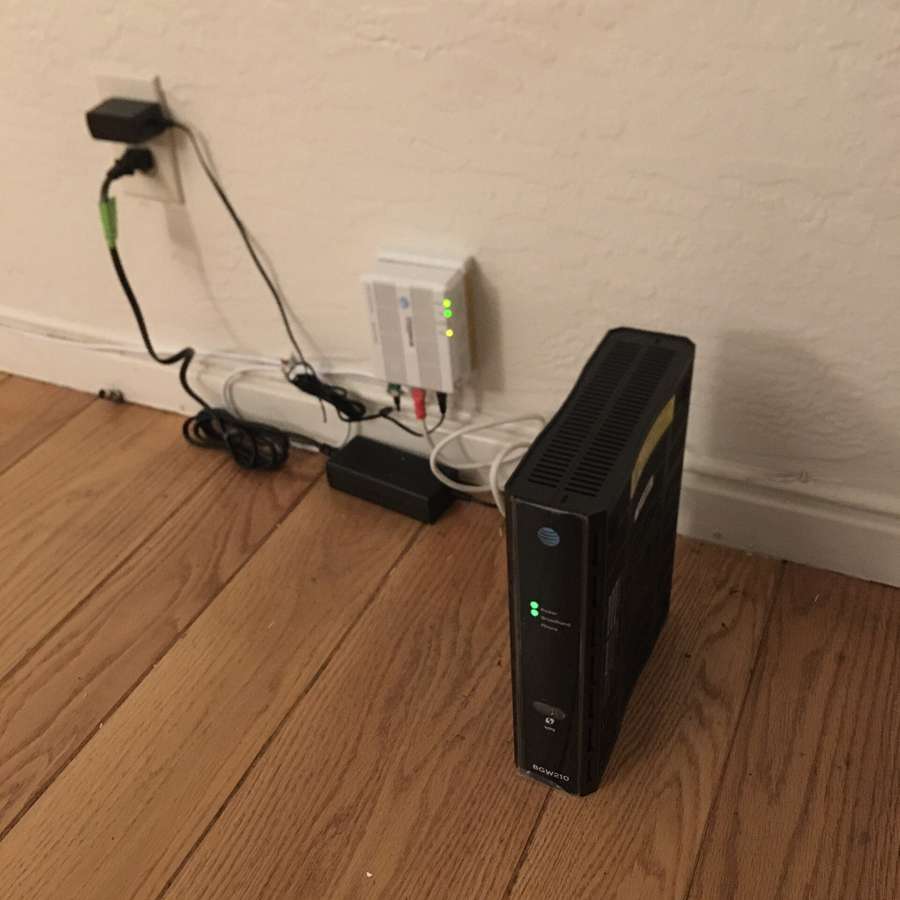
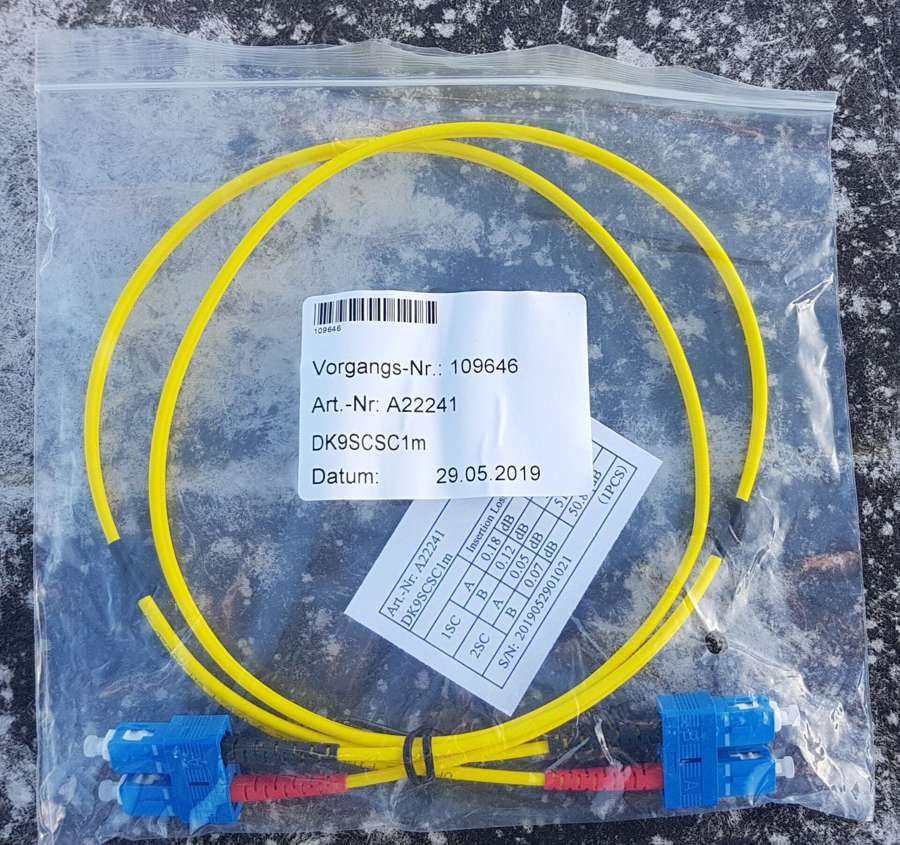
Knowing the drill removes the stress. The technician confirms the address and your flat, finds the building's distribution point, and runs the fiber - through existing ducts where possible, along a drilled channel where not. The terminal (a small box) lands on a wall near a power socket; the router connects to it. Before leaving, the technician should demonstrate a working connection - run a speed test on your own phone while they are still there. You sign an installation report; photograph it. If the visit reveals the building is not actually ready (coverage checkers are optimistic), the order converts to a future date or a fallback technology rather than a fee.
*Data source: installation process per operator documentation, orange.pl/play.pl/vectra.pl, checked October 21, 2026.*
Speed: how much do you need?
Marketing pushes gigabit; life needs less. Video calls and 4K streaming sit comfortably in double digits of Mb/s, so a 300 Mb/s line already over-serves a normal household; 600 Mb/s covers heavy multi-device homes; 1 Gb/s matters for large file work and bragging rights. The tier that actually changes your day is upload speed for remote work - check the upload figure, not just the download headline. And remember the router's Wi-Fi, not the fiber, is usually the bottleneck: a wired test at the router is the only honest speed test.
*Data source: operator tier structures as cited above; usage guidance is editorial.*
Contract or no contract
The 24-month contract buys the promotional pricing; breaking it early usually means paying back discounts or a fee. If your stay in Poland is uncertain, look for the no-commitment variants (Vectra advertises one; other operators offer them at higher monthly prices) or mobile-based home internet with monthly terms. Read the early-termination clause before signing - it is the clause expats meet most.
*Data source: operator offer pages as cited above, checked October 21, 2026.*
When fiber is not there: the fallbacks
In a building without fiber, cable operators and 5G/LTE home-internet boxes (router with a SIM, no installation) cover the gap - the same UKE report notes satellite internet growing as an option for places off the grid entirely. For a short-term rental, a 5G router or a large mobile data plan often beats fighting for a fiber installation you may never get approved.
*Data source: UKE 2025 market report, as above.*
Moving flats, cancelling, and the paperwork
Two life events matter. Moving: most operators let you transfer the contract to a new address if it has coverage - report the move early, because the transfer is a new installation visit, not a switch. Cancelling: notice goes in writing through the operator's channel (account panel, letter, or visit), and the end of a 24-month term is the natural, cost-free exit - the contract then typically converts to indefinite, which you can leave on notice. Returning the rented router is part of closing either way; keep the return receipt, because unreturned-equipment fees are the most common surprise charge on a final bill.
*Data source: operator terms structures as cited above, checked October 21, 2026.*
Frequently asked questions
How much does home internet cost in Poland?
Promotional 300 Mb/s fiber offers currently start around 40-50 zł/month, with 1 Gb/s tiers from roughly 80-90 zł/month after free introductory months, on 24-month contracts. Headline prices carry conditions (e-invoice and consent discounts), so compare total 24-month cost. Source: orange.pl, play.pl, vectra.pl, checked October 21, 2026.
Can I get internet installed without a PESEL number?
Generally yes - operators accept a passport for identity, though a PESEL smooths verification. If the online form rejects you, the phone sales line usually resolves it. Source: operator order flows as cited above, checked October 21, 2026.
How long does installation take?
One technician visit, typically one to two hours, once your address shows coverage; you book the date when ordering. In a rental, get the landlord's consent for the cable run first. Source: operator installation documentation, checked October 21, 2026.
Is 300 Mb/s enough for working from home?
Yes - video calls and streaming use a fraction of it. Check the upload speed in the offer details if your work involves large uploads, and test speeds wired at the router, not over Wi-Fi. Source: speed-tier structures from operator offers as cited above; usage guidance editorial. * Photos: a home Wi-Fi router and terminal by Mrbeastmodeallday, CC BY-SA 4.0; fiber optic patch cable by Asurnipal, CC BY-SA 4.0, both via Wikimedia Commons*