Kaucja in Poland: Rental Deposit Rules and Getting It Back
The essentials: A Polish residential deposit (kaucja) is capped at 12 times monthly rent (usually one month in practice), must be returned within one month of moving out, and is returned valorized - at the rent level on the return date, never less than paid. Deductions must be real claims, not normal wear.
The kaucja - the security deposit - is usually the biggest single payment after the first month's rent when you move into a Polish flat, and the most disputed payment when you move out. Polish law regulates it tightly for residential leases: there is a legal cap, a legal return deadline, and even a rule that can increase the amount you get back. Yet many expats never learn the rules, and some landlords count on exactly that. Here is how the deposit works under the Tenants' Protection Act as of October 2026 - and how to actually get your money back.
What the kaucja is, and what it is for
The kaucja is a sum the tenant pays at the start of the lease to secure the landlord's claims arising from the tenancy - unpaid rent, unpaid bills the tenant owed, and damage beyond normal wear. It is not a fee, not an extra month's rent, and not the landlord's money: it is your money held as security, and the landlord may keep only what corresponds to real, documented claims.
One clarification that matters in practice: the deposit rules in the Tenants' Protection Act apply to residential leases. They cover the standard private-market lease and najem okazjonalny (occasional lease) alike; institutional leases have their own closely related regime. Rooms in a shared flat rented informally, without any written contract, sit outside this protection - one more reason to always have a written umowa najmu.
*Data source: Act on the Protection of Tenants' Rights (ustawa o ochronie praw lokatorów), consolidated text Dz.U. 2023 poz. 725, art. 6 (eli.gov.pl), accessed October 21, 2026.*
The legal cap: twelve months, but one is the market norm
The law sets a ceiling, not a floor: the deposit may not exceed twelve times the monthly rent, calculated at the rate in force on the day the lease is signed. In the real private market, landlords almost always ask for one month's rent - occasionally two for a furnished premium flat. A demand for three or more months is legal but unusual, and worth negotiating down: for most ordinary flats, one month is the figure both sides expect.
A separate warning about cash flow at signing: the deposit is due on top of the first month's rent and, if you rent through an agency, the agency fee (typically one month's rent). Budget three months' rent upfront as the realistic cash requirement for a standard Warsaw rental.
*Data source: art. 6 ust. 1 of the Act as above; market practice is editorial observation, October 2026.*
The return deadline: one month after you move out
This is the rule every tenant should know by heart. The deposit must be returned within one month of the day you vacate the flat (or of the day you buy it, if you purchase the place you rent), after deduction of the landlord's legitimate claims from the tenancy. "When I find a new tenant", "after the annual utility settlement", or "once my accountant processes it" are not legal extensions - the one-month clock runs from handover of the empty flat.
If the deadline passes, the deposit becomes a straightforward overdue debt. Statutory interest for delay applies: the NBP reference rate plus 5.5 percentage points per year - with the reference rate at 3.75% since March 5, 2026, that works out to 9.25% annually on the withheld sum.
*Data source: art. 6 ust. 4 of the Act as above; interest per art. 481 § 2 of the Civil Code; NBP reference rate 3.75% from 2026-03-05 (nbp.pl official rates file), accessed October 21, 2026.*
The part almost nobody knows: valorization
The deposit is not returned in nominal zloty - it is returned in an amount equal to the monthly rent in force on the day of return, multiplied by the number of months' rent taken as the deposit. And never less than the amount paid. In plain terms: if your rent rose during a long tenancy, your deposit comes back proportionally higher. If you paid one month's rent of 3,000 zł in 2021 and your rent at move-out is 3,600 zł, the law entitles you to 3,600 zł - not the 3,000 you handed over. On a long tenancy this is real money, and very few landlords volunteer it.
*Data source: art. 6 ust. 3 of the Act as above.*
What the landlord may lawfully deduct
Deductions must correspond to actual claims from the tenancy: unpaid rent or utility amounts you owed under the contract, missing or damaged equipment listed in the inventory, and damage beyond normal wear and tear. "Beyond normal wear" is the contested border: scuffed paint after three years of living is wear; a burned countertop is damage. Faded walls, tired silicone, worn carpet in walkways - these are the flat aging, and billing them to you as fresh damage is the single most common deposit dispute. A landlord who deducts should be able to show what was broken and what the repair realistically cost.
The best protection exists before you ever pay: the handover protocol (protokół zdawczo-odbiorczy). The Act itself treats the protocol - documenting the flat's technical condition and the state of its installations - as the basis for settlement when the flat is returned. Sign one at move-in with dated photos of everything, and sign one at move-out. Tenants with two protocols almost never lose deposit disputes; tenants without them argue from memory.
*Data source: art. 6 ust. 1, art. 6c of the Act as above.*
Najem okazjonalny and the deposit
If your lease is najem okazjonalny - the occasional lease, signed at a notary - the deposit rules above work the same way: the twelve-times cap, the one-month return, the valorization. What differs is everything around it: the occasional lease gives the landlord faster eviction routes and tighter formalities, which is why many private landlords insist on it. For the deposit question specifically, your rights are unchanged - so a landlord who claims "this is najem okazjonalny, the deposit works differently" is wrong on that point.
*Data source: Rozdział 2a (art. 19a-19e) of the Act as above; deposit rules per art. 6 as above.*
If the landlord does not pay
Work up the ladder in order. First, a written demand (wezwanie do zapłaty) citing the one-month deadline from art. 6 ust. 4, sent to the landlord's address - registered letter, keep the receipt. Many deposits materialize at this stage, because the letter signals a tenant who knows the law. Second, payment order proceedings: undisputed money claims like an overdue deposit are exactly what Poland's electronic writ-of-payment court (e-Sąd in Lublin, EPU procedure) exists for - you file online, in English-friendly form fields, for a modest fixed fee, and the court issues a payment order without a hearing in straightforward cases. The district court (sąd rejonowy) is the fallback for contested cases. Keep the lease, both protocols, payment confirmations, and the move-out correspondence: that bundle is the whole case.
*Data source: procedure per the Civil Procedure Code payment-order framework; e-Sąd/EPU per e-sad.e-court.pl, accessed October 2026.*
The traps expats actually hit
Paying the deposit in cash without a receipt. Bank transfer to the landlord's account with "kaucja" in the title, every time. No written lease. Without it, the Act's protections are hard to invoke. Skipping the move-in protocol. Then every pre-existing scratch becomes "your" damage. Letting the one-month deadline pass silently. Write the day after it expires - delay reads as indifference. Confusing the deposit with the last month's rent. Withholding your final rent "because the deposit covers it" breaches the contract and hands the landlord a real claim; pay rent to the end and reclaim the deposit separately.
*Data source: editorial guidance grounded in the Act as above.*
Frequently asked questions
How much deposit can a landlord legally charge in Poland?
Up to twelve times the monthly rent for a residential lease. In practice the private market standard is one month's rent. Source: Tenants' Protection Act, Dz.U. 2023 poz. 725, art. 6 ust. 1, eli.gov.pl, accessed October 21, 2026.
When must my landlord return the deposit in Poland?
Within one month of you vacating the flat, minus any legitimate claims from the tenancy. After that, statutory interest for delay applies (reference rate plus 5.5 points - 9.25% as of October 2026). Source: art. 6 ust. 4 as above; Civil Code art. 481; NBP rates, accessed October 21, 2026.
Can my landlord keep the deposit for repainting?
Normal wear from ordinary living - faded paint, minor scuffs - is not damage and should not be billed to you. Deductions must reflect real claims, ideally documented against a signed handover protocol. Source: art. 6 and art. 6c as above.
Does the deposit amount change if my rent went up?
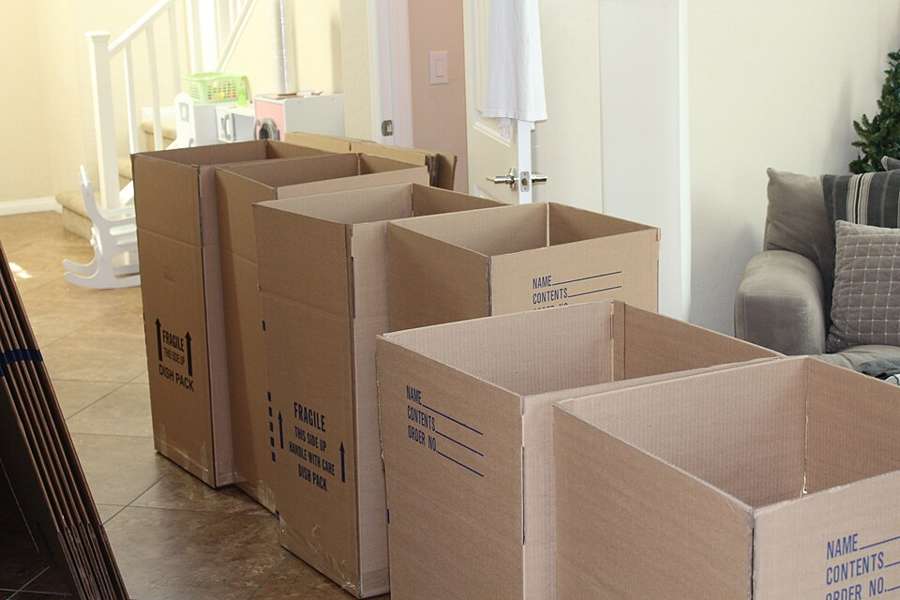
Yes - the returned amount equals the monthly rent on the return date times the number of months' rent taken, never less than you paid. Long tenancies with rent rises get a valorized, higher refund. Source: art. 6 ust. 3 as above. * Photos: house keys by Shixart1985, CC BY 2.0; moving boxes by MoveON moving, CC BY-SA 4.0, both via Wikimedia Commons*