Kefir, Maślanka and Zsiadłe Mleko in Poland
The essentials: Treat kefir, maślanka and zsiadłe mleko as separate shopping choices. Read the full product name, ingredients, fat percentage and quantity. Plain yogurt imagery or a similar bottle does not establish an equivalent ingredient.

Cover: Ngoc Binh Ha, Pexels source photograph, Pexels License. Image unchanged. Yogurt and fruit drinks, shown as wider fermented-dairy serving context. These are not identified as kefir, maślanka or zsiadłe mleko.
Poland's dairy aisle offers more than milk and yogurt. Kefir, maślanka and zsiadłe mleko appear in cups, bottles and different fat levels, sometimes beside flavoured versions. For a new arrival, the useful question is not which one has the most impressive health slogan. It is what you are buying and whether it fits the way you want to use it.
This guide uses named Mlekovita products as current label-reading examples. Their ingredient lists show why a category name is only the beginning. The products are not a medical recommendation, a laboratory comparison or evidence that every producer uses the same cultures and formulation. Check the actual pack before buying.
Separate the name from the flavour
Kefir is the Polish spelling of kefir. Maślanka is the word to look for when shopping for buttermilk. Zsiadłe mleko is a cultured sour-milk product in the checked commercial example. These words help you find the right part of the aisle without assuming that everything white in a bottle is the same ingredient.
Naturalny or naturalna identifies a plain version in these product names. Flavour words then add another decision: a strawberry version is not the same purchase as plain maślanka for a savoury recipe. Read the whole name, not merely the first familiar word, especially if the package colours are similar.
Decide the use before choosing the format
Are you buying a drink, an ingredient for a named recipe or something to serve alongside a meal? Those uses can lead to different choices. For a recipe, match the specified product and any fat-level instruction. For a first taste, a modest pack can be easier to finish than a large bottle selected only because it looks economical.
A screw-top bottle is a packaging feature, not proof of a different dairy category. A cup is not proof that the contents must be eaten with a spoon. Let the product name, ingredients and directions guide you. You can then choose a format that suits your household rather than treating container shape as an ingredient label.
A kefir example shows the detail worth checking
Mlekovita's checked Kefir Polski naturalny 1.5% product comes in a 400 g cup. Its ingredient list includes milk, milk proteins, live bacterial cultures, kefir-grain microflora and kefir yeasts. That is useful detail about a particular product, not a reason to claim that every kefir on sale has precisely that ingredient list.
The same page gives 1.5 g fat per 100 g. If fat content matters to your recipe, read that numerical declaration on the pack you choose. Do not assume all plain kefir from one producer shares the same percentage, or that a different pack size must be the same formulation. A shopping category and a complete specification are different things.
Maślanka deserves its own ingredient check
The checked Maślanka Polska naturalna 1 kg page lists buttermilk, milk and live bacterial cultures. This gives you a concrete Polish product example when a recipe calls for maślanka. It does not establish that every commercial buttermilk in every country has the same ingredients, acidity or behaviour in baking.
If following an English-language recipe, do not stop at translating buttermilk and assuming the rest. Check whether the recipe has more specific requirements. A tested Polish recipe naming maślanka may be a simpler first project than adapting a favourite recipe while also changing flour, raising agent and dairy ingredient at the same time.
Zsiadłe mleko is a product, not a salvage instruction
Mlekovita's checked Mleko zsiadłe Polskie 370 g lists milk and lactic-acid bacterial cultures. The producer describes uses including serving it with young potatoes, cold soups and drinks or desserts. These are uses for its manufactured product, not instructions to leave an ordinary milk carton until it becomes sour.
Do not treat milk that has deteriorated unexpectedly as an equivalent ingredient. Buying a named cultured product with ingredients, dates and storage directions is a different situation from guessing what happened in a forgotten carton. This guide does not give a home-fermentation method or approve a questionable product for eating.
Plain and flavoured are different cooking choices
The checked Mlekovita range lists both natural and strawberry maślanka, alongside several kefirs and zsiadłe mleko. That is a useful reminder to read the second part of the name. A bottle can belong to the right broad category while still being wrong for the dish you intended to make.
For a savoury recipe, use the version it specifies. For a drink or dessert, choose the flavour you want, then inspect its ingredients. Do not use the nutritional table's sugar line alone to infer which ingredients were added. The ingredient list is the place to see what the particular formulation contains.
Match the recipe rather than inventing a universal swap
Kefir, maślanka and zsiadłe mleko can appear in different cooking suggestions, but that does not make them universally interchangeable. A recipe may depend on a particular product's texture or composition. When reliability matters, use the named ingredient or a tested variation that explicitly explains the substitution.
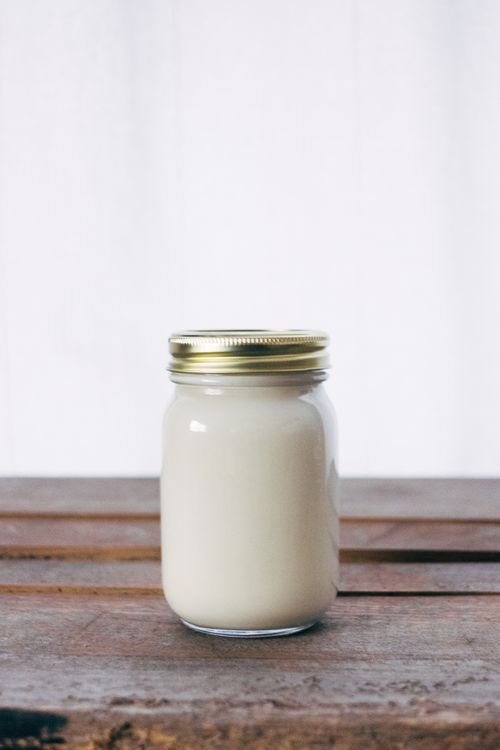
If you deliberately experiment, change one thing at a time and start with a manageable batch. That is an honest kitchen trial, not a guaranteed equivalent. The same caution applies to replacing one of these products with yogurt merely because both are fermented dairy. Similar appearance is not a full recipe specification.
Read weight, not just bottle height
The checked range includes 200 g, 370 g, 375 g, 400 g and 1 kg formats across different products. Those figures are examples from a producer range, not a promise that every local store stocks them. Read the net quantity on what you actually buy.
If a recipe specifies weight, use the required weight. Do not assume one bottle equals one litre or one cup equals the recipe's cup measure. A tall container can look substantial without containing the amount your shopping list requires. Matching units before cooking is easier than discovering the shortage after opening everything.
Compare prices only after choosing the category
A large plain bottle and a smaller flavoured cup are different purchases. Compare unit prices when available, but also ask whether you will use the quantity and whether the formulation fits your plan. The cheapest package price is not always the cheapest amount of the ingredient you need.
For an unfamiliar taste, a small first purchase can be sensible. Keep a note of the full name if you like it. Remembering only the brand may not bring you back to the same product, because the range includes several categories, percentages and formats. The label gives a better reference than a bottle colour.
Useful words for the dairy shelf
Składniki means ingredients. Zawartość tłuszczu means fat content. Naturalny and naturalna indicate the plain versions in the checked names. Bez laktozy means lactose-free. These words help you locate relevant information without understanding every line of the marketing copy.
Ask Czy to jest maślanka naturalna? for plain buttermilk, or Czy ten kefir jest bez laktozy? when checking a lactose-free version. For a recipe, show the exact ingredient line. Pointing to the pack and asking Jaki jest skład? can also help you find the ingredient information rather than getting a general description of the dairy category.
Lactose-free is not milk-free
The checked producer range includes lactose-free kefir. That is a distinct claim, not evidence that the product contains no milk. A fermented dairy name also does not establish suitability for a milk allergy. Read the actual ingredients and allergen information instead of deciding from the word kefir alone.
If you are buying for a person with a medical dietary restriction, use appropriate professional advice where needed. This shopping guide does not assess their tolerance or recommend a product as treatment. The useful everyday distinction is simply that lactose and milk are not interchangeable label questions.
Storage instructions stay with the pack
Follow the product's date, storage conditions and any directions after opening. A large resealable bottle is not a promise that it stays suitable indefinitely. Do not borrow an opened-storage period from another brand or category because the containers look similar. Plan the purchase around the amount you will actually use.
If you order groceries online and receive a substitute, check both the product name and flavour. A replacement can look close while changing from plain to flavoured or from one fermented product to another. Accept it only if that change fits your intended use, rather than discovering the difference while adding it to a savoury dish.
Keep broad health claims out of the shopping decision
Producer pages can contain enthusiastic statements about digestion, nutrition or wellbeing. This guide does not adopt those statements as medical evidence. It uses the pages for product identity, ingredients, formats and the producer's stated culinary uses. You do not need a health promise to decide whether a plain 400 g kefir matches your shopping list.
If you are choosing for a specific health goal, ask that question separately and use appropriate evidence. For ordinary shopping, a narrower comparison is more useful: category, plain or flavoured, fat percentage, ingredients, quantity and directions. That is enough to distinguish the products without turning the aisle into an ungrounded treatment choice.
Make a first purchase you can understand
Choose one named product and one intended use, then note what you bought. Try another category later if you want a comparison. Our supermarket guide explains the wider retail setting, but individual stock varies. Your most reliable reference is the full product name and current pack, not an assumption that every branch carries the same bottle.
Once those details are familiar, the aisle becomes easier. Kefir, maślanka and zsiadłe mleko stop being three vague translations of sour dairy and become separate shopping choices. You can choose the one your meal needs, read the formulation and keep experiments deliberate rather than accidental.
Related: Supermarkets in Poland.
Frequently asked questions
Is zsiadłe mleko the same as forgotten sour milk?
No. The checked commercial product is a named cultured dairy product. This guide does not approve deteriorated milk or give a home-fermentation method.
Can I swap all fermented dairy products in recipes?
Do not assume a universal swap. Use the specified ingredient or a tested variation for your intended product.