Pierogi in Poland: types, ruskie explained and where to eat them
The essentials: Pierogi are Polish boiled dumplings of unleavened dough with savory or sweet fillings. Top varieties include ruskie (potato and quark, Ruthenian not Russian), meat, sauerkraut-mushroom, fruit and leniwe. They are boiled, often fried after, and are essential at Christmas Eve supper.
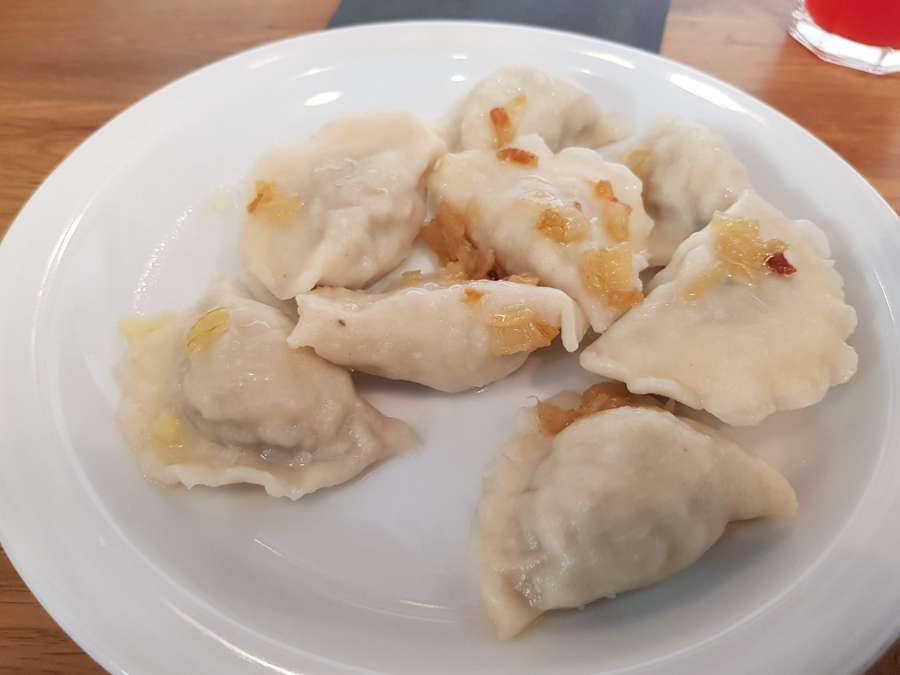
Every expat in Poland has the same first month: someone takes you to a pierogarnia, a menu arrives with fifteen kinds of dumplings on it, and the waiter asks what you want. You point at the first word you recognize - ruskie - and ten minutes later a plate of soft, crimped half-moons under a scattering of fried onion lands in front of you. Congratulations: you have just eaten Poland's national dish, and you have also just discovered that "ruskie" does not mean what you think it means.
What pierogi are
Pierogi are thin unleavened dough pockets, sealed around a filling, boiled and often finished in butter. The word is plural - one dumpling is a pieróg, but nobody eats one. The name itself comes from the old Slavic word pir, a feast, and the same root runs through Russian pirog and pirozhki, which tells you these dumplings predate the borders around them. Dough circles, a spoonful of filling, a crimped edge: the form is simple, the variations are endless, and every Polish grandmother's version is the correct one. They sit in the same global family as Ukrainian varenyky, Italian ravioli and Chinese jiaozi, but the Polish version has its own grammar: softer dough, specific fillings, and a serving ritual Poles will correct you on.
Pierogi ruskie are not Russian
The most-ordered filling in the country carries the most-misread name in the language. Pierogi ruskie are filled with mashed potato, twaróg (Polish farmer's cheese, a fresh quark) and fried onion - and they have nothing to do with Russia. The name refers to Ruś, the old Ruthenian lands of Red Ruthenia in what is now western Ukraine and south-eastern Poland, not to Rosja. Poland's own language authority, the PWN dictionary, is blunt about it: ruskie pierogi are a dish with no connection to Russia. Foreigners have been making this mistake for centuries, so if you have been calling them "Russian dumplings", you are in large company - and now you know.
The fillings you will actually meet
Menus and freezer cabinets rotate a familiar cast. Ruskie (potato and quark) are the default order and the measuring stick for every kitchen. Z mięsem come packed with minced, well-seasoned meat - the filling usually gets a second cooking before it goes into the dough, so they eat richer than the plain ones. Z kapustą i grzybami, sauerkraut and wild mushroom, are the Christmas Eve flavor but appear year-round. Z serem are sweet: quark with sugar, served with cream - dessert masquerading as dinner, and nobody apologizes. Summer brings z owocami, fruit pierogi stuffed with blueberries, strawberries or blackberries picked in local forests, finished with sweet cream. Leniwe, the "lazy" pierogi, skip the filling entirely - quark mixed straight into the dough, boiled and served under butter and breadcrumbs. Tiny uszka, "little ears", float in Christmas barszcz rather than on a plate. Modern pierogarnie stretch the idea further: spinach, salmon, buckwheat, kaszanka blood sausage, even apple-pie filling, and the good ones mark vegan options clearly. Seasonal specials rotate too - pumpkin in autumn, fresh dill and nettle in spring - so the menu you memorize in January will have moved on by June.
A dish built for holidays
Pierogi are everyday food, but their home turf is the calendar. On Christmas Eve, Wigilia, they arrive meatless - cabbage, mushrooms, potato, poppy seed - in keeping with the fast, and tradition reads them as a symbol of prosperity and well-being. They hold a fixed slot in the twelve-dish meatless supper, alongside the barszcz with uszka and the carp our Christmas carp guide explains. Weddings once had their own baked variety, kurniki, filled with chicken. The dumpling even has a patron saint of sorts: Saint Hyacinth, the medieval monk who legend says fed Kraków during a famine, survives in the exclamation Poles still use when stunned - "Święty Jacek z pierogami!", literally "Saint Hyacinth with his pierogi!". When a nation's swear-adjacent exclamation involves a dumpling, the dumpling matters.
How to eat them properly
Pierogi are boiled in salted water until they float, given another couple of minutes, then drained - and many kitchens, and most home cooks reheating leftovers, then fry them in butter until the edges crisp. What goes on top depends on the filling: savory pierogi take fried onion, crispy bacon bits (skwarki) or a dollop of sour cream; sweet ones take cream, sugar or melted butter. Order a portion and you will get eight to twelve; ruskie with fried onion on a plain white plate, as in the photo above, is the canonical serving. Pair with kompot at a milk bar or a cold beer at a pierogarnia and you have spent very little money very well.
Cooking them at home is equally forgiving. Fresh pierogi go into well-salted boiling water and are done about two to three minutes after they float to the surface. Frozen pierogi go in straight from the freezer - never defrost them first, or they turn to paste - and need a minute or two longer. Leftovers belong in a frying pan with butter the next day; many Poles quietly prefer them that way.
Where to eat pierogi in Poland
The dedicated answer is a pierogarnia - a dumpling house that does little else, with laminated menus listing a dozen fillings and the option to mix half-portions. Ordering is easy even without Polish: fillings are listed as "z" plus an ingredient (z mięsem, with meat; z serem, with quark), "poproszę ruskie" gets you the classic, and pointing is universally understood. Every city has several; they range from Soviet-era canteens to stylish new-wave rooms with open kitchens where you can watch the lepienie, the pinching, happen. Milk bars serve the classics cheap - our milk bar guide covers how those work - and Christmas markets sell paper trays of pierogi from November through December. Supermarkets stock fresh and frozen versions that rescue weeknight dinners; frozen ruskie from a decent brand beat most homemade first attempts, which is a sentence no Polish grandmother will forgive but every working parent knows is true.
Making them at home
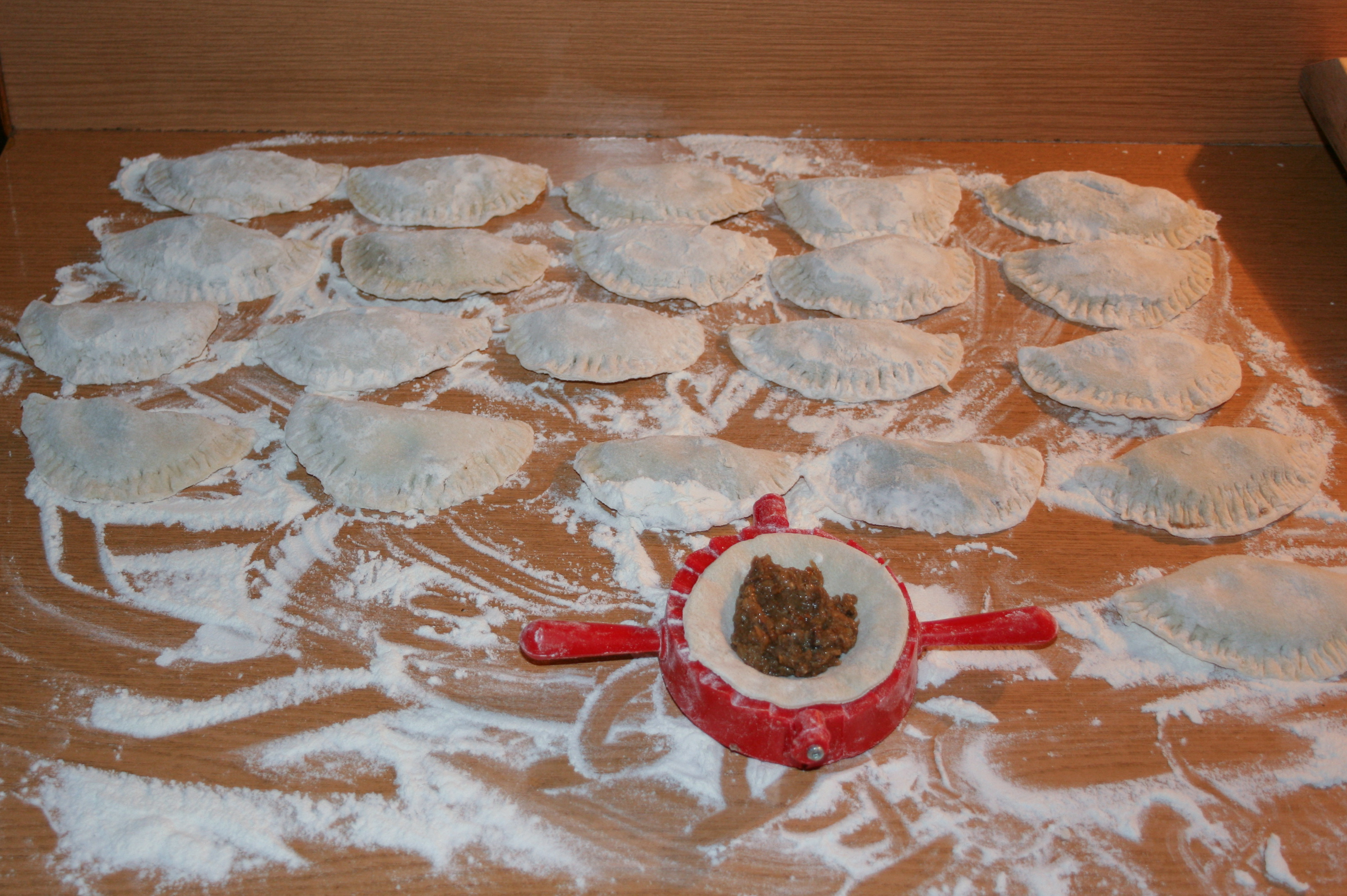
Lepienie pierogów - pierogi-making - is a social event as much as a recipe: the dough is just flour, warm water, an egg and a pinch of salt, but sealing dozens of dumplings takes hands, so Poles rope in family, roommates and, sooner or later, you. The workflow is assembly-line: roll the dough thin, cut circles with a glass, spoon filling, fold, crimp hard so nothing escapes in the pot. First-timers overstuff and under-crimp; the result is soup. Home cooks make extra and freeze them raw on a floured board before bagging, which is exactly what the floured worktop in the photo shows. The dough wants resting - half an hour under a cloth makes it roll without fighting back - and the filling must be cool and dry, because wet filling pops the seams. If you are invited to a pierogi-making afternoon, go - it is one of the easiest doors into Polish home life, and you leave with dinner.
Cover photo: pierogi ruskie with fried onion, by Maksym Kozlenko, CC BY-SA 4.0. Photo above: making pierogi in Gniezno, by Diego Delso, CC BY-SA 3.0.
Frequently asked questions
What are pierogi ruskie made of?
Mashed potato, twaróg (Polish farmer's cheese, a fresh quark) and fried onion. Despite the name, they are Ruthenian - from the historic lands of Ruś - not Russian, a point Poland's PWN dictionary states explicitly.
Are pierogi vegetarian?
Many are: ruskie, sweet quark, fruit, leniwe and sauerkraut-mushroom versions contain no meat, though dough and toppings often involve egg and butter. Vegans should ask - modern pierogarnie usually mark vegan fillings clearly.
How many pierogi are in a portion?
Typically eight to twelve per portion in a restaurant. Portions at milk bars and pierogarnie are generous; one portion is a full meal for most people.
Can you buy good pierogi in supermarkets?
Yes - fresh and frozen pierogi are a Polish freezer-cabinet staple, and decent brands are genuinely good. Fresh market or deli versions sit a step above frozen, and both sit below a strong pierogarnia or a Polish grandmother.
When do Poles eat pierogi?
Any time, but they are essential at Christmas Eve supper (Wigilia), when fillings are meatless, and they appear at family gatherings, weddings historically, and every Christmas market from late November.
What is the difference between pierogi, uszka and leniwe?
Pierogi are the filled half-moon dumplings. Uszka are tiny filled dumplings served in barszcz at Christmas. Leniwe have no filling at all - the quark is mixed into the dough itself - and are eaten under butter and breadcrumbs.