Easter in Poland: Wielkanoc traditions expats should know
The essentials: Polish Easter centers on Holy Week customs: handmade palmy on Palm Sunday, painted pisanki eggs, the święconka basket blessed on Holy Saturday, a long family breakfast, and śmigus-dyngus water play on Monday. In 2027, Easter Sunday is 28 March and Monday 29 March; both are public holidays and shops close.
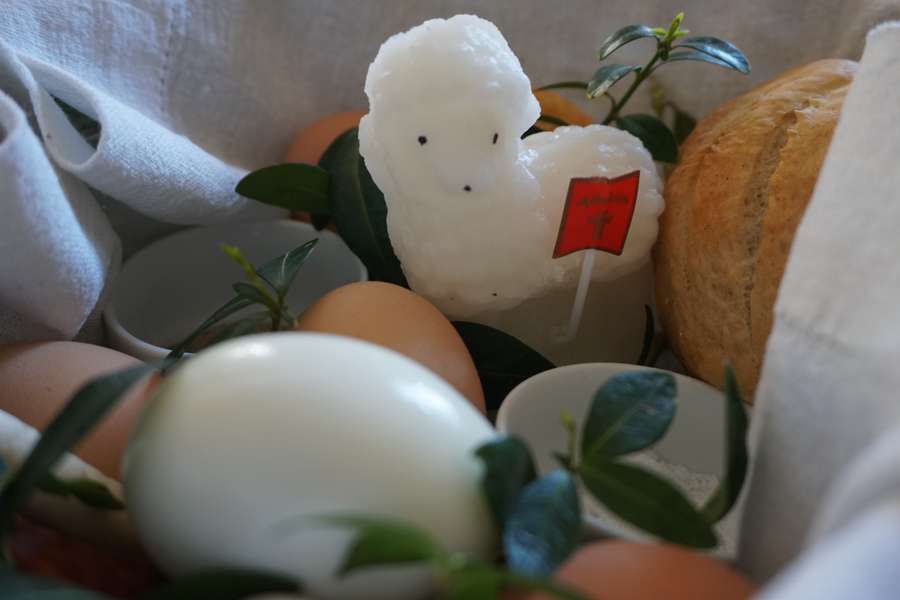
On the morning of Holy Saturday, the forecourt of every Polish church fills with people holding baskets. Inside each one, arranged over white linen and a sprig of boxwood: painted eggs, a ring of sausage, a piece of bread, a wedge of cake, and a small lamb made of sugar or butter. A priest moves along the tables sprinkling holy water, children clutch the handles, and within ten minutes it is over - the food is blessed, Easter can begin. The scene repeats at thousands of parishes at once, in villages and in the middle of Warsaw alike. If you spend one spring in Poland, this is the tradition that will find you first.
The Easter week at a glance
Polish Easter - Wielkanoc - is the biggest family holiday of the year alongside Christmas, and in 2027 it lands early: Easter Sunday on 28 March and Easter Monday on 29 March, both public holidays. The rhythm of the week is fixed. Palm Sunday opens it a week before, on 21 March 2027. Good Friday is a day of fasting and church visits, though not a day off work. Holy Saturday belongs to the basket blessing. Sunday is the family feast, Monday is for water - and everything, including the supermarkets, shuts down.
Good Friday has its own quiet ritual worth seeing even if you never enter a church otherwise: the Tomb of the Lord. Parishes build an elaborate symbolic tomb - candles, flowers, soldiers or scouts standing honor guard - and people stream through all day to pray or simply look. It is Poland at its most solemn, a complete contrast to the water fight coming three days later.
Palm Sunday and the palmy
The week begins with palms - but Poland has no palm trees, so it improvises gloriously. The palma wielkanocna is a handmade bouquet of willow, catkins, dried flowers and colored paper, ranging from a modest sprig to towering village constructions several meters tall, like the ones in the photo below. They are carried to church, blessed, and taken home to hang by the door for the year - traditionally guarding the household until the next spring replaces them. Villages hold palm competitions judged on height and craft; the most famous, in Lipnica Murowana near Kraków, draws entries taller than the church itself. Cities hold processions and markets stacked with ready-made palms. Buying a small palm at a market and having it blessed is the easiest way for a newcomer to join in - expect to pay a few złoty for a simple one.
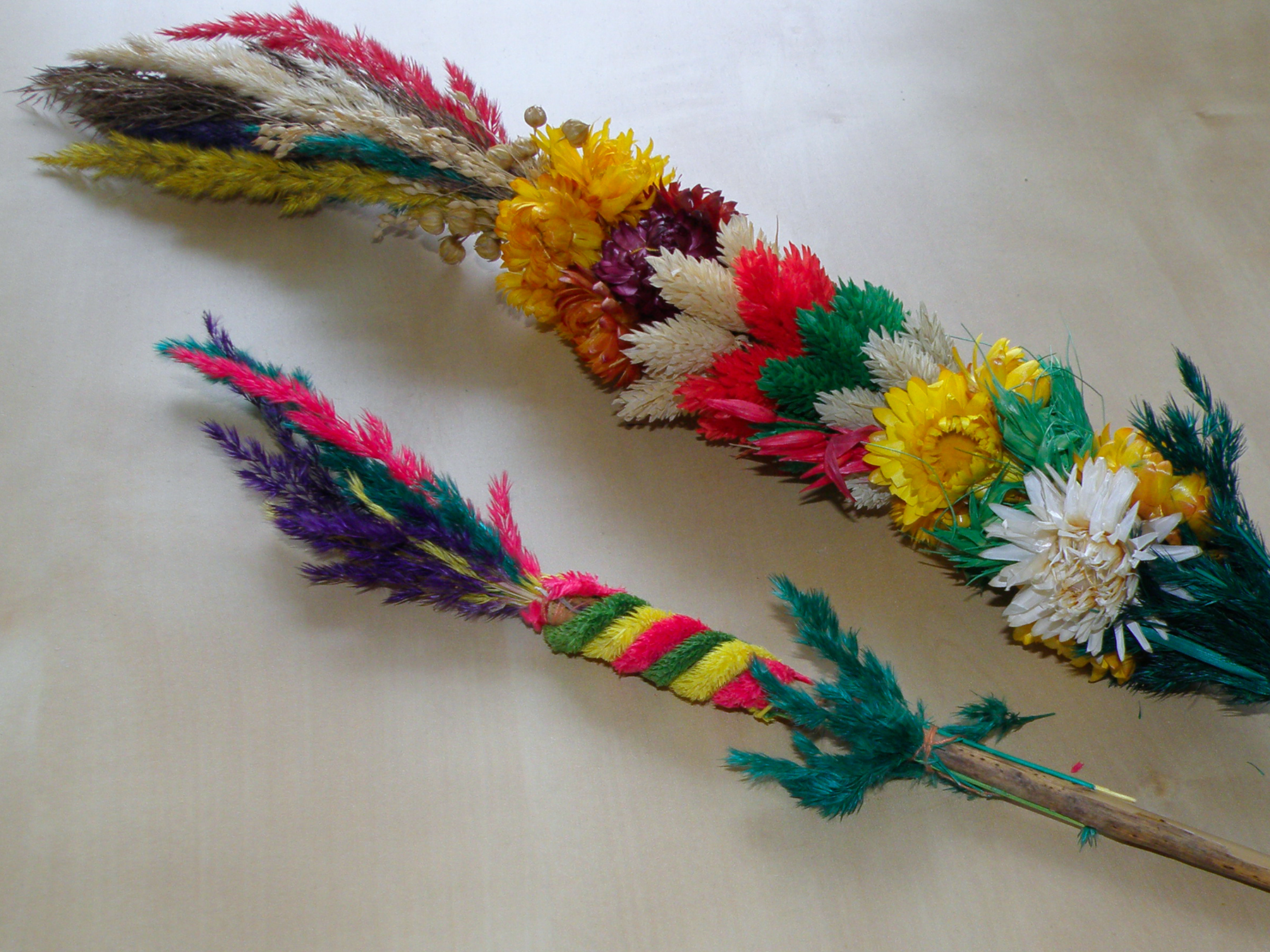
Pisanki: the painted eggs
Decorating eggs - pisanki - is the craft every Polish child learns and every expat household eventually attempts. The classic methods are dyeing in onion skins for deep browns and reds, then scratching patterns through the color, or painting directly. The eggs are far older than the holiday: decorated eggs were treated as magical charms for good harvests, relationships and healthy births, and the Christian egg-as-resurrection symbolism is documented in Poland from the 12th century. They end up everywhere: in the blessed basket, on the breakfast table, and in the egg-tapping contests where two people knock egg ends together and the uncracked one wins. The regional styles get serious - wax-resist batik patterns in the east, paper cut-outs layered like decoupage in Łowicz - and museums and markets sell heirloom-grade examples if your own onion-skin experiments disappoint.
Święconka: the blessed basket
Holy Saturday's centerpiece is the święconka - a basket containing a sampling of the Easter foods, brought to church to be blessed. The contents are traditional rather than fixed: eggs for life and resurrection, sausage or ham, bread, salt, horseradish, cake, and the baranek - a lamb of sugar, butter or cake with a tiny red Alleluja flag, like the one on the cover. The baskets are lined with crisp white linen or lace, with boxwood and sometimes ribbon woven through the handle. In some parishes the baskets line up on long tables; in others, parishioners carry them forward in procession. Non-Catholics are not excluded - showing up with a small basket and standing respectfully in the crowd is entirely normal, and nobody checks anything. Many mixed and non-religious families treat it as a folk custom first: children love it, the baskets are beautiful, and the whole ceremony takes minutes.
The Easter table
Many churches close Holy Saturday with the Rezurekcja, a candlelit resurrection procession that circles the church at dawn on Sunday (or late Saturday night) - the single most atmospheric service of the Polish year, and short enough that even the merely curious can manage it.
Easter Sunday breakfast is the meal the whole week builds toward. The blessed food comes back out: sliced eggs, white sausage, ham, and żurek - the sour rye soup that Poles will happily argue is the entire point of the holiday. Beside it: mazurek, a flat, dense, gloriously decorated cake; baba, the tall yeasted bundt; and the butter lamb presiding over it all. The meal is slow, multi-course and social - families sit for hours, and the table is supposed to show abundance after the Lenten fast, so seconds are not optional so much as assumed. If you are invited to a Polish Easter breakfast, cancel your afternoon.
Śmigus-dyngus: Wet Monday
Easter Monday is Lany Poniedziałek, Wet Monday, and the custom is exactly what it sounds like: people douse each other with water. Its roots are old - boys sprinkling girls they knew, pussy willow branches from Palm Sunday pressed into service, and in the countryside, historically, full buckets and worse. Today's version is mostly family water fights with cups and water pistols, and in some cities public splash battles in the square. As an expat you are unlikely to be ambushed by strangers, but if your Polish friends have children, wear something that dries fast. The water is supposed to bring health and luck for the year - that is the official story you will be given through your wet sleeve.
Practical notes for expats
Plan shopping ahead: the Sunday trading ban applies, and both Easter Sunday and Easter Monday close the supermarkets, so Saturday is the last full shopping day - expect it to be crowded, and expect the egg and sausage sections to look raided by Friday evening. Churches are packed - if you want to see a basket blessing, arrive early and stand at the back. Many cities hold Easter markets in the weeks before, selling pisanki, palms, honey and sausages. If you are invited nowhere this year, city Easter markets and hotel brunches fill the gap - but tell a Polish colleague you have nowhere to go and there is a real chance an invitation appears. Poles take Easter hospitality seriously. And if you are away from family, Polish parishes abroad run the same blessings; in Poland, your parish will not mind an extra basket. For the Christmas counterpart of these traditions, our Polish Christmas carols guide and Christmas carp article cover the winter half of the calendar.
Cover photo: a święconka basket with a sugar lamb, eggs and bread, by LLEW, CC BY-SA 4.0. Photo above: traditional Polish Easter palms, by Alina Zienowicz, public domain.
Frequently asked questions
When is Easter in Poland in 2027?
Easter Sunday falls on 28 March 2027 and Easter Monday on 29 March 2027. Both are public holidays. Palm Sunday opens the week on 21 March 2027.
What is święconka?
A basket of sample Easter foods - eggs, sausage, bread, salt, cake, a lamb figure - lined with white linen and boxwood, brought to church on Holy Saturday to be blessed. It is one of Poland's most beloved and visible Easter customs, and anyone can bring a basket.
What is śmigus-dyngus?
The Wet Monday custom of dousing people with water on Easter Monday. Modern practice is mostly playful family water fights; the historic version involved far more water. It also goes by the name Lany Poniedziałek.
Are shops open over Easter in Poland?
No - Easter Sunday and Easter Monday are public holidays covered by the Sunday trading ban, so supermarkets and most shops close. Do your shopping by Holy Saturday.
Can non-religious expats take part?
Yes. Easter markets, palm displays and egg decorating are open to everyone, and attending a basket blessing as a respectful observer is common. The food traditions need no permission at all.
What should I bring if invited to a Polish Easter breakfast?
Flowers or a good cake are safe; a bottle for the host works too. Come hungry, expect to stay for hours, and never refuse the żurek on the first offer.