Polish christening etiquette: chrzciny gifts, dress code, godparents
The essentials: At a Polish christening (chrzciny), guests give cash in a card - 200-300 zl per person is standard for friends in 2026. The half-hour Catholic ceremony is followed by a long family lunch. Godparents must be confirmed Catholics over 16, so non-Catholic expat friends are usually honored as special guests.
Sooner or later, most expats in Poland get invited to a chrzciny - a baby's christening and the family party that follows it. For Polish families this is one of the big three life events, alongside the wedding and the funeral, and being invited means you count. The good news: as a guest your job is simple. Show up decently dressed, put cash in a card, and enjoy a long Sunday lunch. The details below cover what happens at the church, what to give in 2026, and what it means if a Polish friend asks you to be a godparent.
What a Polish christening looks like
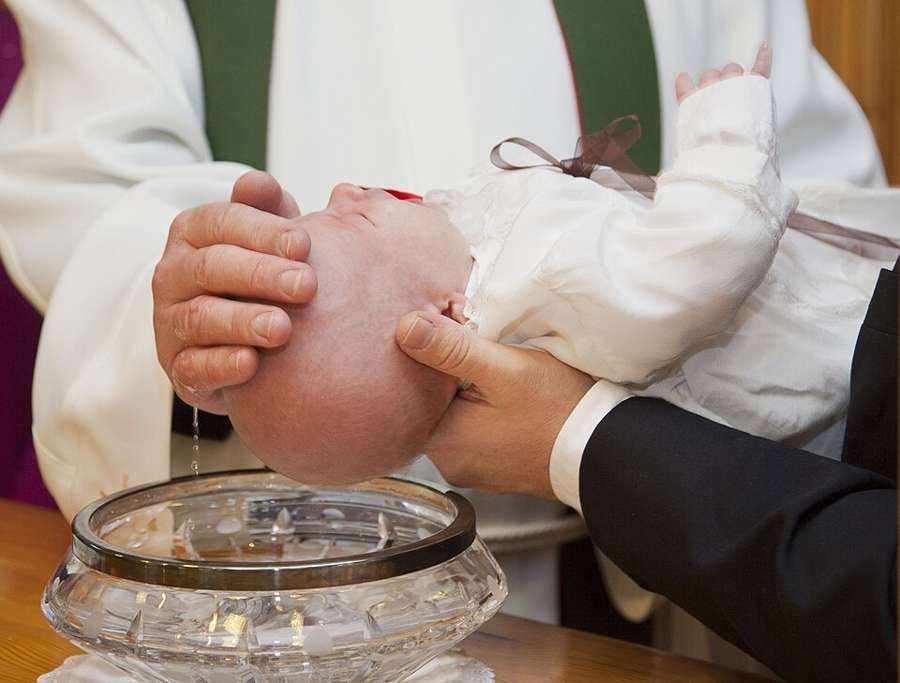
The chrzest - the baptism itself - is a Catholic ceremony held at the family's parish church, usually on a Sunday, either during or right after Mass. The whole thing takes about half an hour. The baby wears white: a special gown, the szatka, that families often keep for generations. The priest welcomes the child at the church door, anoints the baby, pours water over the head three times, and the godparents hold the child and speak the promises on the baby's behalf. A baptismal candle is lit from the Easter candle, symbolizing the light of faith entering the child's life.
Baptisms happen year-round, though spring and early autumn weekends are the busiest, and popular parishes book out weeks ahead - the family has usually arranged the date with the parish office long before you hear about it.
Guests stand in the pews behind the family and simply follow along. Nobody will test your Polish or your theology. If you are not Catholic, you are not expected to kneel at every moment, say the responses, or - importantly - go up for Communion. Standing politely while others receive is completely normal and nobody will read anything into it.
Two smaller moments matter to the family. The anointing with chrism - consecrated oil touched to the baby's head - marks the child as joining the community of the faithful, and the white garment placed on the baby right after the water stands for the new, clean life that baptism begins. Parents watch for both, so do not block their view with a phone.
One practical note on photos: ask the parents before taking pictures during the ceremony itself. Most families are happy about it, but the parish priest sets the tone, and some churches are strict.
If you are asked to be a godparent
Being asked to be a chrzestny or chrzestna - a godfather or godmother - is a genuine honor, and also a real religious role, not just a title. The Polish Church applies clear requirements: a godparent must be at least 16 years old, Catholic, have received First Communion and be confirmed, as the Catholic weekly Niedziela spells out in its guidance for parents choosing godparents. In practice, that means a non-Catholic expat friend usually cannot formally serve as a godparent at a Catholic baptism. Families who want to honor a non-Catholic friend typically invite them as a specially treated guest instead - a front-row seat and a place of honor at the party, without the liturgical role.
The traditional godparent duties are split in a way that surprises foreigners. Custom says the godmother provides the white baptismal gown, while the godfather takes care of the baptismal candle - a division described both in English-language guides to Polish christening customs and still visible at any parish christening today. On top of that come the largest gifts of the day, and a lifelong role: godparents are expected to be present at the child's First Communion, birthdays and milestones, and to step up if anything ever happens to the parents. If a Polish friend asks you, treat it as the serious question it is.
The gift question: how much in 2026
Cash in a card is the standard christening gift in Poland, exactly as at weddings. A dated September 2025 guide from Baby Box Polska, written specifically for the 2026 season, gives these ranges: godparents 700-1500 zl, grandparents 500-1000 zl, close family such as aunts, uncles and siblings 300-500 zl, and distant relatives and friends 200-300 zl. An April 2026 guide from Giftsworld puts the range for more distant guests at 100-300 zl, depending on the relationship and the form of the party.
The same talerzyk logic as at weddings applies as a floor: your envelope should at least cover what the family spends hosting you, which the Baby Box guide estimates at 150-250 zl per person at a typical christening reception. So for an expat invited as a friend, 200-300 zl per person in a nice card with a short handwritten wish is exactly right in 2026. Nobody counts at the table, and a sincere smaller gift beats an absent guest.
Physical gifts are welcome too, especially paired with the card: silver keepsakes like an engraved spoon or a small medallion, a children's Bible, a photo album. Avoid big equipment purchases - car seats, prams - without asking the parents first; they usually have strong opinions or already own them. For more on Polish gift-giving instincts generally, see our guide to Polish social etiquette.
The party: lunch, not a marathon
After the church, everyone moves to the chrzciny party - a long, warm meal either at the family home or in a restaurant private room. Expect a sit-down dinner that starts in the early afternoon and stretches into the evening: soup, a hot main, dessert, cake, coffee, and then another round of everything. Alcohol is modest compared to a wesele - wine and a toast or two, not a vodka marathon - and the dancing, if any, is light. This is a family afternoon, not an all-nighter.
If you have survived a Polish wedding, recalibrate: the chrzciny is its calmer, Sunday-best cousin. Guests drift home by early evening. Children are everywhere and running around is tolerated with great patience.
What to wear and how to behave
Dress as if for church plus a good lunch: a shirt and blazer or a dress, smart but not black-tie. Women often avoid very short or very bare outfits out of respect for the church setting. There is no color rule - white, pastels and darker tones all appear; just skip anything that would look wrong in a church pew.
During the meal, expect toasts, a speech from the baby's father or grandfather, and the moment when the baby is passed around for photos. Hold the baby if offered - Poles read warmth toward the child as warmth toward the family. A small bouquet for the baby's mother on top of the card is a graceful touch, never required.
Seating is informal but tells you where you stand: godparents and grandparents sit closest to the baby's table, and being seated near them is a quiet compliment. The cake usually arrives with a small ceremony of its own - candles or sparklers, everyone reaching for their phone, the baby's first taste of cream becoming the day's funniest photo. If there is a toast, it is short, warm and aimed at the parents and the child's future.
If you are invited but cannot attend, send the card anyway or give it beforehand; the relationship is with the family, not the event.
Frequently asked questions
How much money should I give at a Polish christening in 2026?
As a friend or distant relative, 200-300 zl per person is the standard range. Close family gives 300-500 zl, godparents 700-1500 zl. The practical floor is covering your share of the party, roughly 150-250 zl per head.
Can a non-Catholic be a godparent in Poland?
Formally, no - the Church requires godparents to be confirmed Catholics aged at least 16 who have received First Communion. Non-Catholic friends are typically honored as special guests instead. The exact handling depends on the parish, so the parents should ask their priest.
What should I wear to a chrzciny?
Smart church-appropriate clothing: shirt and blazer or a modest dress. No color rules apply, but avoid anything too casual or too revealing for a church setting.
Is the gift always money?
Money in a card is the norm, often paired with a small keepsake such as an engraved silver spoon, a medallion or a photo album. Avoid large equipment gifts without asking the parents first.
Do I have to take part in the religious parts?
No. Non-Catholic guests simply stand and sit with the congregation and do not go up for Communion. Nobody expects responses, kneeling expertise or Polish hymn-singing from you.
How long does a christening party last?
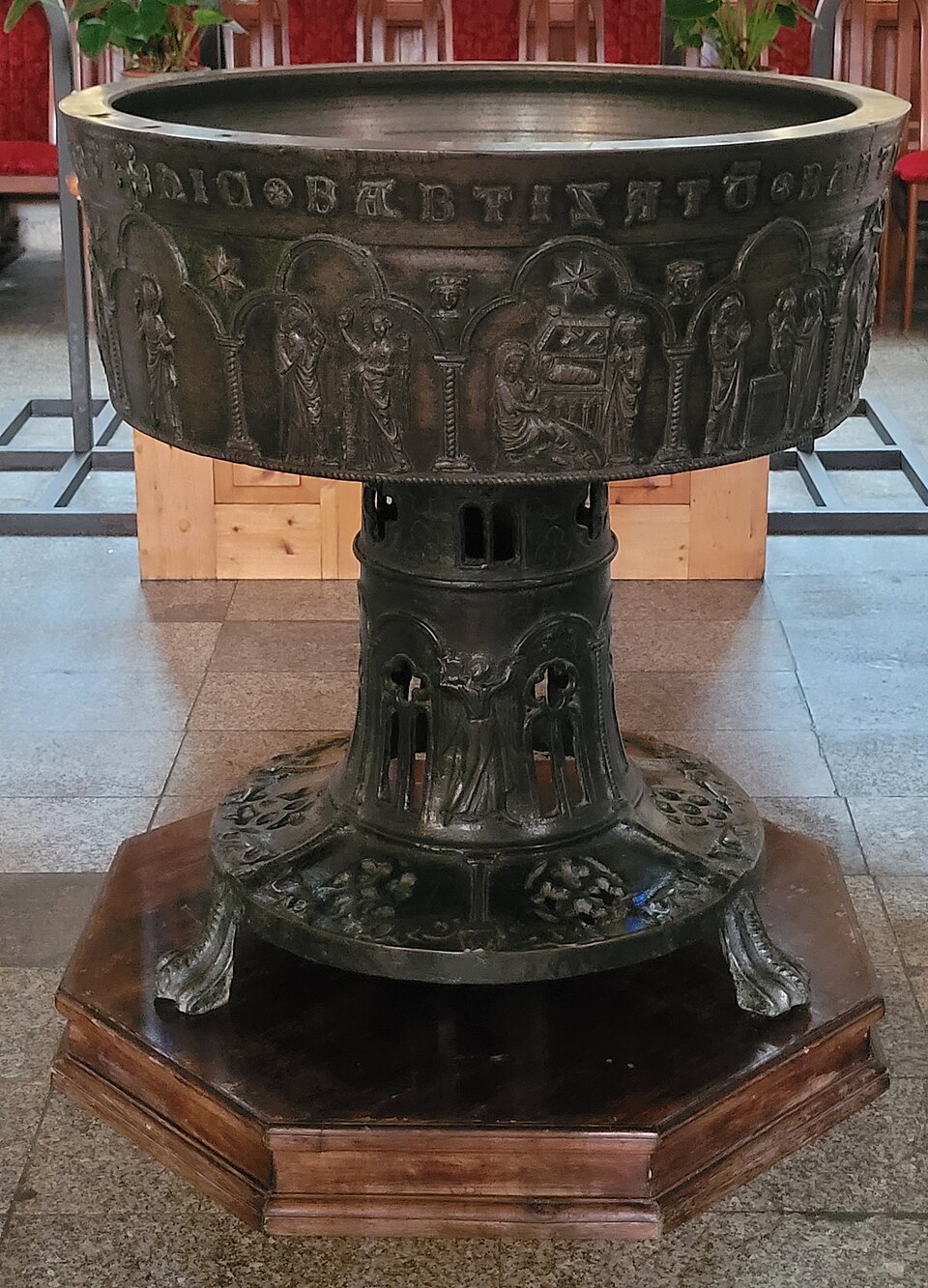
The church ceremony takes about half an hour, and the party that follows is an afternoon event - a long family lunch winding down by early evening, much calmer than a Polish wedding. <em>Cover: An infant baptism at the font (Lutheran ceremony) - photo by keskieve, CC0, via Wikimedia Commons. Body: The historic baptismal font in Legnica Cathedral - photo by Bornholm, CC BY-SA 4.0, via Wikimedia Commons.</em>