Polish Flour Types: Choosing Mąka for Your Recipe
The essentials: Choose flour by grain, the recipe’s requirements and the complete product label. Polish type numbers are a mineral-content classification, not a simple strength score or a promise of a direct match to foreign flour names.
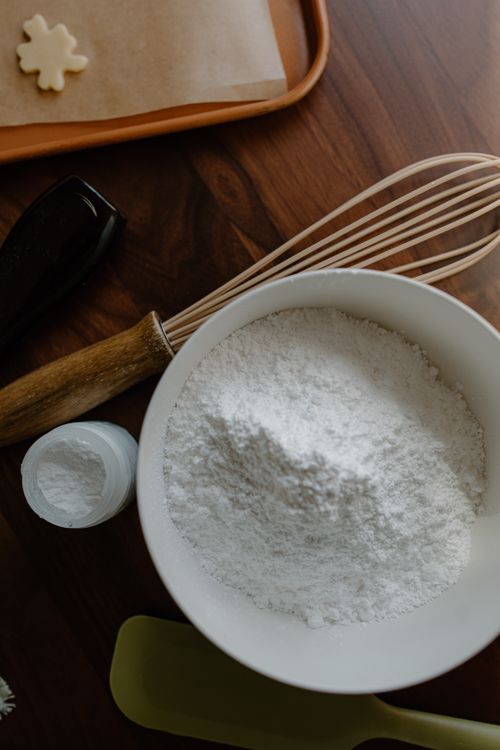
Cover: Tara Winstead / Pexels, Pexels License. Illustrative cooking photograph, not a Polish product label, brand endorsement or tested recipe. Resized.
The flour aisle is one of the places where knowing the basic translation still leaves a newcomer uncertain. Mąka means flour, but a bag marked tortowa 450 sits beside poznańska 500, luksusowa 550 and chlebowa products. None necessarily carries the name used in the recipe you brought from home.
The workable solution is to read three things in order: the grain, the type or named style, and the product’s intended use. That is more useful than searching for one Polish bag that supposedly replaces every foreign all-purpose, plain, bread or cake flour. Start with a recipe you want to make, then find a suitable product for that job.
First identify the grain
Pszenna means wheat flour and żytnia means rye flour. Orkiszowa refers to spelt. These words come before the number in a useful buying decision. A wheat and a rye flour with a similar-looking type designation are not interchangeable merely because their numbers are close.
The manufacturer Młyny Stoisław lists separate wheat, rye and spelt products, including wheat bread flour, rye bread flour and wholegrain spelt flour. Its range illustrates why translating only chlebowa as bread flour is incomplete. You still need to know which grain the bread recipe expects.
For a first attempt at a recipe from another country, avoid changing the grain and the flour style at the same time. If the recipe specifies wheat flour, buying rye because it has a bread-related name changes a basic ingredient rather than simply translating a label. Use a recipe written for rye if that is the flour you want to explore.
What the type number tells you
Polskie Młyny explains type as a classification related to the mineral material remaining after a laboratory test, often described as ash content. Lower-type products are generally associated with lighter flour, while higher-type products tend toward a darker, more wholegrain character. This is a classification clue, not an instruction to add ash or another ingredient.
Do not read the number as a quality ranking. Type 2000 is not automatically a better choice than type 450 for a delicate sponge cake, just as a product named tortowa is not automatically the right flour for a particular loaf. Better means better matched to the recipe.
The type also does not serve as a direct dough-strength score. If your recipe relies on a certain protein specification or particular bread-flour behaviour, check the exact product information and, where needed, the producer’s advice. A neat chart that maps every Polish number to one foreign flour category can hide important differences.
Tortowa: a cake-oriented starting point
Tortowa is the name worth recognising when you are shopping for sponge cakes and similar lighter baking. Lubella identifies its tortowa product as type 450 and recommends it for tortes, bundt-style cakes and sponge cakes. Polskie Młyny also associates type 450 with delicate cakes and biscuits.
That makes it a sensible product category to investigate for a recipe asking for a light wheat flour. It does not establish that every foreign cake-flour formula will behave identically with it, or that its ingredient and protein profile matches a particular imported product.
Read the actual recipe before deciding. A cake recipe may also specify a raising agent, starch or a different flour blend. Buying a bag with a cake-related name does not supply those other ingredients automatically. Keep the flour choice and the raising-agent choice separate.
Everyday wheat flours: similar numbers, different names
Lubella’s current range includes a type 520 product called Uniwersalna. Its listed uses include sponge cakes, yeast dough, rolls, pancakes, pierogi and sauces. Polskie Młyny’s guide instead describes a type 480 product as its universal flour. The shared word uniwersalna is therefore not proof that every brand uses the same type number.
Lubella also lists Poznańska and Wrocławska as type 500 products with different suggested uses. Poznańska is presented for pierogi, pizza and sauces; Wrocławska for pancakes, fritters and waffles. Those are producer recommendations, not exclusive permissions. They show why the complete name and back-of-pack guidance can tell you more than the number alone.
If you need a general household bag for several ordinary recipes, choose one whose stated uses match what you actually cook. Note the brand and exact name after a successful batch. That practical record is more dependable than remembering only that you bought a blue bag of type 500.
Luksusowa and bread-oriented products
Luksusowa is another common flour name. Lubella’s type 550 version is presented for doughnuts, faworki and yeast dough. Polskie Młyny’s guide also connects its type 550 product with yeast baking, rolls, pizza and dumplings. It is worth considering when a recipe is built around a wheat yeast dough, while still checking that recipe’s particular needs.
Chlebowa means bread-oriented flour. Polskie Młyny associates type 750 with wheat bread, and Młyny Stoisław sells wheat bread flour separately from rye bread flour. Check both the grain and any stated baking purpose before treating the word as a direct replacement for the strong bread flour used in another country.
A pizza-specific product can be useful when you want to follow the producer’s accompanying recipe. Do not assume that an Italian-style number and a Polish type number form a universal conversion system. If a dough recipe gives detailed flour requirements, follow those instead of choosing solely by a prominent number on the front.
Wholegrain, razowa and blends
Lubella’s wholegrain wheat flour is listed as type 2000, with wholegrain wheat flour as the ingredient. Młyny Stoisław also lists rye razowa products and graham flour. These are distinct buying decisions, not a single dark-flour category that can replace any white flour in the same quantity without further thought.
For a recipe designed around wholegrain flour, match the specified grain and style. If you want to adapt an existing recipe, choose a tested version or producer guidance rather than assuming an unchanged liquid amount, mixing method and result. This guide does not give a universal white-to-wholegrain substitution ratio because the appropriate adjustment depends on the recipe and product.
A ready flour blend is another separate category. Read its ingredients to see whether it is only a blend of flours or includes other baking ingredients. The front may emphasise bread or pizza while the preparation instructions reveal what you must still add. Do not add yeast or salt by habit without reading that list.
Plain flour is not a complete baking mix
The Lubella examples in this guide list wheat flour as their main ingredient. A product called puszysta, meaning fluffy, should not be interpreted from that adjective alone as self-raising flour. Check whether a raising agent is actually in the ingredients and whether the recipe asks you to add one.
This matters particularly when using a recipe from a country where self-raising flour is common. Translating the recipe into Polish ingredients can require a tested adjustment, not merely a bag whose name suggests lightness. Keep the recipe’s flour quantity and raising-agent instructions visible while shopping.
For the ingredient list, skład means composition or ingredients. It is also where you should check allergen and possible-trace information. Some of the manufacturer examples include mustard trace warnings. A product being a familiar flour category is not a reason to skip the label on the package you will use.
Make a small shopping decision, not a new pantry
For your first few weeks of cooking in Poland, buy for two or three actual meals or bakes. If those are pancakes, dumplings and a sponge cake, you may not need a large collection of specialist bread flours. If you mostly bake bread, a cake flour purchased because its name was easiest to translate may sit unused.
Compare package weights before comparing shelf prices. A cheaper-looking bag is not necessarily cheaper per kilogram, and a large bag is not necessarily good value if you will not use it within the package’s storage and date guidance. No single national shelf price is quoted here because store, size and promotion vary.
Save a photograph of the successful bag’s full name and label. If the next shop stocks another brand, compare the intended uses and specifications rather than chasing the same colour scheme. For a wider explanation of store formats, see our Polish supermarket guide.
A final check before the flour goes into the bowl
Confirm the grain and exact product, then read the recipe again. Check whether the flour is weighed in grams or measured by volume, whether a raising agent is separate and whether the recipe was written for a particular blend. Do not turn a cup into a guessed gram weight based only on the Polish type number.
Follow the package’s storage and date instructions and retain the original label if you transfer flour to a container. That preserves the product name, batch details and allergen information for the next bake. The aim is not to memorise every number on the shelf: it is to make one repeatable choice and understand why it worked.
When the shop has a different number
If the exact product is missing, compare the available flour with the recipe rather than deciding that the nearest number must be identical. A cake-oriented product from another maker may be a more sensible lead than a bread product with a closer number. Read its grain and suggested uses, and keep any adaptation modest. For a special bake where the texture matters, buying the intended flour another day may be better than making several untested substitutions at once. You can experiment later with a recipe that is forgiving and a small batch, recording what changed.
Frequently asked questions
Is Polish typ 500 the same as all-purpose flour?
Not as a universal equivalence. It can be a useful starting point for some everyday recipes, but grain, product formulation and the recipe still matter. Check the named product’s intended uses rather than relying on a single conversion chart.
Does a higher type number mean stronger flour?
No. The type concerns mineral content, not a direct measure of dough strength. Follow a bread or pizza recipe’s flour requirements and the specific product information.