Public Toilets in Poland: Signs, Payment and Access
The essentials: Look up the exact facility, then check hours, charges and the entrance route. Warsaw, Wrocław and Kraków publish different local information. Free, open and accessible are separate facts, not one nationwide promise.
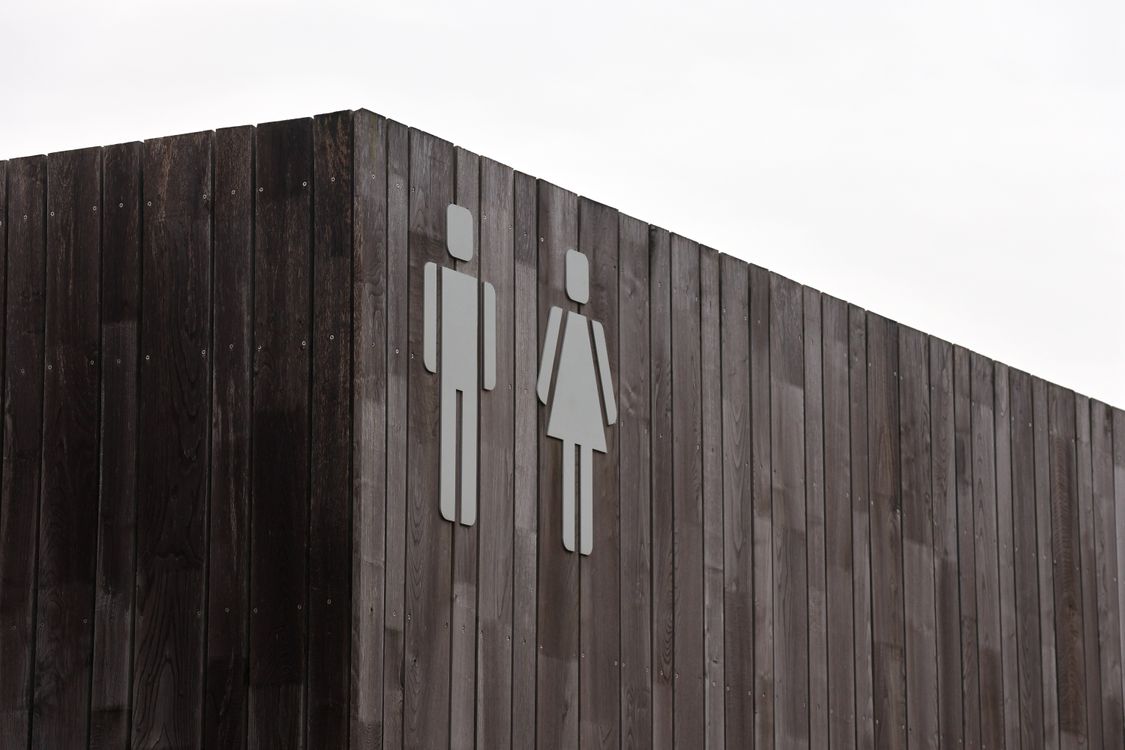
Cover: Ulad R, Pexels source photograph, Pexels License. Image unchanged. Restroom exterior with human-figure signs, illustrative context, not a verified Polish municipal facility.
Finding a public toilet in Poland is easier when you separate four questions: where the entrance is, whether it is open, what it costs and whether you can actually use the access route. A WC symbol on a map answers only the first part. It does not guarantee a free, step-free, round-the-clock facility.
There is no useful single national price or opening schedule to memorise. Municipal facilities, park cabins, station toilets and toilets inside participating businesses can follow different arrangements. This guide uses current official city information from Warsaw, Wrocław and Kraków to explain how to search and what details are worth checking before you make a detour.
Start with the words you will see
Toaleta is the everyday word for toilet. Toalety is plural; WC is also widely used on signs. Szalet or szalety appears in municipal information for public conveniences. A search for toalety publiczne plus the city name is more targeted than assuming an English search will show every local operator's map.
At the entrance, damska means women's and męska means men's. The wording dla pań and dla panów serves the same practical distinction. When a venue uses a shared or unisex toilet, follow the actual door information rather than assuming a plain WC sign describes a particular gender arrangement.
A circle and triangle can be local shorthand
Polish sign suppliers explain a familiar local convention: a circle marks the women's toilet and a triangle the men's. It can be confusing if you have only encountered human-figure pictograms. Treat this as a convention you may see, not a rule that every building must use or an international code.
If a stylised or playful sign is unclear, ask rather than guessing from a colour scheme. The practical meaning matters more than stories about where the shapes originated. This guide does not present speculative symbol history as a fact or suggest that an unfamiliar door decoration is enough to settle access.
Search the city's own map first
A municipal toilet map can provide details that a generic place listing omits: opening times, charges, baby-changing facilities and access information. Use the map's individual point, not only the pin. Two toilets a similar walking distance away may have very different stairs, payment arrangements or closing times.
Check when the underlying information was published and look for current notices. A city directory is a planning tool, not a live guarantee that a cabin is working this minute. If the trip is important because of access needs or a tight timetable, identify an alternative rather than relying on one unconfirmed marker.
Warsaw's 19115 listing has useful detail
Warsaw's current 19115 information says the mobile application's Services section includes a map of publicly accessible toilets. It covers fixed and portable facilities as well as toilets in public buildings and private premises made available to the public. A public-facing listing does not mean every point is the same type of building.
Selecting a point shows the exact address, hours, charges where applicable, baby-changing information and adaptation for disabled users. Read those details together. A changing table is not evidence of a step-free route, and an accessible toilet symbol does not tell you whether the approach is usable during a temporary closure.
Warsaw's metro is a specific free example
The same official city information says public toilets are provided at all Warsaw metro stations, outside the paid-ticket area, free to use. The published daily hours are 6:00 to 22:00. That is a useful specific option when your route already passes a station.
It is not a promise about every railway station, tram stop or metro system in Poland. Nor does a station operating late mean its toilets are open for the same entire period. Check the entry route and actual notice, particularly if you are arriving close to closing or require a lift that may be out of service.
Do not assume every restaurant toilet is public
Warsaw's official city map includes food businesses that make toilets available under an arrangement with the city. That is a defined participating offer, not proof that every cafe must allow anyone to enter without buying something. Use the map listing or ask the staff politely.
Czy mogę skorzystać z toalety? means May I use the toilet? If you need to understand the charge, ask Czy toaleta jest płatna? Do not plan a child's urgent stop around a random restaurant whose access policy you have not checked. A listed municipal or participating facility is a clearer starting point.
Wrocław's park cabins have their own procedure
Wrocław's Zarząd Zieleni Miejskiej describes its distinctive self-service park toilets as free. The operator explains an external panel with lights indicating whether a cabin is available, occupied, being serviced or faulty. These are instructions for that particular managed type, not a universal description of every automatic toilet in Poland.
The published labels include wolne, available; zajęte, occupied; serwis, service; and awaria, fault. Read the actual panel before pressing buttons. An empty-looking doorway does not prove the cabin is ready, especially immediately after the previous user has left and the cleaning cycle has not finished.
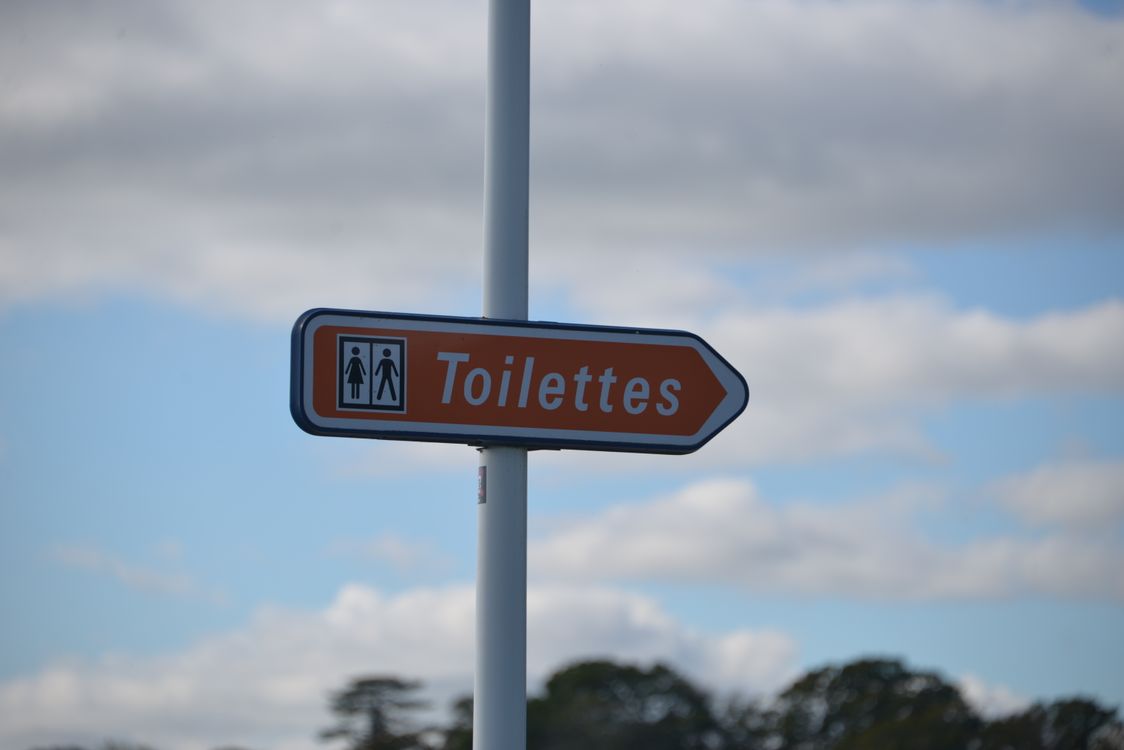
Wait for the available signal, not an open door
For the Wrocław cabins described by ZZM, the operator says to wait for the green available light before beginning a new visit. Entering through a door left open by the previous user can continue that person's timer rather than starting yours and can interfere with the automatic servicing sequence.
The operator describes a twenty-minute use period followed by automatic door opening. That specific privacy implication is worth reading before entry. Do not generalise it to another manufacturer's cabin. Follow the instructions on the unit you are using, and ask a companion to understand the process too if you need assistance.
Know the local emergency controls
The Wrocław operator describes yellow emergency buttons inside these cabins that trigger an alarm and release the door. It also lists emergency information on the external panel. Read the instructions instead of experimenting with an emergency button as a normal exit control.
If a cabin shows a fault, find another facility rather than forcing the door or trying to repair it. The operator's page says its fault indicator also means the unit has contacted service. For other operators, use the contact or reporting method on the actual facility; do not assume the same remote notification system exists everywhere.
Kraków lists different access routes
Kraków's Zarząd Infrastruktury Wodnej publishes a table of municipal toilets with location, type, hours and accessibility features. The list distinguishes staffed facilities from self-service units and describes features such as a platform, lift, ramp or level entrance. Those distinctions are more informative than a single broad accessible label.
For example, the listed route may depend on a platform rather than simply being flat from pavement to cubicle. If you need particular dimensions, transfer space or help operating equipment, contact the operator before treating a listed feature as confirmation that it suits your needs. This guide does not independently certify every facility's physical accessibility.
Opening times can change with season and location
Kraków's current list shows seasonal hours at several staffed facilities, with different periods for April to October and November to March. Other entries are weekday-only, while many self-service units are listed as 24/7. Some entries explicitly say closed for refurbishment.
That variety is a reason to read your chosen point, not to choose one representative schedule and apply it citywide. A late-evening park walk and a weekday city-centre visit need different planning. If a listed toilet is under repair, choose another before setting off rather than assuming the map pin overrides the closure text.
Check payment at the actual entrance
Poland's public toilets do not share one fee or payment method. Warsaw's map explicitly includes charge information where applicable, while the Wrocław park type described here is free. Do not turn either example into a claim about every facility in the city or country.
Carry a practical backup if your route depends on a paid facility, and inspect the displayed tariff and accepted methods before committing payment. A contactless symbol on one toilet does not establish card acceptance at the next. Ask the attendant or use the machine's stated instructions instead of repeatedly attempting an unsupported payment method.
Accessibility is about the whole route
When access matters, check more than the toilet-room symbol. Ask whether the entrance is level, whether any lift or platform is working and whether assistance or a key is required. A suitable room behind stairs is not a useful option for someone who cannot reach it.
The official Warsaw map and Kraków operator list give starting information, but they do not remove the need for a specific question about your circumstances. You can ask Czy jest toaleta dostępna bez schodów?, meaning Is there a toilet accessible without stairs? For more detailed needs, show a short written description so the answer concerns the actual requirement.
A changing table is a separate facility
Przewijak means a baby-changing table. Warsaw's city listing includes this information, which is useful when travelling with a baby. Do not assume every women's toilet has one or that a shared accessible room automatically includes a suitable changing surface.
Check the location and any access requirement before taking a pushchair through a narrow gate. Use only the intended changing surface and follow the venue's instructions. If you need an adult changing facility or another specialist feature, ask about that specifically; a baby-changing marker does not establish it is provided.
Make a simple backup plan
Before a longer city walk, note one suitable toilet and an alternative that is open at the time you expect to need it. Save the address and access detail, not merely a screenshot of a pin. If one is unavailable, you can move to the second without restarting the whole search.
A reliable plan is local and modest: recognise the sign, read the current listing, check price and entrance, then follow the actual facility's instructions. Our city guides can help with the wider route, but toilet access should be checked on its own terms. Free, open, accessible and nearby are four different facts, and the best choice is one that meets all the needs of your visit.
Related: Using public swimming pools in Poland.
Frequently asked questions
Are all public toilets free?
No. Check the actual facility's displayed charge or city listing; particular free examples do not establish a nationwide rule.
Does an accessibility symbol prove the whole route is suitable?
No. Check the entrance, any lift or platform, and the specific features you need, including whether equipment is operating.