Sending a Domestic Letter in Poland: Postage and Proof
The essentials: Choose registration and speed separately. Polecony gives posting proof and an item number; priority alone does not. Current operator pages describe D+3 priority and D+5 economy as estimates, not guarantees.
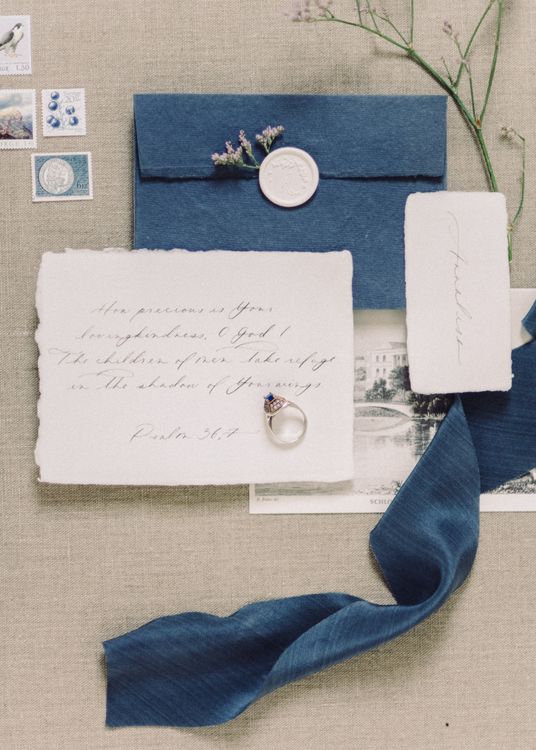
Cover: Leeloo The First, Pexels source photograph, Pexels License. Image unchanged. Blue envelope and decorative handwritten correspondence, illustrative stationery context, not current Polish postage or an addressing model.
Sending a letter within Poland involves two choices that are easy to confuse: whether you need a registered service and whether you want the priority or economy category. Polecony means registered. Priorytetowy describes the delivery category. Paying for priority does not, by itself, turn an ordinary letter into a tracked registered item.
For a first visit to Poczta Polska, take the addressed envelope to the counter and describe what you need to prove. Staff can weigh and measure the finished item, confirm the category and sell the correct postage. This guide covers domestic correspondence, not international customs, parcels or the legal effect of filing a particular court document.
Choose the proof you actually need
An ordinary domestic letter, list zwykły krajowy, is the simple correspondence service described by Poczta Polska. A registered domestic letter, list polecony krajowy, is the service to consider when proof of posting and an item number matter. The operator says registered items can be followed through eMonitoring.
Start with the consequence of a missing letter. A casual note and an important original document are different risks. If a recipient gives specific sending instructions, read them before buying postage. Do not choose a cheap unregistered service and then expect a tracking number to be recoverable after the envelope has entered the network.
Priority and registration are separate decisions
The operator offers priority and economy categories for both ordinary and registered domestic letters. You can therefore ask for a registered economy letter or a registered priority letter. The everyday Polish words are list polecony ekonomiczny and list polecony priorytetowy.
This distinction helps at the counter. Saying only priorytet does not explain that you need a posting receipt. Saying only polecony leaves the speed category to be clarified. Decide both, then check that the service on the receipt matches what you intended to buy rather than relying on a vague memory of the conversation.
Do not expect guaranteed next-day priority delivery
The current ordinary-letter page describes priority delivery as an expected three working days after posting, D+3, and economy as five working days, D+5. The registered-letter page gives the same expected periods, with its priority estimate conditional on posting by 15:00. Both pages expressly say these are not guaranteed delivery times.
That is important if you have seen older advice about next-day priority post. Use the operator's current description, and distinguish posting date from arrival date. If a recipient must physically receive something by a particular date, an estimated postal period is not a promise that makes the deadline safe.
Check requirements for official correspondence separately
Poczta Polska lists private and official correspondence among the contents suitable for its domestic letter services. That does not establish the legal filing requirements of every court, public authority, insurer or employer. Those can concern the required recipient, form, signature, channel and deadline as well as postage.
For a consequential submission, check the receiving institution's current instructions. A registered posting receipt is evidence about sending; it does not by itself establish that you chose the legally required channel or enclosed a complete application. This practical mailing guide should not replace case-specific procedural advice.
Address the person or institution completely
The operator's published address guidance gives the order as the addressee's name or full organisation name, street with building and apartment or premises number, then the correct postcode and locality. For places without street names, the locality and property number take the relevant place in the address.
Copy the recipient's confirmed address rather than translating a street name or substituting the nearest large city. The postcode belongs with the destination locality, not automatically with the name of the post office you recognise. If an institution has a particular department or correspondence address, use its stated receiving details.
Leave clear space for postal markings
Poczta Polska's guidance reserves at least the right half of the address side for the addressee and postage markings, normally with postage at the upper right. Put sender details at the upper left when using that side. Write on the smooth face of the envelope, not across the closing flaps.
Keep the lower strip clear as the guidance specifies, rather than decorating the envelope all the way to the edge. A readable address block is more useful than a beautiful but crowded design. Check that tape, a label or the stamp will not cover a house number or part of the postcode.
Include a usable return address
Nadawca means sender and adresat means addressee. The operator requires the sender's name and address on registered items. A return address is also sensible on an ordinary letter because it gives the postal service a route back if delivery cannot be completed.
Use the address where you can actually receive a return, not an old hotel or apartment merely because it appears on a saved template. Check the sender details on the posting form as well as on the envelope. A correct destination does not cure a wrong return address when an item has to come back.

Measure the finished envelope
Domestic letters use formats S, M and L. The current product pages give S a maximum thickness of 20 mm, length of 230 mm and width of 160 mm. M keeps the 20 mm thickness limit but allows up to 325 mm by 230 mm. The minimum address-side dimensions are 90 by 140 mm.
L has different maximum dimensions: length, width and height together up to 900 mm, with the longest dimension no more than 600 mm. Do not classify by the envelope's shop name alone. A padded insert, folded document bundle or stiff enclosure can change the finished thickness and therefore the applicable format.
Weight matters alongside size
The currently linked universal-service tariff gives S up to 500 g, M up to 1,000 g and L up to 2,000 g. Size and weight need to fit together. An envelope that looks like S is not necessarily charged as S when its contents take it over the relevant weight limit.
Weigh the completed letter, including packaging and any forms attached. If you do not have a reliable scale or thickness measurement, let the counter classify it. Buying a stamp before knowing the category can leave you underpaid, and the tariff describes consequences for postage that is missing or below the amount due.
Read prices from the current linked tariff
On the tariff linked by Poczta Polska's current price index when checked, the domestic ordinary economy rates are 4.90 zł for S, 5.60 zł for M and 8.20 zł for L. Ordinary priority rates are 5.80 zł, 6.40 zł and 9 zł respectively. The document states that it applies from 1 March 2025.
Those are dated tariff figures, not a promise that postal prices never change. Check the live price index or counter before paying. Packaging and optional services can be separate from basic postage. A stamp's face value is not evidence that it covers the finished item you happen to have today.
Registered rates include the registered treatment
The same linked tariff lists registered economy at 7.80 zł for S, 8.30 zł for M and 15.60 zł for L. Registered priority is 9.80 zł, 10.30 zł and 18.30 zł. Its note says the registered price already includes the charge for treating the letter as registered.
Do not add that registration component a second time when comparing the listed totals. Equally, do not read the ordinary-letter price as the registered price because the envelope size is unchanged. Ask the counter for the complete amount for the service, format and extras you have selected, then inspect the receipt.
Posting proof is not the same as acknowledgment of receipt
Potwierdzenie nadania is proof of posting. Potwierdzenie odbioru is an additional acknowledgment-of-receipt service. Poczta Polska's registered product page also describes electronic delivery-or-return confirmation among the available extras. These phrases answer different questions, so explain what evidence you need.
The linked tariff lists paper acknowledgment of receipt for a registered item at 4 zł and says it must be requested when the registered item is posted. Do not assume you can add every service retrospectively. If the addressee requires a particular form of proof, settle that choice before handing over the envelope.
Keep the accepted posting receipt
For a registered letter, complete the required details and keep the counter-accepted proof with its identifying number. Compare the destination details before leaving. A photograph of the envelope before posting records how it was addressed, but it is not the same as the operator's confirmation that the item was accepted.
Keep a copy of important contents separately as well. The tracking record concerns the postal item; it is not a full inventory of every page placed inside. That distinction matters when you later need to know both when a letter was posted and which version of a document you actually sent.
A printed stamp still has posting rules
Envelo, Poczta Polska's online service, explains that a neoZnaczek pays postage and can be printed at home or in an office. Its FAQ says ordinary prepaid letters can be placed in a posting box, while registered letters paid with a printed stamp must still be accepted at a post office or its branch.
A purchased code is therefore not proof that a registered letter has been posted. Follow the printing and placement instructions and take the item through the required acceptance process. Do not reuse a printed postage mark or treat an emailed purchase confirmation as a substitute for a registered posting receipt.
Make the first counter visit simple
You can say Chcę wysłać ten list w Polsce, meaning you want to send this letter within Poland. Add Polecony, proszę if you need registered service, then specify priority or economy and ask about any extra confirmation. Showing the addressed envelope gives staff something concrete to classify.
Leave with the correct receipt and a realistic delivery expectation. Our guide to understanding official Polish letters covers a different stage, receiving and interpreting correspondence. For sending an ordinary domestic letter, the reliable sequence is choose the proof, check the complete address, measure and weigh, buy the correct service and keep the relevant record.
Related: Understanding an official Polish letter.
Frequently asked questions
Is priority the same as registered?
No. Priority is a delivery category; registered service is a separate choice providing posting proof and an identifying number.
Is priority delivery guaranteed in three days?
No. The operator describes D+3 as an expected period and expressly says delivery times are not guaranteed.