Temporary Residence Permit in Poland (Pobyt Czasowy): 2026 Rules
Short answer: A temporary residence permit covers stays over 3 months: the voivode grants it for the time your purpose needs, up to 3 years at a time; you must apply in person no later than your last day of legal stay, and a timely, complete application earns a passport stamp keeping your stay legal until a final decision.
If you plan to live in Poland for more than three months - for work, studies, business or family - the standard route is a temporary residence permit, the *zezwolenie na pobyt czasowy*. Here is how the permit works under the Act on Foreigners (consolidated text, *Dziennik Ustaw* 2025 item 1079), as of October 2026.
What the temporary residence permit is
Under Article 98(1) of the Act on Foreigners, the permit is granted when you meet the requirements for your declared purpose of stay and your circumstances justify staying in Poland for longer than three months. Article 98(2) sets the duration: the permit is granted for the period needed to fulfil that purpose, but never for more than three years at a time.
Three years is not a ceiling on your stay. When a permit nears expiry you apply again for a further one, and you can repeat that cycle as long as your circumstances continue. After several years of qualifying stay, permanent residence or the EU long-term resident permit may open up instead - those are separate permits with their own rules.
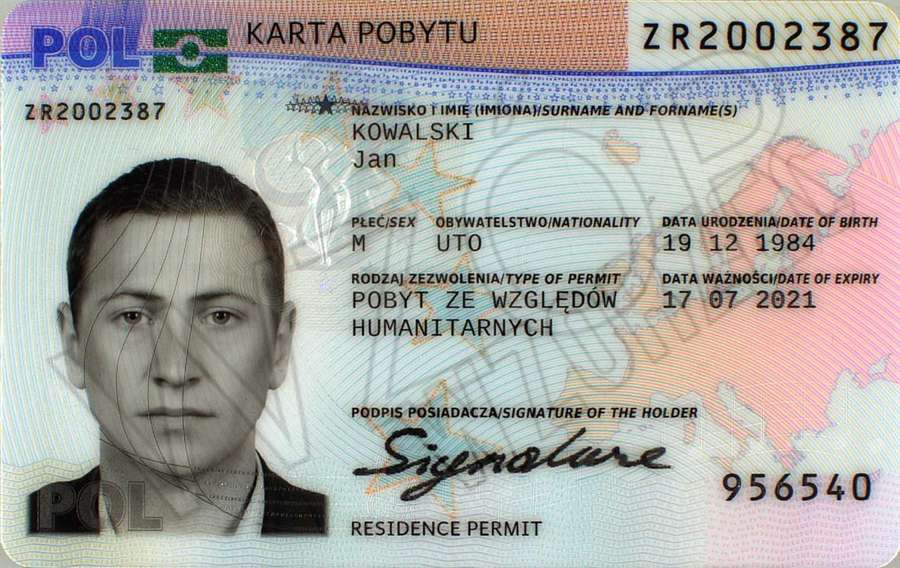
The permit is granted by the wojewoda (voivode), the central-government representative for the region where you live. Once granted, you receive a residence card (*karta pobytu*), the plastic card that confirms your identity and the legality of your stay.
The main permit types
The Act divides temporary residence permits by purpose. The most common for expats:
- Work - the combined temporary residence and work permit (Article 114)
- Posting - work delegated by a foreign employer (Article 140)
- Business activity (Article 142)
- University studies (Article 144)
- Scientific research (Article 151)
- Family reunification (Article 159)
- Other circumstances (Article 186) - a catch-all that includes a one-time permit of up to nine months for graduates of Polish universities who are looking for work or preparing to start a business (Article 186(1)(6) with Article 190(3))
Each type has its own conditions and evidence requirements, but the application framework below is common to all of them.
Apply in person before your legal stay ends
The single most important rule is timing. Under Article 105(1), you must file the application in person, no later than the last day of your legal stay in Poland - for example the last day of your visa or visa-free allowance.
If the application arrives without your personal appearance, Article 105(2) requires the voivode to summon you to appear within a deadline of at least seven days, under pain of leaving the application unexamined. For children, parents or court-appointed guardians file, but a child who has turned six must appear in person when the application is filed (Article 105(3)-(4)).
The application form itself, set out in Article 106(1), asks for:
- your identity data and family members living in Poland,
- previous stays in Poland and your travel and stays abroad over the last five years,
- your financial means and health insurance,
- your declared purpose of stay,
- a signature, plus a written declaration - under criminal liability for false statements - that the information is true.
The stamp that keeps you legal
File on time and without formal defects (or fix the defects within the deadline), and Article 108 gives you two things: the voivode places a stamp in your travel document confirming the application, and your stay in Poland is treated as legal from the day you filed until the day the decision becomes final.
That stamp matters because voivodeship offices in larger cities can take months to decide. Note its limits: the stamp confirms the legality of your stay in Poland - it is not a visa and does not by itself smooth re-entry if you leave the country while the case is pending.
Background checks and waiting times
Before issuing a decision, Article 109 requires the voivode to ask the Border Guard, the regional Police commander and the head of the Internal Security Agency - and where needed a consul - whether your entry or stay could threaten national defence, security or public order. Those bodies have 30 days to respond, extendable to 60 in justified cases. This built-in consultation is one reason even straightforward cases rarely finish in a few weeks.
Fees and the residence card
The application carries stamp duty and a separate fee for issuing the residence card. As of October 2026 the standard amounts are 340 zł stamp duty for a temporary residence permit and 50 zł for the card; our guide to residence permit fees in 2026 lists the full table and the exemptions.
Frequently asked questions
### How long is a Polish temporary residence permit valid?
For the period needed for your declared purpose, but no more than three years at a time (Article 98(2) of the Act on Foreigners). You can apply for a further permit before it expires.
Can I stay in Poland while my application is processed?
Yes - if you filed in person before your legal stay ended and the application has no uncorrected formal defects, your stay is legal from the filing date until the decision is final, and the voivode stamps your passport to confirm it (Article 108).
What permit can graduates of Polish universities get?
A one-time temporary residence permit of up to nine months to look for work or prepare a business in Poland, under the "other circumstances" route (Articles 186(1)(6) and 190(3)).
Who decides a temporary residence application?
The wojewoda (voivode) competent for your place of stay, after mandatory security consultations with the Border Guard, Police and Internal Security Agency (Article 109).