Tourist tax Poland 2027: signed law raises cap to PLN 5 per night
Short answer: The tourist tax cap rises from PLN 3.46 to PLN 5 per night from 1 January 2027, PLN 5.50 in spa protection areas. The spa fee cap is PLN 6.86. Municipal councils set the actual rates.
What changed
On 15 October 2026 the President signed an amendment to the local taxes and fees law that changes how Polish municipalities charge the tourist tax (opłata miejscowa) and the spa fee (opłata uzdrowiskowa). According to GazetaPrawna, citing the President's office, the President signed on Thursday 15 October. The law takes effect on 1 January 2027, with two articles (3 and 10) entering into force 14 days after publication, according to prawo.pl.
This is a signed law, not a draft. It sets maximum rates. Each municipal council still decides whether to charge a fee and how much, up to those caps.
Maximum rates per night
Prawo.pl and GazetaPrawna give the same caps, per night of accommodation:
Tourist tax: up to PLN 5, against PLN 3.46 in 2026.
Tourist tax in areas with spa protection status: up to PLN 5.50, against PLN 4.89 in 2026.
Spa fee: up to PLN 6.86, against PLN 6.67 in 2026.
These are ceilings. The Ministry of Finance stressed, as quoted by GazetaPrawna, that the final rate is set by the municipal council. If a locality qualifies for both the tourist tax and the spa fee, the council can choose only one of them.
Where municipalities can charge
Until now a municipality needed to show favourable climate conditions, including air quality, to introduce the tourist tax. That requirement is dropped. Under the new law the council can introduce the tourist tax in places with landscape value (walory krajobrazowe) and an accommodation base, and in places or parts of places in spa protection areas where accommodation is offered. A Council of Ministers regulation is to set the minimum landscape qualities.
The spa fee can be introduced in spa towns where accommodation is provided.
Who pays and who collects
The person who is provided with accommodation for at least one night in a place where the fee has been introduced pays it. The Ministry of Finance said, as quoted by GazetaPrawna, that there will be no need to establish whether someone came for tourism, work or health.
Accommodation covers hotels and other facilities listed in the hotel services act, including guesthouses, campsites, hostels and private rooms, and sanatoriums.
The accommodation provider collects the fee. At present, persons or entities designated by the municipality do it. Providers will receive at least 10% of the collected amount for passing it on on time, and must keep a register of fees collected and not collected.
Exemptions
According to GazetaPrawna and prawo.pl:
People with a severe disability and one accompanying person.
Children up to 16 with a disability certificate, and people with a moderate disability with a visual impairment.
Pupils and young people in organised school groups, and their carers, according to prawo.pl.
People staying more than 29 consecutive nights are exempt for the whole stay. The Ministry of Finance said this is meant to cover people in a place for work, seasonal work or study.
Municipalities can also vary the rates and add exemptions, for example by length of stay, season or age, said the Ministry.
What it means for expats and visitors
Expats on short stays, such as business trips, city breaks or family visits, will see the fee on hotel and rental bills where the municipality has introduced it. Anyone staying longer than 29 consecutive nights is exempt from the fee for the whole period, as the law is described.
The sources do not say how the exemption works in practice for people with a residence registration, or how a provider checks the length of stay. Check with the accommodation provider or the municipal office.
Fees vary widely by town. Check the current resolution of the municipal council for the place where you will stay.
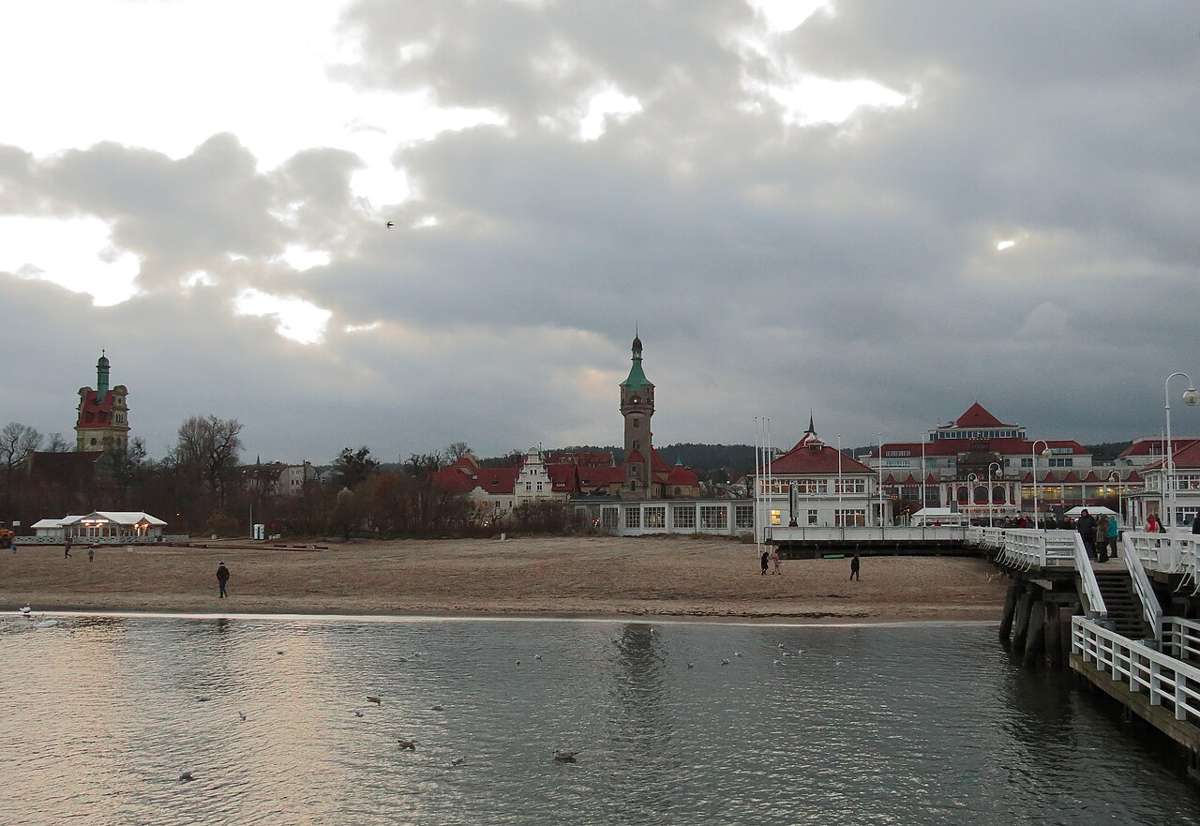
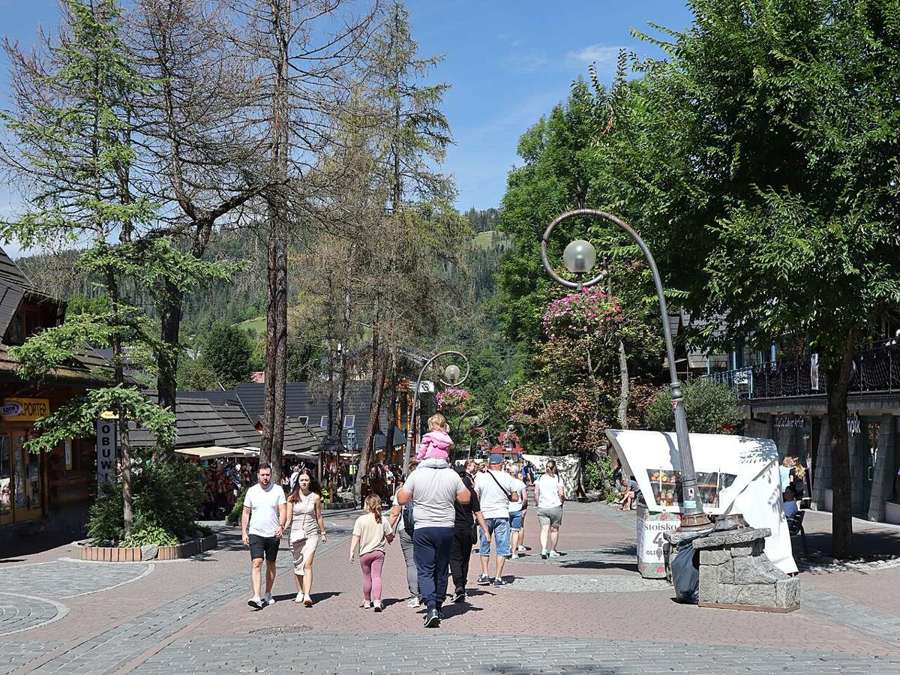
* Photos: Krupówki street in Zakopane and the pier in Sopot, both CC0 via Wikimedia Commons. The images are illustrative.
Frequently asked questions
When does the new tourist tax law start?
On 1 January 2027, with two articles starting 14 days after publication in the Journal of Laws, according to prawo.pl. The President signed the law on 15 October 2026.
How high can the tourist tax be in 2027?
Up to PLN 5 per night, PLN 5.50 in spa protection areas. The spa fee can be up to PLN 6.86 per night. Municipal councils set the actual rates and may choose lower ones.
Who is exempt?
People with the disabilities listed in the law and one carer, and anyone staying more than 29 consecutive nights. Municipalities can add exemptions.
Do I pay it as a foreigner?
The fee does not depend on nationality or the purpose of the stay. It depends on being provided with accommodation for at least one night in a place where the fee has been introduced.