Twaróg in Poland: Choosing Curd Cheese for Cooking
The essentials: Choose twaróg by description, ingredients, weight and recipe. Chudy, półtłusty and tłusty describe fat categories; mielony means ground. A cheesecake tub can have a different formulation from a plain block.
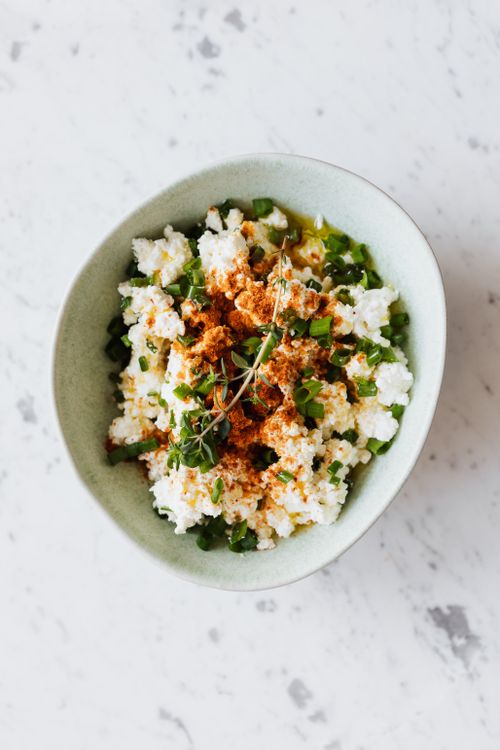
Cover: Kaboompics, Pexels source photograph, Pexels License. Image unchanged. A cottage-cheese dish with herbs, shown as serving context. It is not a photograph of the named twaróg products or proof of a precise formulation.
Twaróg is one of the most useful Polish supermarket words to learn if you cook at home. It appears in blocks, wedges and tubs, with descriptions that tell you about fat content, texture or intended use. Translating every pack simply as cottage cheese can hide differences that matter to a recipe.
A better approach is to ask what you want the cheese to do. Are you making a crumbly filling, mixing a breakfast spread or following a cheesecake recipe? The answer helps you read the label. This guide uses current Piątnica producer pages as concrete examples, not a taste ranking or a claim that every Polish twaróg follows one specification.
Begin with the recipe, not the biggest tub
Write down the kind of cheese your recipe expects, its quantity and any instruction about grinding. A large tub can look convenient, but convenience does not prove the contents match a recipe written for a plain block. Read the description and ingredients before deciding that one format can replace another.
If you are improvising a sandwich spread, the choice can be flexible. If you are making a cake for an occasion, match a tested recipe to the exact product type. That reduces the number of variables you introduce at once. Trying a new cheese and changing the rest of the recipe simultaneously makes it harder to understand the result.
Chudy, półtłusty and tłusty are useful starting words
Chudy means lean, półtłusty means semi-fat and tłusty means full-fat in this shopping context. The checked Piątnica range lists these descriptions across its twaróg products. They help you narrow the shelf, but should not replace the numerical information on the specific product.
For example, Piątnica's checked Twaróg półtłusty 4% product is a 250 g block. Its page declares 4 g fat per 100 g. That is a named example, not a universal rule that every półtłusty cheese in every shop must carry the same number. Compare the label rather than remembering a percentage from a different product.
Shape and processing are separate from fat content
The producer range distinguishes twarogi w kostce, meaning blocks, from twarogi w klinku, meaning wedge-shaped formats. You may also see mielony, meaning ground. These words concern the form or processing; they do not replace the fat description or ingredient list.
This is why a label can need more than one word to be useful. Półtłusty tells you one feature and mielony another. A recipe may care about both. If it asks for ground twaróg, do not assume an unground block is already prepared merely because its fat category matches. Equally, a smooth-looking tub does not tell you what else it contains.
Compare two actual ingredient lists
Piątnica's current 250 g półtłusty 4% block lists pasteurised milk and lactic-acid bacterial cultures. Its Twaróg sernikowy mielony 1 kg lists cream cheese and twaróg. Those are visibly different formulations, even though both belong in the wider cheese section and both may be used in home cooking.
The lesson is not that one is better. It is that a product marketed for cheesecake can be formulated differently from a plain block. When a recipe's result depends on the cheese, compare its specification with the product you are buying. Do not let a shared word erase the other information on the pack.
A cheesecake tub is not a neutral container
The checked Piątnica sernikowy product declares 18 g fat per 100 g. Its producer says that its cream-cheese and twaróg formulation is designed so that additional butter or margarine is unnecessary for the intended preparation. Keep that statement tied to this particular product and its appropriate recipe.
It does not mean you should remove butter from every cheesecake recipe whenever you buy a tub. Nor does it mean every product called sernikowy has this composition. Read the recipe, the actual product directions and the ingredients together. If they do not match, find a tested recipe for the product rather than guessing a correction.
Avoid a one-word English substitution rule
An English-language recipe may call for cottage cheese, cream cheese, quark or another fresh cheese. Those names alone do not establish that a Polish pack will behave identically. Look for the texture, ingredients and preparation the recipe expects. The purpose is to match the ingredient, not merely to find an appealing translation.
When cooking something forgiving, a small trial can be useful. When baking a cake that must work on the first attempt, use a recipe written for the cheese you can actually buy. This guide does not certify a universal swap between twaróg and every product sold under an English fresh-cheese name.
Read gramatura as carefully as the cheese name
Gramatura is the pack weight. The checked producer examples include a 250 g block and a 1 kg cheesecake tub. Do not compare shelf prices without accounting for that difference. A larger package may make sense for a particular recipe, but only if you need that amount and the formulation fits.
A recipe calling for a kilogram requires checking the total amount you put in the basket. Do not assume that four visually similar packs always add to the right total; read each weight. If buying by a variable-weight format, use the actual labelled weight rather than a nominal impression of its size.
Use producer pages as a reference, not a substitute for the pack
A current producer page is useful when planning in English before you shop. You can identify the product name, format and ingredients, then compare them with the physical label. It is less useful if you treat a saved screenshot as proof that a later package has not changed.
The pack in your hand should settle what you are buying. If a delivery substitution changes the brand or format, repeat the comparison. Another 1 kg white tub may contain a different cheese mixture. Approving a substitute by colour and size alone can change the most important ingredient in the recipe.
Choose a first use that teaches you something
For a first purchase, choose a dish where the recipe clearly names the kind of twaróg required. That gives you a more meaningful reference than buying a random pack and trying to make it fit a dish afterwards. Note the exact name and whether the recipe asked for grinding or another preparation step.
If you want to make a simple spread, start with a modest amount and add other ingredients gradually according to your recipe. If you want cheesecake, follow a tested formulation instead of treating the cheese tub as a complete set of instructions. Familiarity comes from matching products and dishes, not from assuming all fresh cheeses are alike.
Learn a few questions for the cheese counter
Czy ten twaróg jest mielony? asks whether the twaróg is ground. Czy to twaróg półtłusty? asks whether it is semi-fat. Jaki jest skład? asks what the ingredients are. Pointing at the product makes these questions more useful than asking about the whole shelf.
For a specific recipe, show the ingredient line and ask whether the pack matches it. A shop assistant may help identify the product description, but that is not the same as guaranteeing a recipe outcome. Keep the original instructions available so that a translation does not silently change what you meant to buy.
Keep lactose and milk questions separate
The checked Piątnica range includes a twaróg labelled bez laktozy. That phrase is useful if lactose content is the issue you are checking, but it does not mean the product contains no milk. The wider range also includes different cheeses that should not be treated as interchangeable dietary solutions.
If you are shopping for a person with a milk allergy or another specific medical restriction, inspect the actual ingredients and allergen information and use suitable professional advice. A lactose-free claim is not permission to describe a dairy product as milk-free. This distinction matters more than finding an approximate English name.
Storage and dates belong to the individual pack
Follow the storage directions, date and any instructions after opening. Do not apply a shelf-life statement from a different cheese simply because both are white and refrigerated. The amount you buy should fit the recipe and your ability to use the rest under the product's instructions.
Keeping the label or a clear photograph helps when planning another purchase. Record the product name as well as the brand. If you only remember the package colour, a redesigned wrapper or neighbouring product can lead you to something different. A short written note is more reliable than a vague visual memory.
Build a useful shopping note
A strong note might say: twaróg, specified fat category, ground or unground, required weight, exact recipe. That is enough to search another shop without assuming that every producer uses the same package shape. It also tells another person what they may substitute and what should stay unchanged.
For the rest of the weekly shop, our supermarket guide explains the Polish retail setting. It cannot guarantee that an individual store has a particular cheese today. If a recipe depends on one formulation, check availability before committing the rest of the ingredients or a large baking schedule to it.
The decision that prevents most surprises
Before putting the pack in the basket, match four things: description, ingredients, weight and recipe. A block, wedge or tub can all be sensible choices for different jobs. The wrong shortcut is treating the word twaróg as a complete specification when the rest of the label supplies details your cooking needs.
Once you can read those details, the cheese shelf becomes more flexible. You can choose a plain block for one dish and a prepared cheesecake cheese for another without calling one a substitute for everything. That is more useful than memorising a single English translation and hoping every pack behaves the same way.
Related: Supermarkets in Poland.
Frequently asked questions
Does mielony mean low-fat?
No. It means ground. Read the fat description or numerical declaration separately.
Are all cheesecake tubs the same?
No. The named Piątnica example contains cream cheese and twaróg, unlike its checked plain block. Read each product's ingredients.