Kasza in Poland: A Guide to Groats on the Shelf
The essentials: Kasza is a shelf category, not one grain. Read the word after it: gryczana is buckwheat, jaglana is millet and jęczmienna is barley. Check whether the product is loose, in cooking bags or a blend before following preparation instructions.
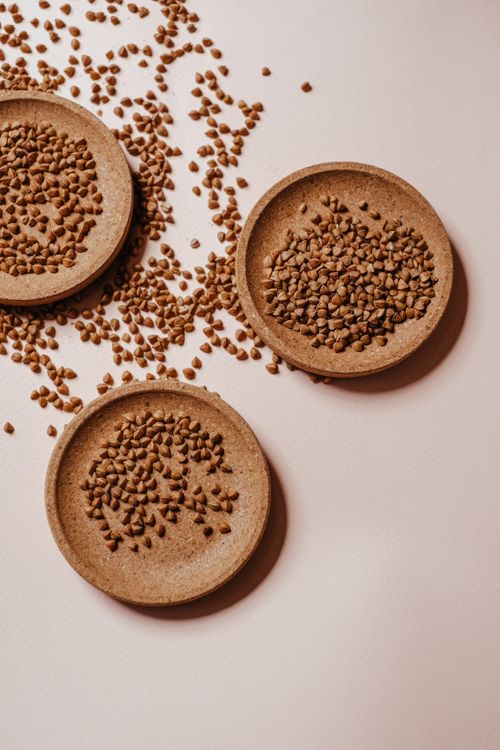
Cover: Vie Studio / Pexels, Pexels License. Illustrative buckwheat ingredient photograph, not a Polish product label or recipe test. Resized.
Kasza appears on enough Polish shelves and menus that it is easy to assume it names a particular ingredient. It does not. A box of kasza jaglana, a bag of kasza gryczana and a pack of kasza jęczmienna can belong to the same supermarket section while providing quite different ingredients for dinner.
For a newcomer, the task is to learn a small group of names rather than one translation. Identify the grain, look at how it has been processed or packaged, then use a preparation method written for that product. That is enough to start cooking without buying a whole row of unfamiliar boxes or treating every kasza as a substitute for rice.
Read the name after kasza
Gryczana refers to buckwheat. Jaglana is millet, which Kupiec identifies as coming from proso. Jęczmienna refers to barley. The category can also include bulgur, which the checked Kupiec label identifies as made from durum wheat, and kukurydziana, a corn-based product category in the producer’s range.
These are not different flavour names for the same base. A barley soup ingredient and a millet ingredient for a sweet recipe are different shopping choices. Read the complete name in your recipe and on the package before comparing price or pack size.
A mixed product needs another step. Kupiec’s range includes blends combining grains and other ingredients, such as buckwheat and barley. A front-of-pack word may highlight only part of the contents. Check the ingredient list if you need a single grain or want to control what goes into a particular dish.
Buckwheat: notice the additional description
Kupiec sells both a product called kasza gryczana and one called kasza gryczana biała. Its wider range also explicitly identifies roasted buckwheat as prażona. Those extra words should stay on your shopping note; reducing everything to buckwheat can hide the particular product a recipe expects.
If a recipe specifies biała or prażona, buy that version where possible, rather than assuming the difference is only packaging. When exploring a new ingredient, use a recipe written for the version you bought. That gives you a clearer way to judge the result than changing the grain version and cooking method simultaneously.
For a first purchase, choose a small pack with an intended use you understand. You can try it as the named grain component in a producer recipe or another tested dish. There is no need to make claims about a particular regional tradition or nutritional advantage to justify putting a new ingredient on the table.
Millet: jaglana is its own ingredient
Kasza jaglana is millet. The checked Kupiec product page lists millet groats as the sole ingredient, while the retailer Sklep Kupiec describes both savoury and sweet uses. That versatility is a reason to consider it, but not proof that any millet preparation can replace any other grain without a change in method.
The retailer Sklep Kupiec’s 4×100 g product gives a specific cooking-bag instruction: one bag goes into one litre of boiling water and is cooked covered for 15 minutes, then drained and opened. Treat that as a named product example. It is not a water ratio for loose millet in every recipe or an instruction to put the outer retail packaging into a pan.
The same page includes additional preparation advice. Read the package you actually receive and follow its complete directions rather than selecting one sentence from an online description. If you prefer a loose-grain method, use instructions designed for that format rather than emptying a cooking bag and guessing how the water amount should change.
Barley: pęczak and perłowa deserve separate attention
Jęczmienna tells you barley; pęczak and perłowa further identify products within that group. Kupiec lists both in its groats range, as well as other barley products. Keep the full label when buying for a recipe, especially if the texture of the grain is a central part of the dish.
The checked pęczak ingredient list says 100% barley groats and explicitly notes gluten. That is useful product information, not a reason to treat the entire kasza shelf as one dietary category. The general word kasza says nothing reliable about whether a product meets a particular dietary requirement.
A recipe asking for a named barley product may not give the intended texture if you replace it with an entirely different grain. If you want a substitution, choose a recipe author’s tested alternative or a producer method. This guide deliberately does not give one universal substitution table, because timing, liquid and texture depend on the dish.
Bulgur belongs to the wheat decision
The Kupiec bulgur label checked here lists 100% bulgur from durum wheat. The pack contains 3×80 g, giving a total of 240 g. That differs from the 4×100 g format common elsewhere in the range, so similar-looking boxes do not necessarily contain the same total amount or portion size.
The product’s stated preparation uses a cooking bag in boiling water for 15 minutes. Again, that is the method for that labelled product. A recipe for loose bulgur using another water amount or resting method should not be combined casually with a cooking-bag instruction.
If your recipe asks for bulgur, confirm the exact product and pack format. Do not choose another kasza simply because it sits beside it or has a similar price. Start with the named ingredient and make any adaptation deliberately after checking a tested method.
Loose packs and cooking bags are different conveniences
A pack marked 4×100 g contains four 100 g units. A 400 g loose pack may contain the same total weight but provides a different way to measure and prepare it. The multiplication sign is therefore practical information, not decorative branding.
Cooking bags can help portion a product according to its printed instructions. Loose packs can make it easier to weigh a different amount for a recipe. Neither format is automatically better value or more suitable for every household. Decide whether you want the producer’s bag method or the flexibility of measuring loose grain.
Check what a recipe means by portion. A producer’s suggested serving is a reference, not a rule about how much every adult or child will eat. If the grain is only one component of a larger dish, the amount you need may differ from an example side-dish portion. Follow the recipe quantity and adjust future meals based on what your household actually uses.
Compare prices using the same total weight
Kasza shelves mix package sizes and formats, so the lowest box price can be misleading. Compare price per kilogram where displayed and check the net weight. A 240 g pack, a 400 g pack and a larger loose bag are not like-for-like at the headline price.
No fixed national price is quoted here. Manufacturer shops and supermarkets can have different promotions, delivery costs and stock. If buying online, confirm the product identity and weight in the basket and inspect any substitution before cooking.
A larger pack is only a saving if it suits your storage and use. Follow the printed storage conditions and date guidance, and keep the original information when moving the ingredient to a jar. If several grains look similar once decanted, a label with the exact name and preparation reference prevents the next meal becoming another guessing exercise.
Ingredients and dietary requirements need the whole label
The checked millet page says its product may contain gluten, while the barley and bulgur examples identify gluten-containing ingredients. These distinctions show why the underlying grain name and the package’s allergen information both matter. Do not assume a product is suitable for a particular requirement merely because its main grain sounds familiar.
This is a cooking and shopping guide, not dietary treatment advice. Producer pages may make wider wellbeing claims, but those are not needed to choose an ingredient or follow a recipe. Read the label relevant to the person eating the dish and obtain appropriate individual advice where necessary.
For a blend, check every listed ingredient, not only the grain in the largest text. Seeds, pulses and other additions can be part of the product. A single-ingredient recipe is easier to reproduce when you buy a single-ingredient pack rather than a similarly named lunch mix.
Build familiarity one bag at a time
Choose one kasza and one recipe for your first experiment. Record the exact product, the dry amount, the method and whether you liked the result. On the next shop, you can repeat a successful combination or change one element intentionally.
Our supermarket guide helps with the wider shopping routine, while the market-hall guide offers another way to explore everyday food shopping. Whichever shop you use, the useful habit is the same: full grain name, exact pack format, then the matching cooking instructions.
Keep the recipe and label together
For a first attempt, photograph the preparation panel before discarding the outer box. Record whether the stated weight is for dry grain and how many individual bags the pack contains. If the dish turns out too large or too small for your household, change the measured quantity next time while preserving the correct method. That is a clearer adjustment than changing grain, pack format and cooking time together. If another recipe uses the same Polish word but specifies a different format, treat it as a new method to read, not confirmation that your previous instructions apply unchanged.
Frequently asked questions
Does kasza mean buckwheat?
Not by itself. Kasza gryczana is buckwheat, but the category also includes millet, barley and other products. Read the full name.
Can every kasza use the same water and cooking time?
No. Grain, processing and pack format differ. Use the method for the exact product, especially when a cooking-bag instruction differs from a loose-grain recipe.