Ogórki Kiszone or Konserwowe? Polish Pickles Explained
The essentials: Kiszone and konserwowe are different buying choices. Check the full name and ingredients: the Rolnik konserwowe example uses vinegar and sugar, while its kiszone product is described as sour-salty. Do not infer live cultures or storage rules from the name alone.
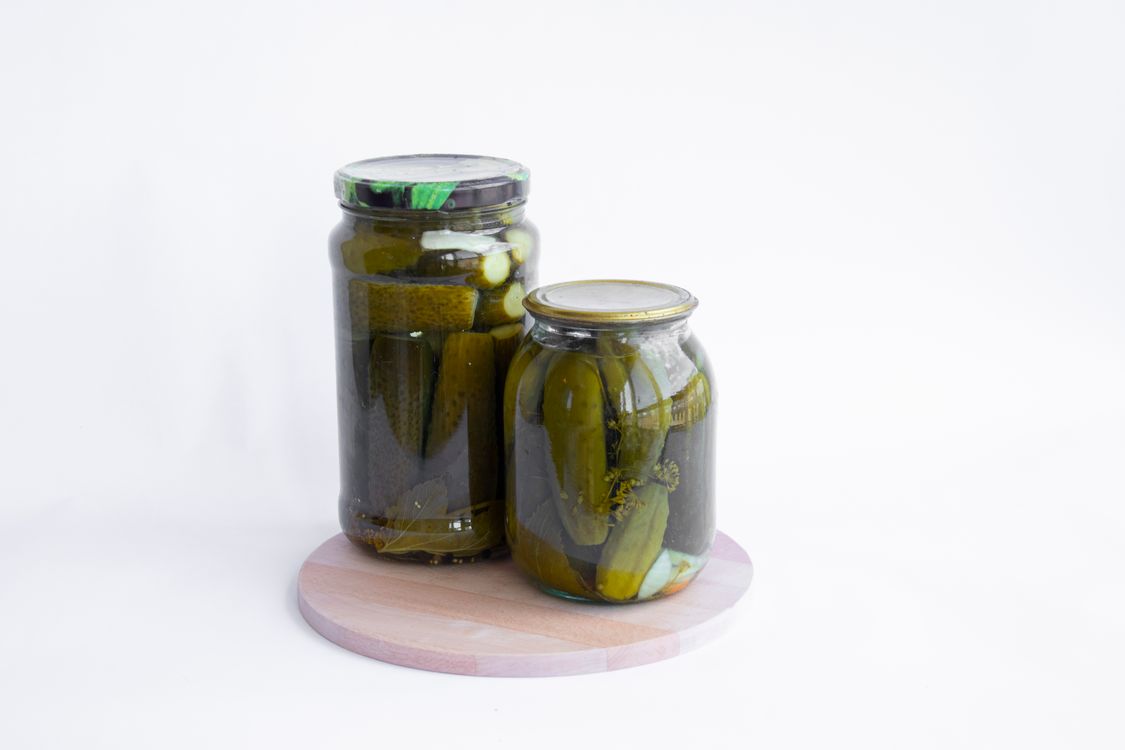
Cover: Леся Терехова / Pexels, Pexels License. Illustrative cooking photograph, not a Polish product label, brand endorsement or tested recipe. Resized.
Ogórki is a useful first word in a Polish food shop, but it only gets you as far as cucumbers. On the preserved-food shelf, kiszone, konserwowe, korniszony and kanapkowe tell you more about the product you are considering. Two green jars can be quite different choices for a sandwich, salad or soup.
For newcomers, the simplest approach is to buy by the full name, ingredients and intended dish. Do not rely only on the word pickle from a translation app, a photograph of dill or the colour of the liquid. And do not turn a sour taste into a claim about health benefits or live cultures: the label has to establish what the specific product is.
Kiszone and konserwowe are separate shopping choices
Rolnik lists kiszone and konserwowe products separately in its cucumber range. It describes its kiszone product as having a pronounced sour-salty flavour and suggests uses including cucumber soup, sandwiches and salads. Its konserwowe description instead identifies a vinegar marinade and a sweet-sour taste.
The checked konserwowe ingredient list contains cucumbers, water, spirit vinegar, sugar, salt and spices including mustard. That gives a concrete way to understand the difference without trying to judge a sealed jar by appearance. Vinegar and sugar in that product’s list are part of its formulation, not evidence that every preserved cucumber from every brand uses the same proportions.
If a recipe names one style, start with that style. A soup recipe calling for kiszone is not automatically asking for any jar labelled pickle in English. If you deliberately substitute a sweet-sour vinegar product, treat that as a change to the dish rather than assuming the words are interchangeable.
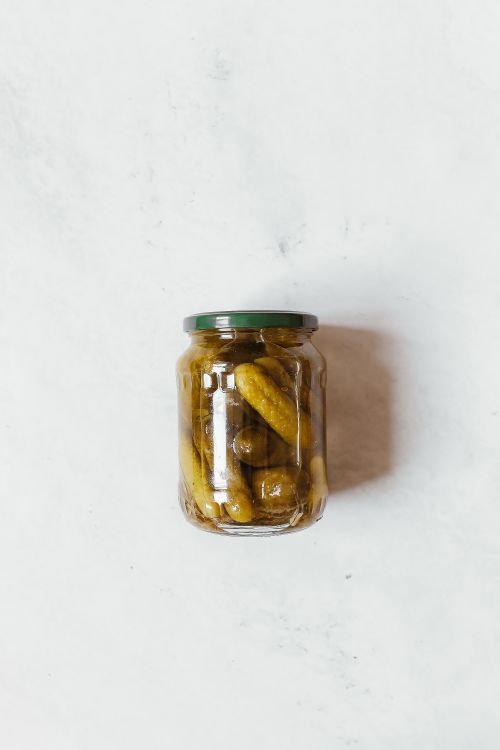
Read the ingredients rather than a romantic description
Producer descriptions often discuss tradition, crunch or an old recipe. Those phrases can help explain how a product is marketed, but the ingredient list is more useful when you need to know what is actually inside. Look for ocet, vinegar, cukier, sugar, sól, salt, and named spices.
The exact label can also reveal allergens. Rolnik’s checked konserwowe example includes mustard in the spice mixture. Do not assume a jar of cucumbers contains only cucumber and water, or that another product in the same brand’s range has an identical spice blend.
If an online description differs from the jar you receive, read the actual package and clarify with the seller or producer where needed. Product ranges, sizes and formulations can change. The brand name alone is not enough to decide that an old screenshot is still the complete specification.
Kiszone is not a health label
A product’s name does not establish the presence of live cultures, how it was processed or the storage conditions it needs. Do not assume that every kiszone jar is an unprocessed live-culture food, and do not choose it on the basis of an unsupported digestive or treatment claim.
This guide is about flavour, product identification and everyday shopping. It does not rank jars by medical benefit or advise using a food to treat a condition. A sour-salty style can be a useful ingredient without needing a broader health promise attached to it.
The same caution applies to words such as natural or traditional. Read the actual processing and storage information, and follow the package instructions. A category name cannot replace a clear statement about the product you have bought.
Korniszony and kanapkowe answer different questions
Rolnik’s range includes korniszony and products identified for sandwiches as kanapkowe. Its current category also lists small cucumbers described with a 3–6cm size range and sandwich products with additions such as jalapeño. These are further product distinctions, not synonyms for one standard jar.
Kanapkowe is a useful clue when you want a sandwich-oriented product, but still check the form and ingredients. A jar may contain slices, added chilli or a particular marinade. The front photograph can help, but the exact description tells you more than assuming all sandwich cucumbers are mildly flavoured.
Korniszony can be worth considering when size is part of the intended serving. If your dish needs a specific cut or quantity, check what is actually in the pack. A small-cucumber product and a diced product may both sit near a whole-cucumber jar but save or create different preparation work.
Choose for a dish you already plan to make
For a first purchase, start with one clear use. If you are making a recipe that specifies kiszone, find that word and read the label. If you want a sweet-sour accompaniment, investigate a konserwowe product whose ingredients and format fit your preference. If preparing sandwiches, compare a whole-cucumber jar with a suitable pre-cut product.
Do not buy several large jars merely to learn the terminology. A small, deliberate comparison gives you more useful information than a fridge crowded with opened products you are not sure how to use. Record the full product name after finding one you like so the next shop is repeatable.
Producer serving suggestions are ideas, not restrictions. Rolnik suggests its kiszone product for cucumber soup, sandwiches and salads, while its konserwowe product is described for dinners, salads and snacks. You can use those as starting points without claiming they define every household’s Polish food tradition.
Total weight and drained weight are different
A jar contains both cucumbers and liquid. If your main aim is to buy a quantity of cucumbers for a recipe, check masa po odsączeniu, the drained weight, as well as the net amount. A large-looking jar does not necessarily contain more usable cucumber than another product with a different liquid proportion.
The checked Rolnik 720 ml product page lists net mass 660 g and drained mass 340 g. Those figures are a product example, not a universal ratio for all jars or even all sizes of the same style. Use the values on the exact pack when comparing what you will get.
For a practical price comparison, put two products on the same basis. If the shelf unit price uses total jar contents but you care about cucumbers after draining, note that distinction before deciding which is cheaper for your recipe. No fixed retail price is quoted here because size, shop and promotion vary.
A worked comparison without inventing a bargain
Suppose one recipe requires a particular drained quantity. First read that quantity in the recipe, then find the drained weight on the jar. Only then decide how many jars the dish needs. Do not multiply the front-of-pack volume as though every millilitre were cucumber.
If you are comparing whole and sliced products, include the actual use. A slightly different price may matter less than buying the form the dish needs, but convenience is a preference, not a claim that one product is objectively better value. Keep the price and preparation decisions visible instead of collapsing them into one headline bargain.
For online ordering, inspect the exact item and size in the basket. A substitution can change style, cut, spice level or drained weight while still looking superficially similar. Check the delivered jar before starting a recipe that depends on a specific kind of cucumber.
Storage starts with the jar you bought
Follow the printed instructions before and after opening. Rolnik’s checked konserwowe page says to keep the product in a dry, cool place and refrigerate after opening. That instruction belongs to the named product; it is not a universal shelf-life rule for every kiszone, fresh market product or opened jar.
Do not decide storage solely from whether a product was sold on a shelf or from a photograph in an article. Read its date and conditions. If the label gives an after-opening period, use that instruction rather than replacing it with a general number found online.
This guide does not provide a home-preservation recipe or a method for judging whether an uncertain jar is safe. If the package is damaged, instructions are unclear or a product seems questionable, do not improvise from a shopping article. Resolve the specific product question with the seller or producer.
Buying at a market or shop counter
If buying a loose product rather than a sealed branded jar, ask what it is and how it should be stored. The full Polish terms help: kiszone for the style you are seeking, konserwowe for the vinegar-marinated category described here, and bez dodatku cukru only if you specifically need to ask about an absence of added sugar. An answer still needs to concern the actual product.
Do not assume a market product has the same formulation or storage instructions as a supermarket jar. For help with the setting, our Polish market-hall guide explains the broader shopping experience. Our supermarket guide covers the other common route.
The useful result is a small vocabulary with a practical purpose. You can identify the style, check what is inside, compare how much cucumber you are buying and choose a jar for dinner without asking a translation app to treat every Polish pickle as the same food.
Keep a useful note after opening
Once you have tried a jar, record what mattered to your household: the full product name, whether the flavour suited the intended dish and whether the cut saved preparation time. Keep that separate from claims about how the product was made that you have not verified. A photograph of the front and ingredient panel makes the next shop easier. If you change brands, use those details to compare the new jar rather than assuming a similar lid colour signals the same style. The aim is a repeatable dinner choice, not a ranking of every pickle on the shelf.
Frequently asked questions
Does kiszone guarantee a product contains live cultures?
No. The name alone does not establish processing, live-culture content or storage needs. Read the exact product label rather than making a health claim from the style name.
Can I compare jars only by their total weight?
If you mainly want the cucumbers, compare drained weight as well as price and pack size. Liquid is part of the jar’s total contents, so the headline weight can hide a different quantity of cucumbers.