Butter in Poland: Masło, Mix and Spread Labels
The essentials: Read the product name, fat percentage and ingredients together. Masło, mix and margaryna are different categories. Similar packaging does not make a spread equivalent to the butter a recipe specifies.
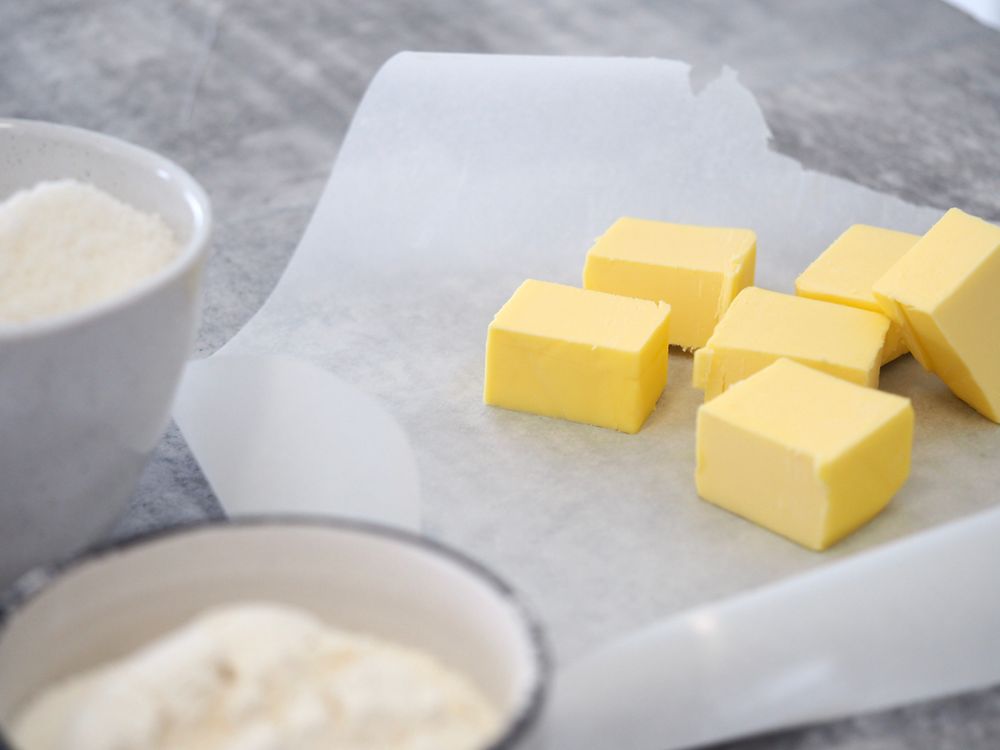
Cover: Jess Bailey Designs, Pexels source photograph, Pexels License. Image unchanged. Butter cubes in a cooking setup. Illustrative stock photo, not the named Polish product or evidence of a fat percentage.
A Polish butter shelf can look deceptively simple. There are foil-wrapped blocks, tubs for spreading and packages whose colours feel familiar even when their names are not. The mistake is to buy the wrapper you recognise while missing the line that says whether the product is butter, a mixed-fat spread or something else.
For an expat kitchen, the useful skill is reading the product name, fat content and ingredients as a set. Poland's food-quality inspectorate, IJHARS, explains that milk fats, mixes and margarines are different products with different compositions and properties. Its May 2026 consumer guidance specifically warns against judging from packaging shape and design.
Start with the name, not the countryside picture
Masło means butter. Mix or miks signals a mixed-fat product, while margaryna means margarine. Tłuszcz do smarowania describes a spread. Do not stop at a large brand name or a word such as creamy. Find the product designation, which may appear in less prominent print.
This matters when two blocks sit together and one is on promotion. You may prefer the mix for spreading. Make that choice knowingly rather than discovering at home that you bought a different ingredient for a cake. Similar packaging is not a substitution rule, and the same manufacturer can sell several kinds of spread.
What the fat range tells you
The official category explanation from the Olsztyn inspectorate describes ordinary butter as containing at least 80% and less than 90% milk fat, no more than 16% water and no more than 2% non-fat milk solids. That gives context for the 82% figure seen on many Polish blocks. It does not mean every butter-related product must say 82%.
The 2026 IJHARS guide distinguishes lower-fat milk-fat products too. Three-quarter-fat butter falls in the 60–62% range; half-fat butter in the 39–41% range. Other milk-fat spreads have their own percentage bands. Read the full description. A lower percentage does not automatically mean vegetable oil was secretly added, but it does mean a different ingredient balance.
Total fat is not the same as fat source
A number on the front tells you how much fat a product contains, not necessarily what that fat is. IJHARS explains that milk-fat spreads cannot replace their milk components with other fats. A mixed-fat spread belongs to another category, combining the relevant milk and other fats under that category's rules.
The Olsztyn guide describes mixed-fat products as having milk fat representing between 10% and 80% of their total fat content. That is a share of the fat, not a promise that the whole product is 80% butter. Read the ingredients and designation together rather than adding numbers from unrelated parts of the wrapper.
Practise with a named producer example
Mlekovita's current page for Masło ekstra z Polskiej Mleczarni 200 g declares 82% fat and lists pasteurised cream as the ingredient. This is a concrete example: an identified pack, a percentage and a producer ingredient list that you can compare with the wrapper in your hand.
It is not evidence that every butter has the same composition. The producer's broader range includes different percentages, sizes and descriptions. Packages can change. Use the example to practise reading, then check the actual pack instead of treating one web page as a permanent specification for the whole shelf. This guide does not claim to have taste-tested it.
Baking substitutions need more than a similar shape
For a sandwich, spreadability and taste may be your main concerns. For baking, a recipe depends on its ingredient balance too. A substantially lower-fat product is not simply ordinary butter in softer packaging. Replacing one with the other without checking the recipe creates an avoidable unknown.
If your recipe specifies 82% butter, buy an appropriate butter or use a tested recipe designed for the alternative. Do not casually add an estimated amount of oil to fix a lower-fat spread. There is nothing wrong with experimenting, but an experiment should not be presented as a guaranteed like-for-like substitution when guests or an important cake depend on it.
Margaryna is not an automatic allergen answer
The official category explanation allows a small milk-fat component in margarine. For an individual shopper, the exact ingredients and allergen information still need reading. Do not decide that a product suits a milk allergy simply because its name is not masło. A category name is not a personalised safety assessment.
Likewise, bez laktozy refers to lactose, not the absence of every milk component. For a specific allergy or dietary restriction, use the actual pack's information and appropriate professional advice. This guide sorts shopping categories. It does not certify a spread for a medical need or make a dairy-free claim about an unchecked product.
Learn the words that change the purchase
Zawartość tłuszczu means fat content. Składniki means ingredients. Śmietanka is cream. Oleje roślinne means vegetable oils. Do smarowania means for spreading. Recognising those words helps you locate the useful parts of the label even when an advertising paragraph remains difficult.
Ask Czy to jest masło, czy mix? meaning: Is this butter or a mix? Czy to masło ma 82 procent tłuszczu? asks whether the butter has 82% fat. Point at the exact pack rather than asking whether a whole brand makes real butter. The answer can depend on which of that brand's products you mean.
Check weight before comparing price
Blocks do not all contain the same amount. The checked Mlekovita range includes small portions, 100 g and 200 g products, plus larger osełka formats. A familiar shape is not a reliable indication of weight. Find the net quantity before deciding one price is cheaper.
Compare unit prices where supplied, while keeping category and fat content in view. A cheaper price for a smaller block or another type of spread is not the same offer. You may still choose the smaller pack because you will use it. That can be more useful than buying a larger bargain you cannot sensibly fit into your cooking.
Descriptive words are not a complete specification
Osełka appears in the checked producer's butter range alongside several pack weights. Treat it as a description to investigate rather than a replacement for the ingredient and fat-content checks. A traditional-looking form does not remove the need to read, just as the word extra does not tell you every detail you need.
Farm pictures, wooden churns and fresh bread can make packaging attractive without answering the practical questions. What category is it? How much fat does it contain? What is it made from? These questions work across brands. They also help when your usual pack has been redesigned and you cannot rely on its old colours.
Follow storage instructions on your own pack
Find the date and storage directions, then follow them after purchase and opening. Do not copy an opened-storage period from another butter or a spread that looks similar. If the pack gives separate instructions after opening, include those in your kitchen plan rather than assuming the printed date answers every question.
For an unfamiliar product, a smaller pack makes the first trial easier. Keep the name or a label photograph if it works in your cooking. Compare the next pack instead of assuming a shelf position proves the product is unchanged. This is helpful when you are shopping quickly or accepting a delivery substitute without seeing the shelf.
Keep marketing separate from composition
Producer pages can explain ingredients and intended uses, but may also carry broad claims about health or digestibility. You do not need those claims to decide whether a 200 g pack matches a recipe. This guide uses the checked producer example for its declared composition and format, not as proof that one fat is best for everyone.
If you want a dependable baking ingredient, keep the decision narrow. A medical or nutritional change is another question requiring suitable advice. Reading a shopping label can identify the product without settling a personal health decision. Choosing a familiar ingredient for a cake is not the same task as choosing a diet.
Separate the sandwich choice from the baking choice
If you enjoy one spread on bread but follow recipes calling for ordinary butter, you do not have to force one product to do both jobs. Keep those choices separate if that suits your household. Knowing the categories makes this easier: the spread can be a deliberate preference rather than an accidental replacement.
For a first Polish shop, choose one clearly identified butter for a recipe you already know. Try another spread later as an intentional comparison. Our Polish bread guide covers another part of the breakfast shop, and the supermarket guide explains the wider retail setting. Neither requires assuming one wrapper or chain always offers the best choice.
Repeat a short shelf check
Before paying, read the designation, percentage, ingredients and weight. Confirm that the product fits its job. For a delivery, inspect any replacement as carefully as the original choice. A substitution can change the ingredient despite a close-looking package, and a quick check is easier than correcting a recipe halfway through.
A useful shopping list can therefore say more than butter: write the required quantity and percentage when they matter. If you are buying only for toast, note your preferred category instead. You are giving yourself enough information to choose another brand without accidentally changing the kind of product.
Once this routine is familiar, the shelf stops being a brand-recognition test. You can choose butter, a mix or another spread on purpose. The important result is not always choosing the same category. It is knowing which one you bought and avoiding an unwanted surprise when you begin cooking.
Related: Supermarkets in Poland. See also Bread in Poland.
Frequently asked questions
Does 82% on the wrapper prove it is butter?
No. Check the product designation and ingredients as well as the percentage.
Is margarine automatically dairy-free?
Do not assume so. Read the actual pack's ingredients and allergen information.