Barbórka: Poland's miners' day on 4 December - and its UNESCO bid
The essentials: Barbórka is the miners' holiday on 4 December, St Barbara's day, marked by dawn brass-band wake-ups, parades in gala uniforms and miners' Masses, above all in Silesia. In 2026 it falls on Friday 4 December, as UNESCO weighs inscribing Barbórka and mining traditions on its intangible heritage list.
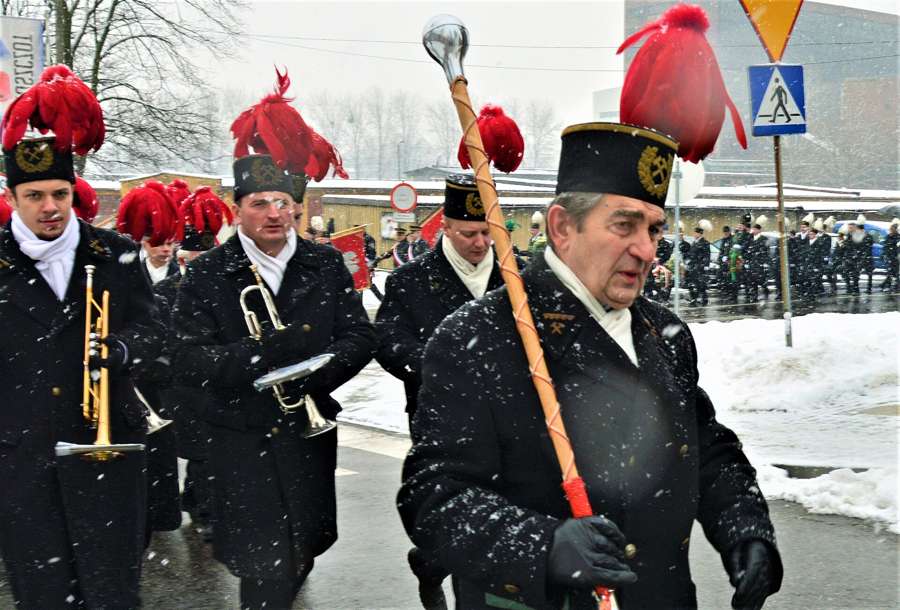
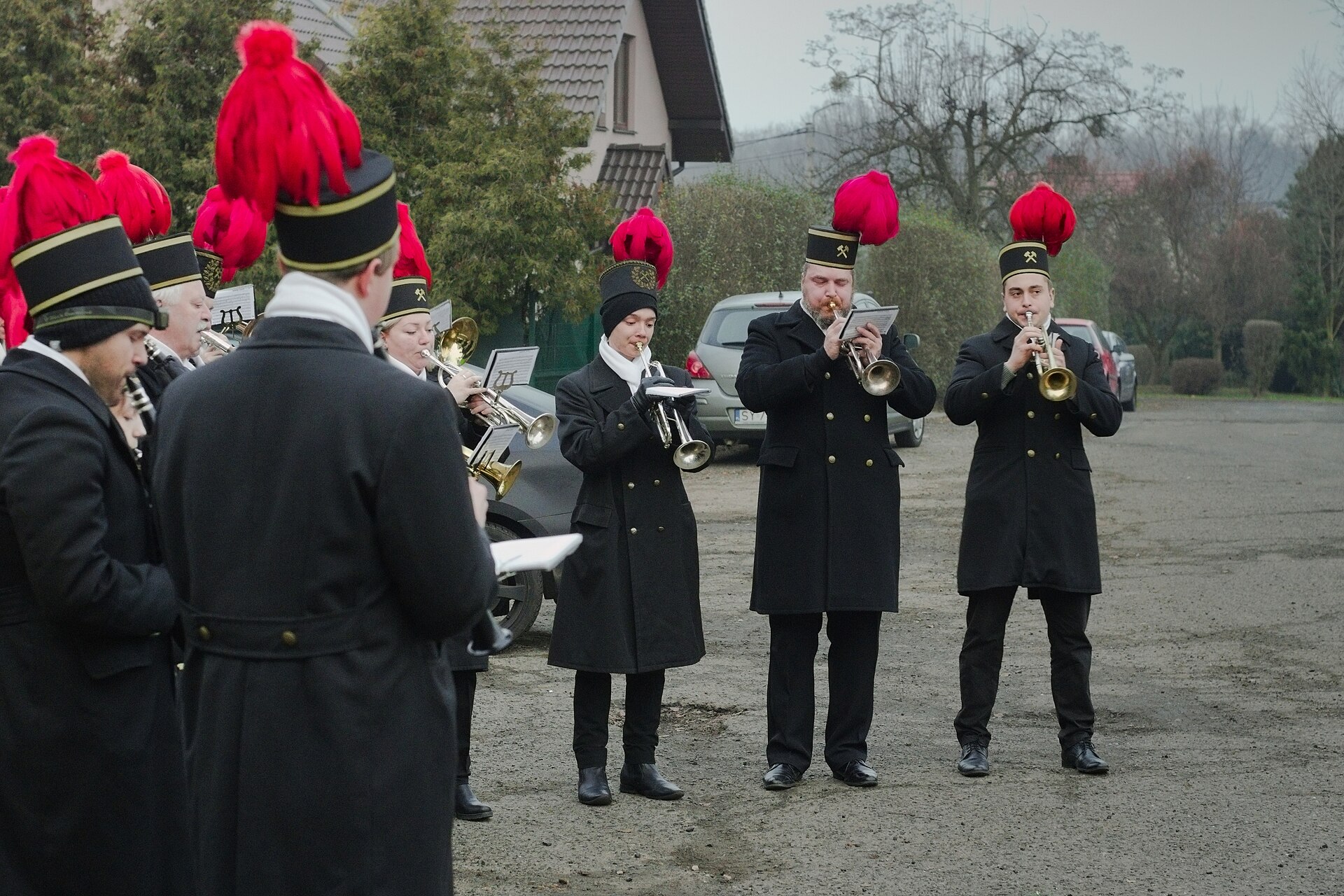
At dawn on 4 December, brass bands start marching through the back streets of Silesian mining districts before most alarm clocks ring. Men in black gala coats and tall czako hats crowned with red feather plumes play behind banners, church bells join in, and by mid-morning the churches of Katowice, Bytom, Zabrze and Rybnik are full. This is Barbórka, the feast of St Barbara - miners' day, and one of the most distinctive working traditions still alive in Poland.
In 2026 the day falls on Friday 4 December, and it carries extra weight: UNESCO is expected to decide at its committee session around the turn of November and December whether Barbórka and mining traditions join the Representative List of the Intangible Cultural Heritage of Humanity. Here is what the day is, what the rituals mean, and how an outsider can respectfully watch.
St Barbara and why she belongs to miners
Barbara was, according to legend, a Christian martyr executed around the year 306, reputedly by her own father, who died in a lightning strike soon after. Because of that story she became the patron saint who protects against a sudden death without the last rites - and in a hard-rock world of firedamp, cave-ins and explosives, no worker needed that protection more than a miner. Her attributes are a tower and a chalice, often with a miner's lamp, and her image hangs over shafts, in underground chapels and in miners' homes across Europe. In Poland she watches over coal miners in Silesia and the Wałbrzych basin, salt miners in Wieliczka and Bochnia, copper miners in the KGHM basin around Lubin, plus geologists, steelworkers and - by extension - firefighters and sappers.
The formal greeting you will hear all day is Szczęść Boże - literally "God give you luck". Saying it back is never wrong.
What actually happens on 4 December
Barbórka is not a public holiday; it is a normal working day wrapped around rituals that mining families structure their year around. A typical programme:
- Pobudka (the wake-up). Before sunrise, miners' brass orchestras - every coal mine and many mining towns keep one - play through the workers' districts to wake the community. In places like Bytom's Miechowice district the band stops outside the homes of jubilarians and plays for them personally.
- The gala march. Miners put on their mundur galowy: a black gala uniform with silver buttons and braid, white scarf, gloves, and the czako - the tall hat with the red plume. Denominations of rank are encoded in the buttons and feathers. Companies march behind their mine banners, usually to church.
- Miners' Mass. Parishes in mining districts hold dedicated Masses, often with the orchestras playing miners' hymns such as *Piesń górnicza*. At the Guido mine in Zabrze, a Mass is celebrated underground on the 170-metre level, in the St Barbara chapel.
- The cemetery. Delegations lay flowers at the graves of miners killed underground and at monuments to mining disasters. In Silesia the day also sits beside a darker anniversary: on 16 December 1981, nine striking miners were shot dead at the Wujek mine in Katowice during martial law, so the mid-December season mixes celebration with remembrance.
- The akademia. In the afternoon, mines hold a ceremonial academy: speeches, jubilee awards, promotions, and the awarding of the szpady górnicze - the ceremonial miner's sword, a leather-and-steel honour given for long or distinguished service.
- Karczma piwna (the beer hall). The evening belongs to a closed, miners-only institution with roots in early-20th-century German mining academies, revived in its modern form from the 1980s. Entry is strictly by invitation. Inside, the evening runs on ritual: newcomers who recently passed their professional exams must undergo the skok przez skórę - literally the "jump over the hide". Kneeling on a leather apron, the young miner drinks a beer, is struck on the backside with the hide by the ceremony master - the Lis-Major - and leaps over it, receiving a miners' name and the title of Lis ("Fox"). Veterans are Stare Strzechy, the "Old Thatches". There are rules, and breaking them costs you: a mug put down wrong or an elbow dropped in the wrong place means buying a round for the table.
Around the day there are also folk customs - in Cieszyn Silesia, for instance, men nicknamed Barbara serve drinks in the pub on Barbórka - and sayings miners quote all month, like "Barbara po wodzie, Boże Narodzenie po lodzie" (if St Barbara's day comes on water, Christmas will come on ice).
The UNESCO bid - decision expected at the end of 2026
In March 2024 Poland filed nomination no. 2256, "Barbórka i tradycje górnicze" (Barbórka and mining traditions), for UNESCO's intangible heritage list - a multinational nomination together with Austria and Luxembourg. The Polish side covers Upper Silesian and Wałbrzych coal traditions, the silver and lead miners of Tarnowskie Góry (whose St Barbara brotherhood dates to 1721), the salt miners of Bochnia and Wieliczka with the cult of St Kinga, and the Silesian brass-orchestra culture. Austria contributes the mining traditions of Carinthia and Styria, Luxembourg those of its former steel south.
Barbórka has been on Poland's national list of intangible cultural heritage since 2018, when the Zabrze celebrations were inscribed. The UNESCO evaluation runs its course over about two years, and the decision is expected at the committee session around the turn of November and December 2026. As of late October 2026, no decision has been announced - this article will be updated when it lands.
The timing matters. With coal mines closing under decarbonisation, the people behind the bid argue openly that they are fighting for a living tradition, not a museum piece: the point, they say, is not to preserve the past but to pass on values - solidarity, pride in hard work, memory - to the next generation, whether or not the pits survive.
Where you can see Barbórka as an outsider
The parades, the pobudka and the miners' Masses are public; the karczma piwna is not. Practical options:
- Upper Silesia is the heartland: Katowice (especially the Nikiszowiec and Murcki districts), Bytom-Miechowice, Piekary Śląskie, Zabrze, Rybnik, Jastrzębie-Zdrój, Wodzisław and the mining towns around them. Morning parades on 4 December are the easiest thing to catch; the Guido mine underground Mass in Zabrze is ticketed and sells out early.
- Tarnowskie Góry (silver-lead mining, UNESCO-listed historic mine) and Wałbrzych (former coal basin, now the Stara Kopalnia museum) both celebrate in their own right.
- Bochnia and Wieliczka honour St Barbara alongside their own patron, St Kinga, with salt-miner uniforms - a different cut and colour from the Silesian black. Wieliczka is an easy day trip from Kraków year-round; our Wieliczka Salt Mine tickets guide covers the practical side.
If you are in Silesia for the season, pair it with the region's Christmas markets - our Katowice Christmas market 2026 guide has dates and locations - and mind the etiquette basics from our Polish social etiquette guide: a parade to Mass is a ceremony, not a street party. Watch from the pavement, don't walk into the marching column, and accept a *Szczęść Boże* with a nod.
Cover photo: Barbórka parade in Piekary Śląskie by Danuta Cholewa / Regionalny Związek Gmin i Powiatów Zagłębia Miechowickiego_(cropped).jpg), CC BY 4.0. Photo above: the pobudka wake-up call by the miners' orchestra in Bytom-Miechowice by Adrian Tync, CC BY-SA 4.0.
Frequently asked questions
Is Barbórka a day off work in Poland?
No. Barbórka (4 December) is not a public holiday - offices, shops and schools run normally. Miners often get the day off or celebrate at work, and the ceremonies are scheduled around the working day, with the wake-up before dawn and the beer hall in the evening.
Can tourists attend Barbórka events?
Yes, the public ones. The morning pobudka, the parades to church and the miners' Masses are open to anyone who behaves respectfully, and towns like Zabrze run ticketed events such as the underground Mass at the Guido mine. The karczma piwna and the skok przez skórę are strictly for the mining community by invitation.
What is the skok przez skórę?
The "jump over the hide" is the miners' initiation ritual performed at the karczma piwna. A young miner who has passed his professional exams kneels on a leather apron, drinks a beer, is struck with the hide by the ceremony master (the Lis-Major) and jumps over it, earning a miners' name and the title of Lis (Fox). It is performed in Poland and wherever Polish miners have settled, including the Ruhr and the US.
What does Szczęść Boże mean?
"God give you luck" - the traditional miners' greeting, used between miners and offered to visitors on Barbórka. The correct response is to repeat it back.
When will UNESCO decide on the Barbórka listing?
The nomination (no. 2256, filed by Poland with Austria and Luxembourg in March 2024) is expected to be decided at the UNESCO intangible heritage committee session around the turn of November and December 2026. As of late October 2026 no decision has been announced. Barbórka has been on Poland's national intangible heritage list since 2018.