Gdansk All Saints 2026: Cemetery Buses, Trams and Closures
The essentials: For All Saints 2026 Gdansk runs staged cemetery transport from 24 October, peaking on Sunday 1 November with the C10 express every 4 minutes from Wrzeszcz PKP to the Lostowicki cemetery, an extended tram 3 and specials C22, C27, C80. Normal ZTM fares apply.
Gdańsk city hall published its full All Saints 2026 plan on Friday 23 October: special cemetery bus lines, an extended tram 3, street closures around the three big cemeteries, free garden-tool stands on the necropolises and a total ban on driving onto the two largest ones. Whether you are visiting a family grave, paying respects at the graves of the notables of Solidarity-era Gdańsk, or simply trying to get across the city next weekend, here is how the coming week works.
The headline: on Sunday 1 November the special line C10 runs every 4 minutes between Wrzeszcz PKP and the Łostowicki cemetery, and all traffic onto the grounds of the Łostowicki and Srebrzysko cemeteries is banned - for everyone, including seniors over 65 and people with mobility disabilities. Gdańsk's answer to the biggest travel weekend of autumn is, firmly, the bus and the tram.
The transport plan, day by day
ZTM Gdańsk builds the extra service up over ten days:
- Saturday 24 - Sunday 25 October: the first weekend lines. Special buses C27 (Żabianka SKM - Chełm Witosa) and C80 (Stogi - Cedrowa / Łostowicki cemetery) run every 20 minutes, tram 7 runs every ~20 minutes between about 10:00 and 18:00 (on Sunday tram 10 also densifies to every ~10 minutes in those hours), and buses 107 and 911 run more often.
- Thursday 29 - Friday 30 October: normal weekday schedules, with buses 162 and 227 boosted to every ~10 minutes between about 9:00 and 14:00.
- Saturday 31 October: trams 7 and 11 every ~20 minutes in the middle of the day, nine bus lines densified (107, 108, 115, 117, 162, 175, 208, 227, 911), and bus 136 rerouted along aleja Żołnierzy Wyklętych to serve the Srebrzysko stop. Special lines: C22 (Sopot Brodwino - Brętowo PKM) every 40 minutes, C27 every 10, C80 every 20.
- Sunday 1 November (All Saints' Day): Saturday schedules plus the full special overlay. Trams 2, 5 and 10 run special timetables, tram 3 is extended to run Łostowice Świętokrzyska - Nowy Port Oliwska every ~10 minutes, and trams 6, 7 and 11 run every ~10 minutes between about 9:30 and 18:00. Eleven bus lines get denser schedules, including 227 every ~8 minutes and 115, 136 and 175 every ~10. The special lines: C10 (Wrzeszcz PKP - Łostowicki cemetery, about 9:30-18:00, every 4 minutes), C22 every 40, C27 every 8 and C80 every 10.
Note the small print: on 1 November bus 108 changes route via Cienista and Brzegi, and 117 detours towards Jelitkowo via aleja Grunwaldzka. Tickets are the normal ZTM fares - Gdańsk is not among the Polish cities waiving fares on 1 November this year (Łódź, Poznań, the GZM, Bydgoszcz and Toruń are; see our free transport on 1 November roundup). A 75-minute transfer ticket is 6 zł and a 24-hour ticket 22 zł - details in our Gdańsk tickets and prices guide. The C22 reaches into Sopot, so check whether your ticket covers the metropolitan zone.
Driving: what closes and where you can park
The biggest restrictions hit the surroundings of the two largest cemeteries.
Łostowicki cemetery. On Sunday 1 November ulica Łostowicka closes to general traffic - only ZTM buses, taxis, vehicles carrying people with disabilities (with a valid card), residents and cemetery-trade deliveries get through, and only towards aleja Armii Krajowej. From 24 October a 50 km/h limit applies on aleja Armii Krajowej by the cemetery, and from 31 October the service lane by the stalls closes. Parking: about 200 disabled spaces by the side entrance below the main gate, about 90 spaces on Nowolipie, about 90 by the residents' service centre on Milskiego and about 200 on Cedrowa (one-way towards Nowa Olchowa on 1 November). Eleven gates will be open.
Srebrzysko (Central Cemetery). Access runs one-way along aleja Żołnierzy Wyklętych towards Potokowa; the second carriageway is reserved for buses, taxis, people with disabilities and residents. There is no entry from Rondo de la Salle (detour via Potokowa, Rakoczego, Jaśkowa Dolina and Grunwaldzka). From 31 October Słowackiego goes one-way; on 1 November Srebrniki and Ogrodowa follow, and Srebrniki plus Róży Ostrowskiej close to general traffic. The main gate plus 14 side entrances stay open.
Oliwa cemetery. Approach via Opacka; Czyżewskiego runs one-way towards Sopot with a total stopping ban on both streets outside marked bays. Parking: about 40 spaces on Cystersów, about 40 at the Tatrzańska/Czyżewskiego junction and about 200 on Czyżewskiego past the gate. Main gate plus seven side entrances.
Smaller cemeteries get tailored rules: one-way access at Salvator Nowy, the Garrison cemetery (parking on Plac Zebrań Ludowych, stopping bans on Dąbrowskiego and 3 Maja from 24 October), St Francis, St Ignatius (about 80 spaces along Brzegi) and St Hedwig, while Sobieszewo keeps its normal layout. Residents and businesses on Łostowicka and Srebrniki can collect access passes from the Gdańsk Road Authority (Wyspiańskiego 9a, room 132) between 26 and 30 October, 7:00-15:00.
And the rule that surprises people every year: from 15:00 on Wednesday 28 October until 2 November, no cars at all may enter the grounds of the Łostowicki and Srebrzysko cemeteries - the exemption some cities give seniors and people with disabilities does not apply in Gdańsk.
Useful things the city provides
Two free amenities are worth knowing about. At the cemeteries you will find 31 stands with garden tools (watering cans and rakes) to borrow for tidying a grave, and 22 "zniczodzielnie" - racks where undamaged grave-lantern covers are left for reuse, so your candle burns in a recycled shell instead of a new plastic one. Use the side entrances to skip the main-gate crowds, and check the online grave search before you go if you are unsure of a plot location.
The Gdańsk Greenery Authority also reminds families to check and renew the lease on their graves - extensions run 10 or 20 years and can be paid at the cemetery offices (Partyzantów 76, Łostowicka 35, Srebrniki 12, Opacka 8) or by bank transfer. Reassuringly, an overdue payment does not automatically mean the grave is removed, but All Saints is the moment most people notice the notice on the headstone.
Two volunteer campaigns run this week. "Gdańsk pomaga sprzątać groby" (Gdańsk helps clean graves) sends volunteers to tidy graves free of charge for residents over 65 - requests were accepted until 30 October. And "Utrwalamy pamięć" (Preserving memory), in its tenth year, cares for about 50 graves of people of merit to Gdańsk and Poland; on 30-31 October volunteers will be at the cemeteries handing out leaflets and white-and-red sashes and collecting nominations at utrwalamypamiec.pl.
If this is your first All Saints in Gdańsk
On and around 1 November Polish families visit the graves of relatives to clean them, lay chrysanthemums and light znicze - the red-capped lanterns that turn cemeteries into seas of small flames after dark. It is a public holiday (and this year a Sunday, so shops are closed anyway), while Monday 2 November - All Souls' Day - is a normal working day. Our All Saints' Day in Poland guide explains the customs; for the atmosphere at its most beautiful, go after dusk on 1 November, but expect the biggest crowds between mid-afternoon and evening. Municipal police patrols will be out at the biggest cemeteries from Friday afternoon 30 October through Sunday evening, so follow the signs and their directions, and keep an eye on your wallet and phone in the crush.
Other cities run their own operations this week: see our guides for Kraków, Warsaw and Szczecin.
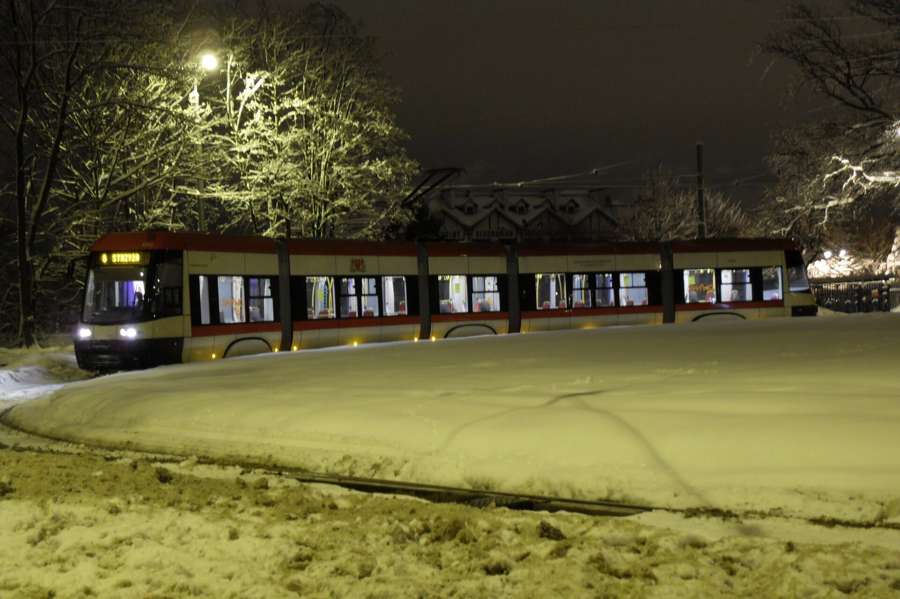
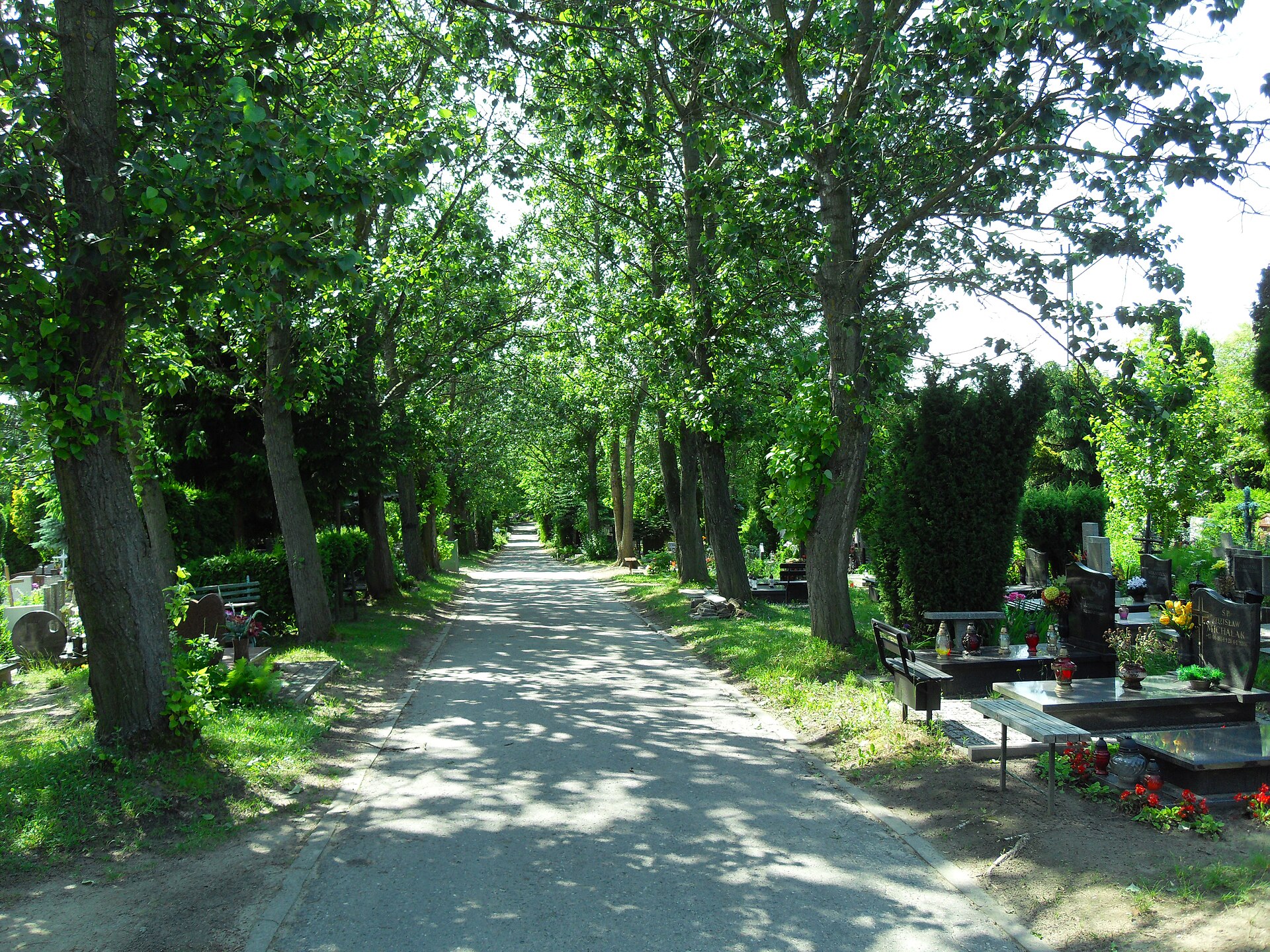
*Details verified against the City of Gdańsk press office announcement of 23 October 2026 (published 14:13). Timetables and traffic rules can change at short notice - check ztm.gda.pl before setting out. Cover photo: a PESA tram on a winter night in Gdańsk, by Artur Andrzej (CC0, via Wikimedia Commons). Archive photo below: an alley of the Łostowicki cemetery, by Artur Andrzej (CC BY-SA 3.0, via Wikimedia Commons).*
Frequently asked questions
When do Gdańsk's special cemetery lines run in 2026?
Special buses C27 (Żabianka SKM - Chełm Witosa) and C80 (Stogi - Cedrowa / Łostowicki) start on the weekend of 24-25 October. C22 (Sopot Brodwino - Brętowo PKM) joins on Saturday 31 October, and the express C10 (Wrzeszcz PKP - Łostowicki cemetery, every 4 minutes) runs only on Sunday 1 November, about 9:30-18:00.
Is public transport free in Gdańsk on 1 November 2026?
No. Normal ZTM fares apply on all regular and special lines - a 75-minute transfer ticket costs 6 zł and a 24-hour ticket 22 zł. Gdańsk has not joined the cities waiving fares this year (Łódź, Poznań, the GZM, Bydgoszcz, Toruń).
Can I drive onto the Łostowicki or Srebrzysko cemetery grounds?
No. From 15:00 on 28 October until 2 November, all cars are banned from both cemetery grounds, without exemptions for seniors over 65 or people with mobility disabilities. Designated parking is provided nearby (about 200 disabled spaces by the Łostowicki side gate), and on 1 November ulica Łostowicka itself closes to general traffic.
How do I get to Srebrzysko cemetery by public transport?
On 31 October bus 136 is rerouted along aleja Żołnierzy Wyklętych to serve the Srebrzysko stop, and on 1 November it keeps that routing every ~30 minutes. On the peak days trams 6, 7 and 11 run every ~10 minutes to the Chełm and Wrzeszcz side, a short walk from the cemetery's 14 side entrances.
What is a zniczodzielnia?
A "candle-sharing rack" at the cemetery where visitors leave undamaged grave-lantern covers for others to reuse - Gdańsk provides 22 of them, alongside 31 stands with borrowable garden tools for tidying graves.